Aviation is often understood as movement through the skies, but its real story begins long before takeoff and continues long after landing.
Aviation Media Lab 2026 peeled back the surface, offering an immersive journey through Kenya’s aviation ecosystem, where mobility, wildlife tourism, airport operations, cargo logistics, engineering systems, and industry dialogue converge into a single complex, high-precision network.
Safari Tour
The experience opened at Nairobi National Park, where participants were introduced to an unconventional mobility experience through Uber Safari. Moving through the park revealed a rare coexistence of urban life and untouched wildlife, with giraffes, rhinos, buffalo, and diverse bird species set against Nairobi’s skyline.
The experience demonstrated how tourism, mobility, and technology are increasingly converging to reshape how destinations are accessed and experienced.

The journey into modern mobility continued with Uber’s electric bike initiative, offering insight into sustainable transport innovation and the gradual shift toward cleaner, tech-driven urban mobility systems. This segment underscored how transportation ecosystems are evolving beyond traditional models to align with environmental and efficiency goals.
The immersion then transitioned into aviation training at Pride Centre and drone technology discussions, where participants explored how aviation professionals are developed and how unmanned aerial systems are being integrated into sectors such as agriculture, security, and media. The discussions reinforced the expanding scope of aviation beyond aircraft into data-driven and regulated technological systems.
Airport Operations
A deeper operational understanding followed at Jomo Kenyatta International Airport (JKIA), where participants were taken through the complete passenger journey from ticket processing to boarding procedures. The experience revealed the synchronised systems that manage passenger flow, security protocols, and operational efficiency within one of East Africa’s busiest aviation hubs.
Attention then shifted to baggage handling operations, where luggage is processed through automated conveyor systems and routed to different aircraft. The importance of strict handling procedures was emphasised, including the removal of old baggage tags during international travel to prevent routing errors and operational disruptions.
In the cargo section, participants encountered the complexity of global air freight systems. This included the handling of pharmaceuticals, high-value goods, and regulated cargo requiring strict compliance. A key highlight was the temperature-controlled storage facilities operating under extreme conditions, including environments maintained at approximately -20°C for sensitive goods preservation.
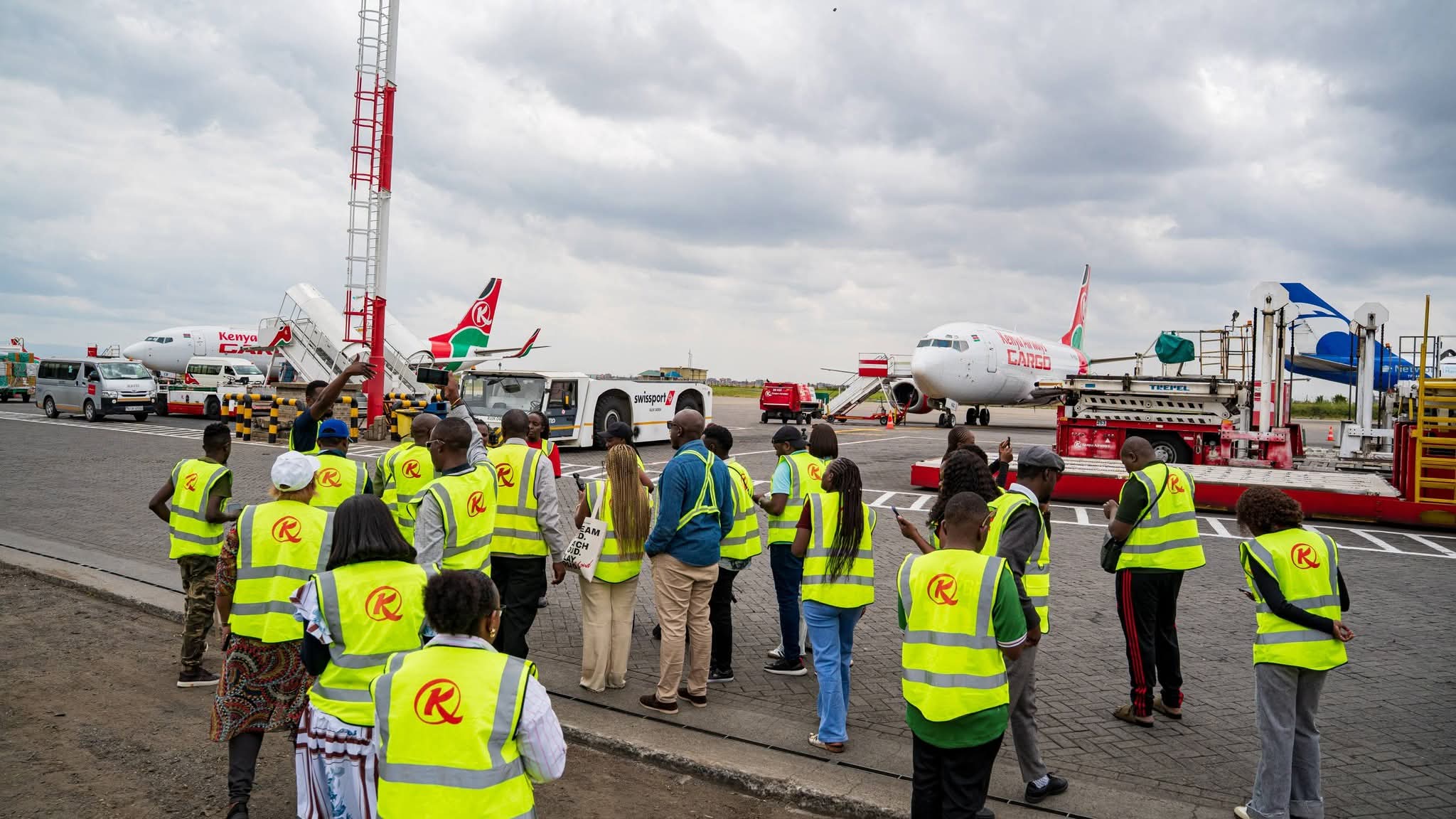
The session also introduced highly regulated cargo categories such as human remains and hazardous materials, reinforcing the strict international standards that govern aviation logistics. These systems reflect the industry’s precision-driven approach, where safety and compliance are non-negotiable.
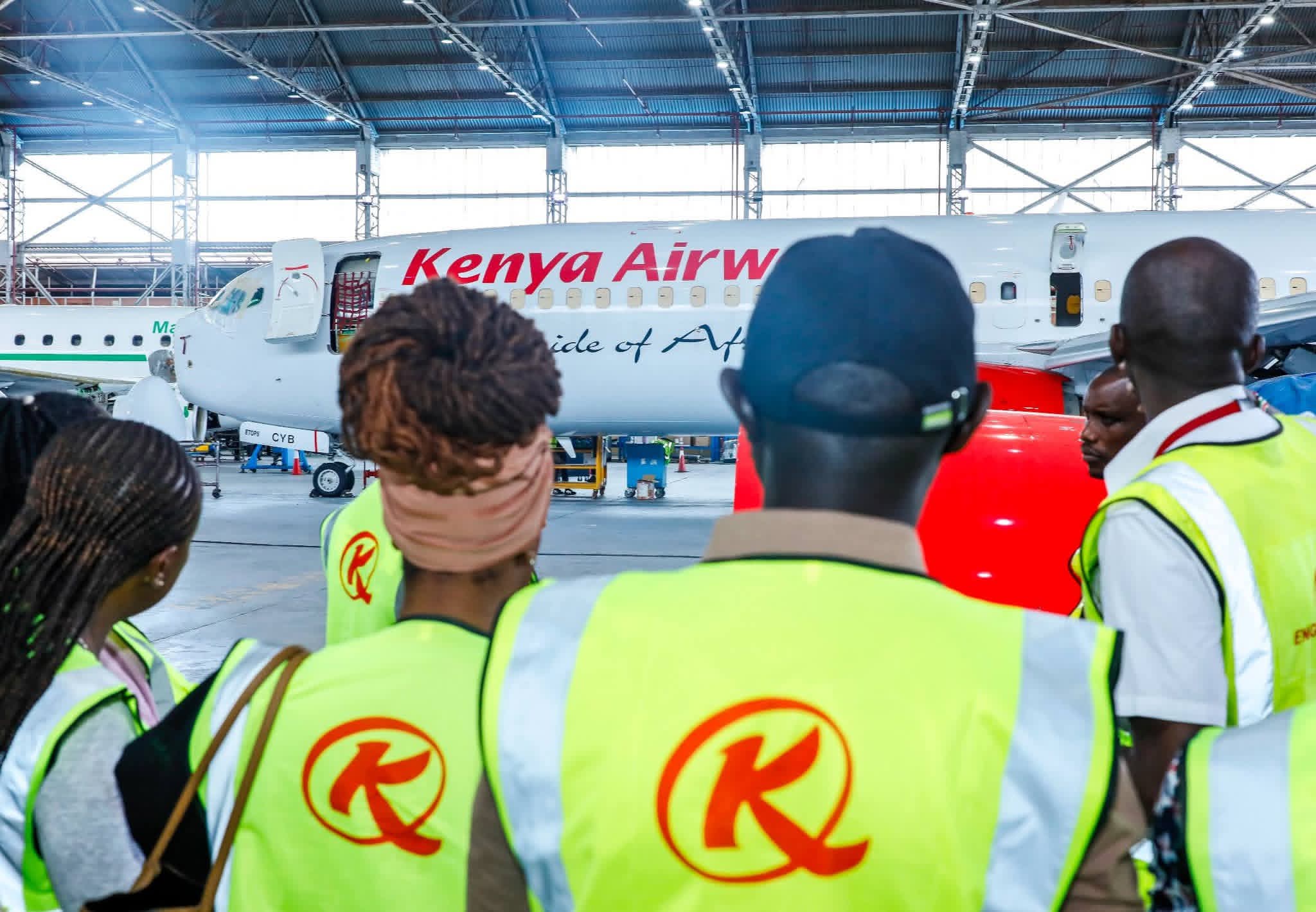
The experience extended into aircraft engineering and maintenance facilities, where participants observed how aircraft are continuously inspected, serviced, and prepared for safe operations. From cabin fittings to onboard equipment, every component undergoes meticulous checks, reinforcing the principle that aviation safety is built on constant maintenance and technical discipline.
The journey later transitioned into air travel itself, with evening flights from Nairobi to Mombasa via Kenya Airways and Jambojet, connecting operational learning with passenger experience in real time.
Inside Aviation Journalism
In Mombasa, the program was officially welcomed at PrideInn Paradise by George Kamal, Acting Managing Director, who set the tone for the discussions and remained present throughout the program, later concluding the final session of Aviation Media Lab 2026. His remarks emphasised the importance of addressing misinformation and ensuring accuracy in aviation communication, particularly in an era where unverified narratives can directly influence public perception and airline operations.
Industry conversations deepened into market analysis, network strategy, and airline commercial structures, offering insight into how airlines position themselves within competitive regional and global systems.
Discussions also explored aviation economics, including revenue performance trends, with reference to strong revenue outcomes in 2023 and continued improvements observed in 2025. The focus remained on revenue dynamics rather than profitability, reflecting the industry’s high-cost operational environment.
Structural challenges such as taxation frameworks, air navigation charges, fleet modernisation pressures, insurance costs, and blocked funds in certain markets were also highlighted. Sustainable aviation fuel (SAF) emerged as a critical long-term transition strategy toward reducing aviation’s environmental footprint.
The program also reinforced the importance of responsible aviation communication. Stakeholders emphasised that misinformation and unverified reporting can distort public perception and affect operational stability, making accurate, verified storytelling essential within aviation journalism.
The experience concluded with a networking session that brought together journalists, aviation professionals, and content creators from across Africa, including Kenya, Nigeria, Rwanda, Ghana, Uganda, Tanzania, Zimbabwe, and South Africa. This exchange highlighted the growing importance of cross-border collaboration in aviation storytelling and industry understanding.
Aviation Media Lab 2026 ultimately delivered more than exposure; it delivered clarity. It revealed aviation as a deeply interconnected system built on precision, regulation, communication, and trust. From wildlife-adjacent mobility experiences to airport operations, cargo systems, engineering hubs, and high-level industry dialogue, the program demonstrated that aviation is not just about aircraft in motion, but the systems that make that motion possible.
In the end, the message was unmistakable: aviation runs on accuracy, and in telling its story, precision matters just as much on the ground as it does in the sky.