
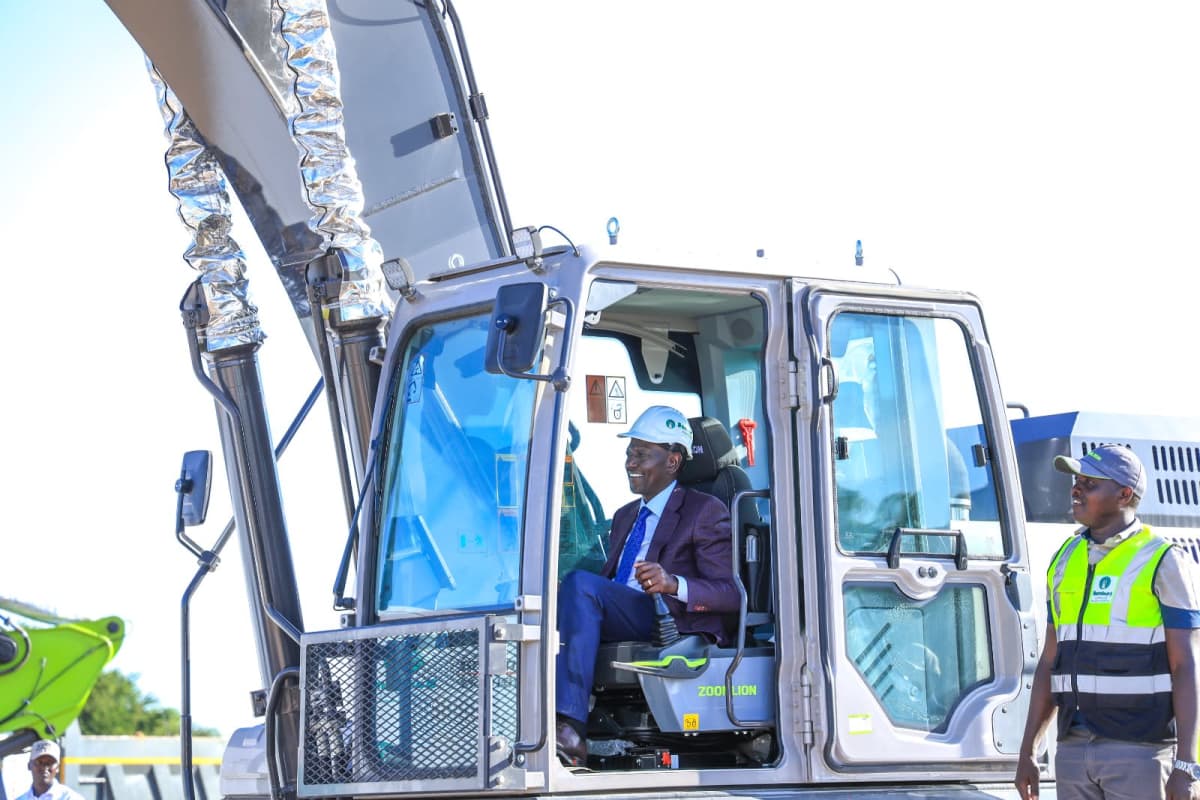
President William Ruto has presided over the groundbreaking of a Ksh32 billion cement manufacturing plant in Kwale County, with the project expected to create more than 10,000 jobs and reduce Kenya's reliance on imported clinker.
The new Bamburi Cement facility, which will be constructed in Matuga, will have the capacity to produce 1.6 million tonnes of clinker annually, significantly expanding the company's manufacturing operations.
The US$250 million (Ksh32 billion) investment will increase Bamburi's clinker production capacity from 1 million to 2.6 million tonnes annually. Its cement production capacity is also expected to rise from 1.8 million to 4 million tonnes.
Beyond the investment, residents of Kwale and neighbouring Coastal counties are expected to benefit from employment opportunities during construction and subsequent operations.

The project will also open opportunities for local businesses in transport, logistics, quarrying, equipment maintenance and other support services.
Speaking during the groundbreaking ceremony on Tuesday, November 24, Amsons Group Managing Director Edha Nahdi described the investment as a demonstration of the company's confidence in Kenya.
“For Amsons Group and Bamburi Cement, this US$250 million investment is a statement of our long-term confidence in Kenya and its economic potential. It is also part of our commitment to advance the value of local manufacturing as the engine of East Africa's economic growth,” Nahdi stated.
How Bamburi Plans to Use Coconut and Cashew Waste
One of the notable features of the new plant will be its use of alternative fuels and raw materials, including coconut husks, cashew nut husks and municipal solid waste collected from the Coastal region.
The materials will be incorporated into the manufacturing process as part of efforts to reduce the plant's environmental footprint and reliance on conventional fuels.
The facility will also feature a six-stage precalciner system, which is designed to improve efficiency during clinker production.
Bamburi Cement Chief Executive Officer Geoffrey Ndugwa said the investment would help address Kenya's dependence on imported clinker, a crucial ingredient in cement manufacturing.
“Clinker is the core ingredient at the heart of cement manufacturing, and policymakers have been exploring avenues to guarantee domestic self-sufficiency. With this groundbreaking, the new Bamburi Matuga Clinker Plant brings that heart home,” Ndugwa said.
He noted that local production would reduce manufacturers' exposure to international supply disruptions and fluctuations in foreign exchange rates.
“This clinkerisation plant will shield Kenyan manufacturers from global supply shocks and currency swings, while lowering the cost of building in Kenya,” he added.
Chinese Firm to Construct the Plant
Bamburi has contracted Sinoma CBMI Construction Co. Ltd, a Chinese engineering firm specialising in cement plant construction, to undertake the project.
The company expects the increased production capacity to strengthen local clinker supplies, reduce foreign exchange spending on imports and support the country's construction and infrastructure sectors.
Meanwhile, Bamburi Cement Board Chairman John Simba highlighted the company's plans to support households affected by the development.
He disclosed that 112 people from 42 households affected by the Mwachome Village relocation project had received financial literacy training ahead of the second phase of compensation under the Ksh250 million relocation programme.
“As part of Bamburi Cement's Corporate Social Responsibility obligations, the success of this investment must go hand in hand with the well-being of the community around it,” Simba said.
The groundbreaking marks a major expansion of Bamburi Cement's manufacturing operations under Amsons Group, which is seeking to strengthen its presence in Kenya and the wider East African market.