
A Ksh108.8 million judgment against the Kenya Union of Savings and Credit Co-operatives (KUSCCO) has triggered a fresh legal battle that has temporarily stalled the government’s plan to liquidate the troubled cooperative apex body.
The High Court on Friday, September 4, certified as urgent a case filed by RUPSA Regulated NWDT Sacco Society Limited, formerly PCEA Ruiru Sacco, challenging the appointment of three government officials to oversee KUSCCO’s winding up.
“Upon considering the merits of the said application, it is hereby ordered that the application be certified as urgent and shall be heard during the recess period,” the ruling stated in part. Justice Rhoda Rutto directed RUPSA to serve KUSCCO, the appointed liquidators and the Commissioner for Co-operative Development by close of business on Friday.
The judge scheduled the matter for September 8, when the court will issue further directions on the hearing of the application. The respondents have also been allowed to file their responses.
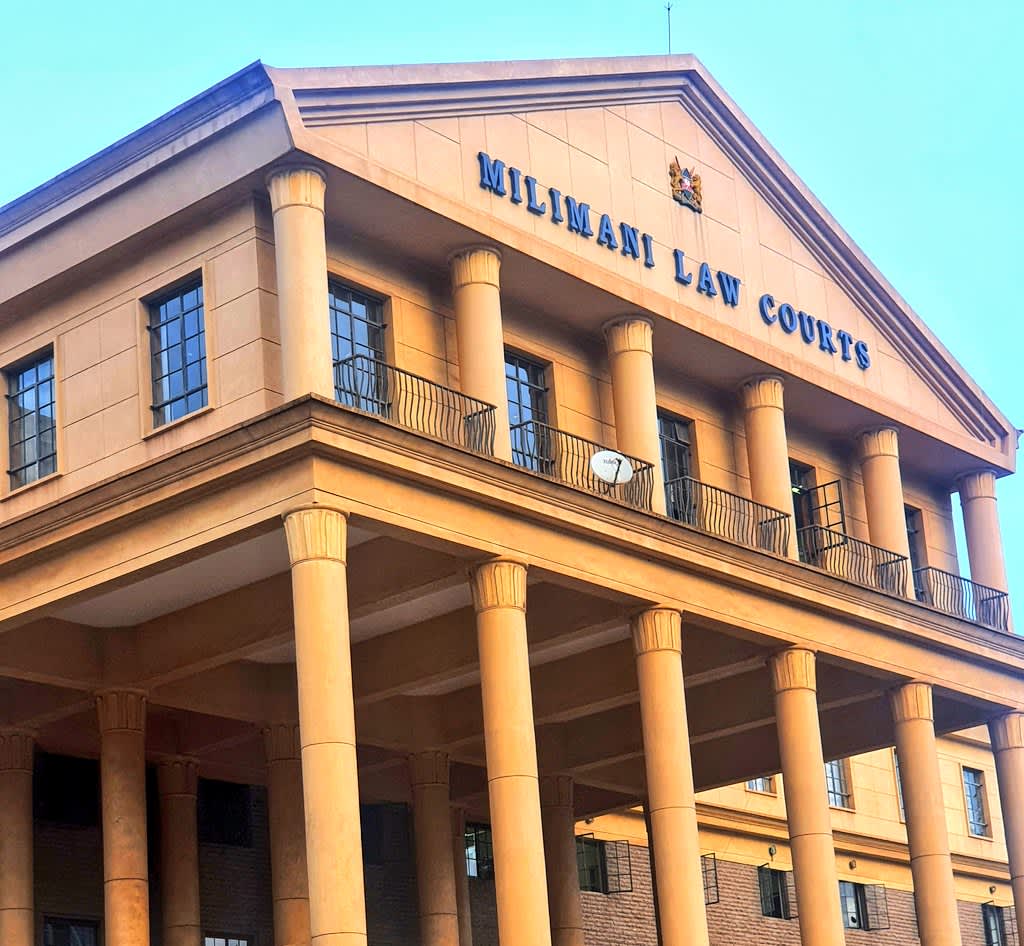
The development puts KUSCCO’s liquidation in legal limbo days after the Commissioner for Co-operative Development cancelled the union’s registration and appointed three liquidators to take control of its assets, books and records.
RUPSA is seeking to have the Gazette Notice that triggered the liquidation set aside, arguing that it was issued while existing High Court orders protecting KUSCCO’s assets were still in force.
Court orders at centre of dispute
The Sacco’s case hinges on a series of preservatory orders issued earlier this year. On March 25, Justice Lawrence Mugambi barred KUSCCO from disposing of its assets or transferring shares in its subsidiaries. Justice Bernard Wafula Murunga extended the orders on June 25, orders which remain in force and carry a penal notice warning of contempt proceedings for anyone who breaches them.
However, on August 31, Commissioner David Obonyo published Gazette Notice No. 13997 cancelling KUSCCO’s registration and appointing CPA Peter Wanjohi Kiama, Habif Olembo Jesse and Mariann Adam Abubakar as liquidators. The appointees were granted immediate authority to take custody of KUSCCO’s property, books and records.
The Gazette Notice came three days after approximately 250 member Saccos voted at a Special General Meeting on August 28 to dissolve KUSCCO under the Co-operative Societies Act instead of injecting fresh capital into the financially troubled union.
RUPSA’s lawyers, Allan Mulama Advocates, have challenged the process, arguing that the Commissioner should have sought the court’s permission before taking action that could affect existing court orders.
The lawyers contend that an administrative decision cannot override a court order that remains valid. In their submissions, they argued that a court order remains binding until it is varied or discharged, adding that “the shepherd has appointed himself undertaker.”
Ksh17.7 billion liabilities
The legal battle comes against the backdrop of a deep financial crisis at KUSCCO. Financial reviews by PwC and Grant Thornton, cited in the case, place KUSCCO’s liabilities at approximately Ksh17.7 billion against assets worth about Ksh5.2 billion. The figures leave the union with a deficit of nearly Ksh12.5 billion.
Co-operatives Cabinet Secretary Wycliffe Oparanya told the Senate in May that losses at KUSCCO had exceeded Ksh13 billion.
The financial crisis has left 177 creditor Saccos owed a combined Ksh6.17 billion. So far, recoveries have amounted to approximately Ksh369 million, equivalent to about six per cent of the amount owed. RUPSA maintains that it has not received any money despite holding a Ksh108.8 million judgment against KUSCCO.
The Sacco has raised further concerns over approximately Ksh6.27 billion in intercompany loans spread across five KUSCCO subsidiaries.
Its lawyers argue that a court-supervised liquidation would provide greater powers to trace assets, investigate the conduct of directors and potentially reverse improper transactions under the Insolvency Act.
Liquidator appointment challenged
RUPSA has also questioned the appointment of CPA Kiama as a liquidator. Kiama serves as Deputy Commissioner for Co-operative Development and was seconded to KUSCCO as Acting Chief Executive Officer in January 2026.
His subsequent appointment as one of the officials responsible for liquidating the same institution has raised concerns over a potential conflict of roles.
RUPSA further argues that Section 65(3) of the Co-operative Societies Act requires liquidators to be authorised insolvency practitioners, and claims that none of the three officials appointed by the Commissioner meets that requirement.
The Sacco is asking the High Court to appoint an independent provisional liquidator under Section 449 of the Insolvency Act.
It also wants the three government-appointed liquidators to explain on affidavit whether they were aware of the existing court orders when they assumed their new roles.
RUPSA has additionally questioned continued expenditure on travel and conferences, including activities linked to the SACCA Congress 2026 scheduled for Dar es Salaam in October, at a time when KUSCCO remains heavily indebted to member Saccos.
Court to determine next step
The High Court has not yet ruled on whether the government-appointed liquidators will be stopped from exercising their powers. Friday’s decision only fast-tracked the case and directed that all affected parties be served. The substantive application will come up for further directions before Justice Rutto on September 8.
KUSCCO, the Commissioner for Co-operative Development and the three appointed liquidators had not publicly responded to the application by Friday.
The case now places the government’s statutory powers against existing court orders at the centre of KUSCCO’s collapse. The eventual ruling could determine whether the Commissioner can proceed with the liquidation or whether KUSCCO’s winding up must instead take place under the supervision of the High Court.
Beyond KUSCCO, the decision could establish an important precedent on how government regulators intervene when financially distressed cooperative societies are already subject to active court proceedings.
