Public health officers have issued four key demands to the Ministry of Health amid growing concerns over Kenya’s preparedness to contain the country’s first reported Ebola case.
Speaking during a briefing on Wednesday, October 7, the officers urged the ministry to strengthen public health response systems at the county level, arguing that containing Ebola and other infectious diseases requires the coordinated involvement of all health professionals, not doctors alone.
They also questioned how the suspected patient managed to travel from the Democratic Republic of Congo (DRC), through Uganda, and into Kenya, saying the movement exposed weaknesses in the enforcement of international health regulations at border points.

The officers questioned whether proper screening and certification were carried out before the patient crossed the three countries, insisting that public health officers should play a central role in such processes.
They further warned that years of weakened public health systems could leave Kenya vulnerable to a crisis similar to the COVID-19 pandemic, which was also introduced into the country through an imported case.
The demands come as the Ministry of Health intensifies contact tracing following confirmation of an Ebola case, with 57 contacts identified so far.
Authorities had placed 10 people in quarantine facilities by Wednesday morning as part of measures to contain the virus.
Four demands
The officers called on the Ministry of Health to engage public health officers across the country and work towards resolving ongoing strikes, while ensuring they are fully integrated into the national Ebola response.
They also demanded a whole-system approach to managing Ebola and other epidemics and pandemics. Under the proposed model, public health officers, laboratory professionals, clinicians, nutritionists and other healthcare workers should have clearly defined roles during disease outbreaks.
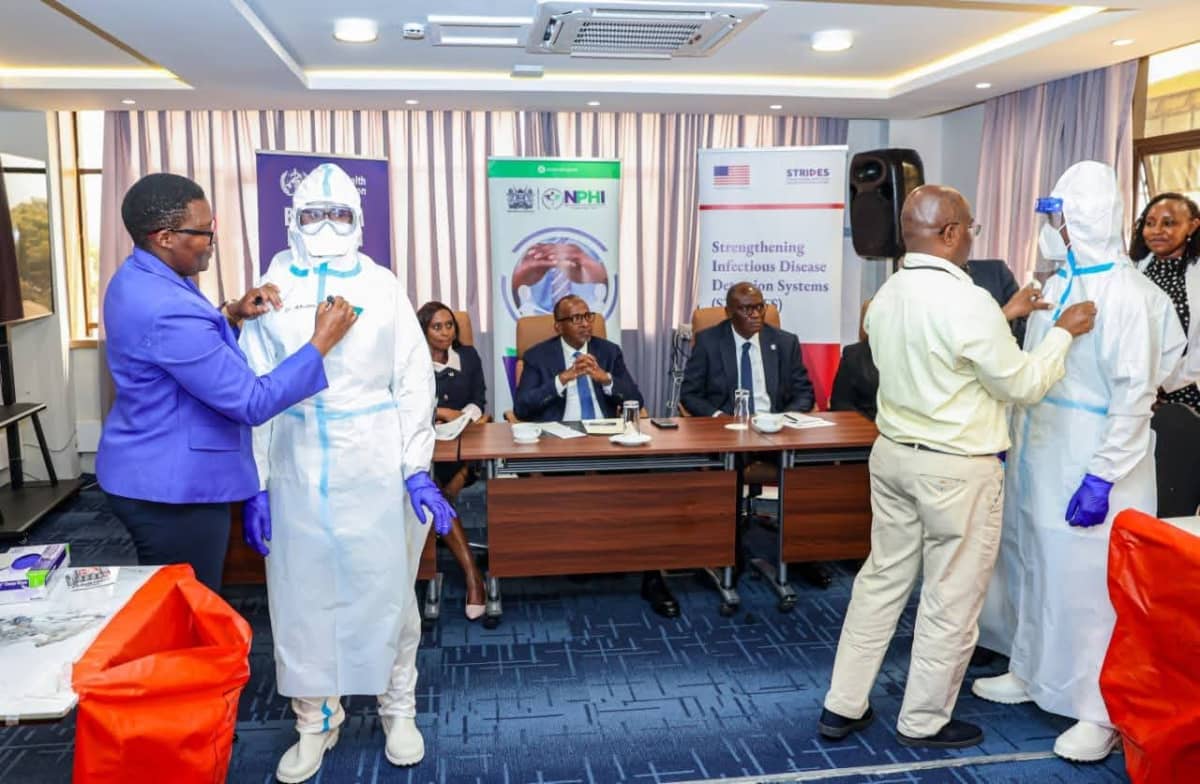
The officers further called for expanded Ebola preparedness training, arguing that although approximately 4,791 healthcare workers have been trained, the programme has largely focused on senior officials and executives who may not necessarily be the first responders during a public health emergency.
They want public health officers and laboratory personnel across the country to receive specialised training in Ebola preparedness, surveillance, detection and response to ensure frontline workers can act swiftly when cases emerge.
The officers also raised concerns over inadequate supplies of personal protective equipment (PPE), warning that some public health workers have been exposed to potentially fatal diseases while carrying out their duties.
They said strengthening frontline capacity, improving border surveillance and equipping health workers would be critical to preventing the current Ebola outbreak from escalating into a wider public health crisis.
