President William Ruto has announced that the government will officially launch the National Conversation on Kenya's Future Beyond Vision 2030 on Wednesday, August 12, 2026, terming it a landmark initiative that will determine the country's next development agenda.
The national dialogue is set to convene leaders from the national and county governments, the private sector, civil society, academia, youth organisations and other stakeholders to develop Kenya's long-term economic and social development blueprint.
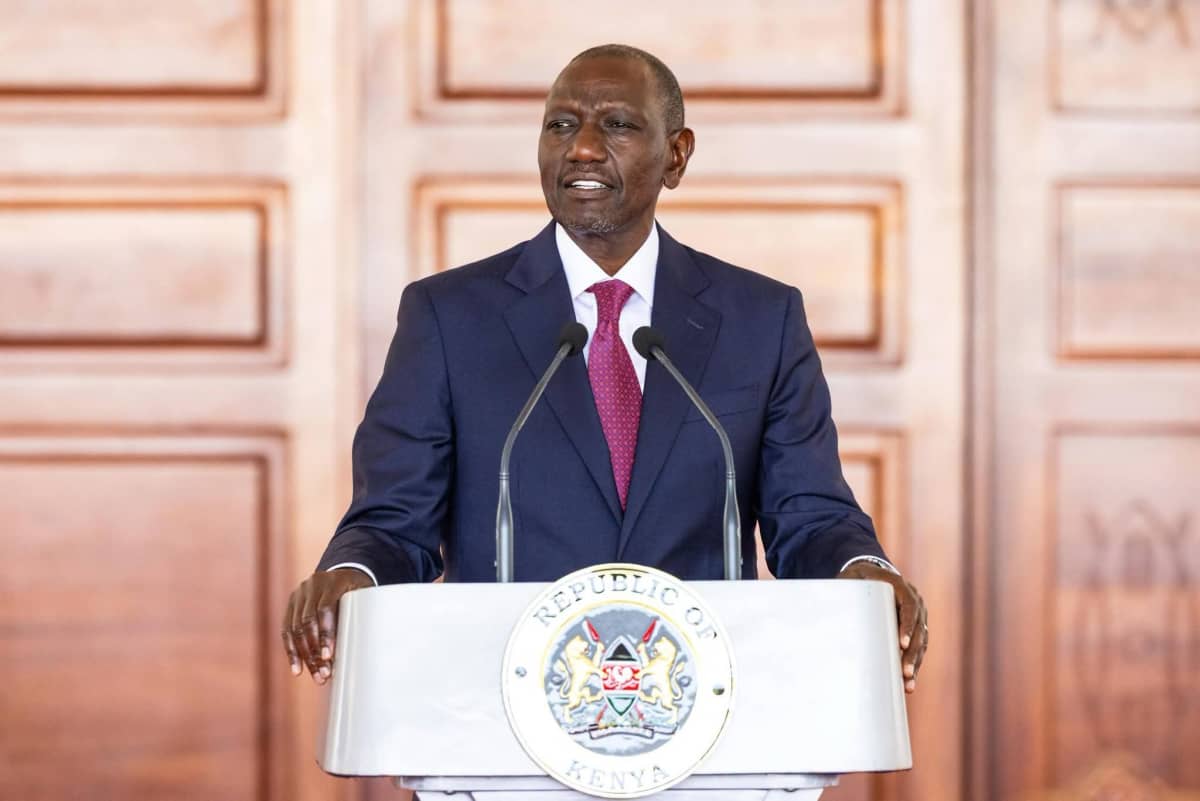
"On the 12th of August, 2026, we will officially launch the National Conversation on Kenya's Future Beyond Vision 2030. It will bring together all stakeholders. It will be the most consequential national conversation with national participation since the promulgation of the Constitution in 2010," the President said during his address at State House, Nairobi, on Thursday, July 30.
Ruto said the initiative will give Kenyans a chance to jointly determine the country's priorities once Vision 2030 comes to an end, marking the beginning of a new chapter in national planning after nearly 20 years.
He noted that the discussions would centre on creating a shared vision aimed at driving sustained economic growth and improving the livelihoods of future generations.

The Head of State described the process as one of the country's most important public engagements in recent years, adding that it would be comparable to the nationwide consultations that culminated in the promulgation of the 2010 Constitution.
President Ruto affirmed that Kenya must embark on a fresh national dialogue to evaluate its development journey, acknowledge its achievements, identify shortcomings and agree on a new long-term vision for the country.
The President noted that while Vision 2030 had significantly influenced Kenya's development agenda, public policy and investment decisions over the past two decades, the country now needed a new National Development Charter aligned with the aspirations of the 2010 Constitution.
"Vision 2030 set a target of Kenya becoming an upper middle-income country by 2030. So far, we are off target. This is not a criticism of Vision 2030, nor is it a reason for disappointment; rather, it is an opportunity to proudly learn from our successes, reflect with honesty on where we have fallen short, and define together Kenya's next long-term vision," Ruto said.
He emphasised that the proposed national conversation should rise above politics and electoral cycles, instead uniting Kenyans around a shared vision for the country's future.
Ruto also argued that Kenya had failed to fully capitalise on previous waves of global economic transformation that enabled several Asian nations and other economies to achieve rapid growth.
He cited countries including South Korea, China, Vietnam and Bangladesh as examples of nations that accelerated their development through industrialisation, economic reforms, exports and investment, while Kenya lagged behind despite having similar opportunities.
"In 1965, for example, Kenya and South Korea each had a GDP per capita of approximately US$110. Today, South Korea exceeds US$36,000 compared to ours of US$2,400," he said.
The President said the country must take an honest look at why other nations had advanced further and determine what changes are needed to ensure Kenya's next phase of development delivers better outcomes.
"The question we must ask ourselves candidly and honestly is why other nations have fulfilled so much of their potential, while we have repeatedly fallen short. More importantly, what must we now do differently to ensure that the next chapter of Kenya's development story is fundamentally different from the last," Ruto said.
Even so, Ruto maintained that Kenya had made notable strides in restoring economic stability and laying the groundwork for sustained growth.
According to the President, the government had strengthened the economy by rebuilding foreign exchange reserves, easing inflation, lowering borrowing costs and boosting investor confidence.
He added that Kenya attracted US$3.2 billion (about KSh413 billion) in foreign direct investment in 2025, more than double the amount recorded in 2022.
Ruto further pointed to the establishment of the National Infrastructure Fund and the Sovereign Wealth Fund, noting that they were intended to finance long-term development projects while safeguarding national resources for future generations.
The announcement came during Ruto's Special State of the Nation address, his third since taking office in September 2022. The address had been widely anticipated amid heightened political tensions ahead of the 2027 General Election.
His previous nationwide address was delivered on December 31, 2025, when he outlined the government's priorities on job creation and poverty reduction for the year ahead.
