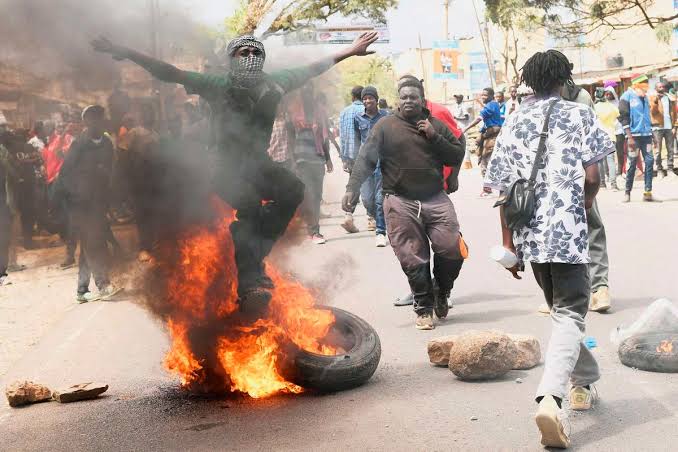
President William Ruto is facing renewed pressure over the proposed U.S.-funded Ebola quarantine facility at Laikipia Air Base after two people were killed during protests in Nanyuki on Monday, June 1.
The deaths were confirmed on Tuesday, June 2, by protest organiser Patrick Wahome and a security source quoted by Reuters. However, the circumstances surrounding the fatalities remain unclear, and the National Police Service (NPS) had not issued an official statement by the time of publication.
The latest development follows earlier reports that at least two people sustained serious injuries during the demonstrations, sparking concerns that casualties could rise after the unrest.
Residents took to the streets from as early as 7am to oppose the planned facility, citing concerns over potential health risks and questioning why the quarantine centre was being established in Kenya instead of the United States.

Hundreds of protesters marched through Nanyuki carrying placards and leaves while chanting slogans against the project.
Addressing demonstrators, Wahome said residents wanted the facility shut down entirely by June 9.
Tensions escalated after protesters reportedly attempted to access the site but were stopped by military personnel, leading to a standoff that lasted nearly two hours. The situation only eased after a senior air base official addressed the crowd and appealed for calm.
Footage shared from the protests showed burning barricades on roads across sections of Nanyuki, sending thick plumes of smoke into the air. Security officers were also seen firing during the disturbances.
Residents from the Likii area later reported that police officers were deployed to restore order, clearing streets and escorting people home at about 7pm.
The deaths come as public opposition to the project intensifies, even after the High Court extended conservatory orders suspending the establishment of the facility pending the hearing and determination of a petition filed by Katiba Institute challenging the project.
US Govt Issues Travel Advisory
Meanwhile, the United States government has issued a travel advisory warning its citizens in Kenya to exercise caution following the Nanyuki demonstrations.
In a notice dated June 1, 2026, the U.S. Embassy in Nairobi warned that protests witnessed in Laikipia could spread to other towns, including Nairobi.
The embassy noted that demonstrations in Kenya are often accompanied by a heavy police presence, which can result in traffic disruptions and heightened security concerns.
President Donald Trump's administration advised Americans living in or travelling to Kenya to remain vigilant, avoid crowds and monitor local media for updates on road and highway conditions before travelling.
According to the embassy, protesters could assemble in different urban centres, potentially disrupting transport, businesses and public services.
While the advisory did not cite any specific threats against U.S. citizens, it stressed the need for caution due to the unpredictable nature of protests.
The U.S. government added that it would continue monitoring the situation and provide updates where necessary, urging its citizens to rely on official embassy communication channels and follow directions issued by local authorities.
Despite the backlash, President Ruto has defended the agreement, maintaining that it is mutually beneficial and would strengthen Kenya’s preparedness for future disease outbreaks.
The U.S. government has also reportedly deployed a specialised Ebola response team to Kenya to assist in the care, monitoring and quarantine of American citizens returning from the Democratic Republic of the Congo (DRC).
