
El Niño is often associated with heavy rainfall, flooding, and landslides, particularly in East Africa. But the weather phenomenon does not produce the same conditions everywhere.
As Kenya prepares for the October-December (OND) short-rains season, meteorologists are warning of above-average rainfall in much of the country. At the same time, parts of Asia and southern Africa are facing increased risks of drought, delayed rains, heat and wildfires.
The apparent contradiction is explained by how El Niño disrupts atmospheric circulation across the globe.
What is El Niño?
El Niño is a naturally occurring climate phenomenon that develops when sea-surface temperatures in the central and eastern tropical Pacific Ocean become warmer than normal.
The warming alters atmospheric pressure, wind patterns, and the movement of moisture around the world. As a result, clouds and rainfall are redistributed, changing normal weather patterns thousands of kilometres away from the Pacific.
This means El Niño does not simply "create rain" or "create drought". Instead, it shifts the large-scale atmospheric circulation that determines where moisture rises, where clouds develop and where rainfall is concentrated.
The World Meteorological Organization (WMO) says the current El Niño is firmly established and expected to strengthen further, with forecasts indicating that it could persist into early 2027. Its September 2026 outlook projects further intensification, with the event expected to peak around November-December.
The WMO has also stressed that a very strong El Niño can significantly alter rainfall and temperature patterns worldwide.
Why Kenya Expects More Rain
In East Africa, El Niño has historically been associated with enhanced rainfall during the October-December season.
The OND rains are particularly important in equatorial East Africa, where they make a substantial contribution to annual rainfall. Climate research has linked positive El Niño–Southern Oscillation (ENSO) conditions, together with a positive Indian Ocean Dipole (IOD), to increased rainfall across parts of the region.
Kenya's Meteorological Department has consequently warned of above-average rainfall during the 2026 OND season as the El Niño strengthens. The department has forecast rainfall across all 47 counties, although the onset and intensity will vary from one region to another. Some counties are expected to begin receiving rains in September, while others are expected to experience the onset in October.
Kenya Met has also warned that some areas could experience episodes of particularly heavy rainfall, increasing the potential for flooding and landslides.
"According to the most recent update, the 2026 El Niño event continues to intensify across the central-eastern equatorial Pacific," KEMSA announced. The department has additionally projected warmer-than-average temperatures in some parts of the country during the season.
Why Other Regions Face Drought
The same atmospheric disruption that enhances rainfall in East Africa can suppress rainfall elsewhere. One of the regions facing heightened drought risks is Southeast Asia. Indonesia, for example, is expecting a delayed and shorter rainy season, with approximately 61 per cent of its land area forecast to experience a delayed onset of rains.
Indonesia's Meteorology, Climatology and Geophysics Agency has projected that the country's rainy season will begin later than previously expected, with the delay linked to the strengthening El Niño. The prolonged dry conditions have also increased wildfire risks and created challenges for farmers.
India and other parts of South Asia can also experience weaker monsoon rainfall during El Niño events. The summer monsoon is critical to agriculture, reservoirs and water supplies, meaning a disruption can have significant consequences.
Australia is another region where El Niño is commonly associated with hotter and drier conditions, particularly in parts of the east and south.
The WMO's global outlook captures the broader pattern: some regions become wetter while others face increased drought risk because the atmospheric circulation and distribution of moisture have shifted.
What Happens in Africa?
Africa also experiences contrasting effects. East Africa, including Kenya, Tanzania and Somalia, is generally more likely to experience enhanced rainfall during certain El Niño events, particularly during the OND season. This can increase the risks of flash floods, overflowing rivers, landslides and damage to homes, roads and farmland.
Southern Africa can experience the opposite. Countries including Zambia, Malawi, Mozambique, Zimbabwe and South Africa have historically faced reduced rainfall and drought during El Niño episodes. The 2023-2024 El Niño, for example, contributed to one of the region's worst droughts on record, affecting agriculture, water supplies and food security.
The contrast can be severe. Reduced rainfall can leave farmers with poor harvests, lower reservoirs and disappearing pasture, while communities dependent on livestock can face shortages of water and grazing land.
This is why El Niño should not be understood as a single weather event producing the same conditions across an entire continent.
Is El Niño Caused by Climate Change?
El Niño itself is a natural climate phenomenon rather than a direct consequence of human-caused climate change.
However, climate change can influence the background conditions in which El Niño occurs and can worsen some of its impacts. Higher global temperatures can intensify the consequences of heat, drought and heavy rainfall when these events occur.
The WMO has warned that the current El Niño is developing alongside exceptionally warm global oceans, increasing the potential for significant weather impacts in different parts of the world.
What It Means for Kenya
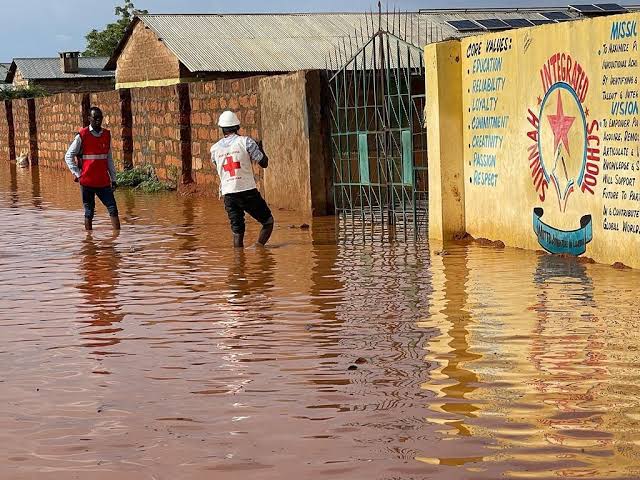
For Kenya, the immediate concern is not drought but the potential for excessive rainfall during the OND season.
The national and county governments have therefore stepped up preparedness in areas vulnerable to flooding, landslides and other rain-related hazards. Residents in flood-prone settlements have been urged to pay attention to weather advisories and move away from dangerous locations where authorities issue evacuation warnings.
The key point is that El Niño has no single global "weather signature". Its influence depends on geography, season, atmospheric circulation, and the interaction of other climate systems such as the Indian Ocean Dipole.
That is why the same El Niño event can mean flooded roads and overflowing rivers in Kenya, delayed rains and wildfires in Indonesia, or drought and water shortages in southern Africa.
