
Kenya’s aviation market is set for a major upgrade as Emirates, one of the two flag carrier airlines of the United Arab Emirates (UAE), prepares to deploy its latest-generation Airbus A350 aircraft on flights between Dubai and Nairobi, giving passengers access to a new cabin experience from October 25, 2026.
Vantage Ke has learnt through reports that Nairobi will become the 32nd destination on Emirates’ A350 network when the aircraft begins operating flights EK717 and EK718 between Dubai International Airport and Jomo Kenyatta International Airport (JKIA). The deployment will also mark the first time Emirates’ Premium Economy cabin is offered to passengers travelling to and from Kenya.
The move is part of Emirates’ broader expansion of its newer aircraft and upgraded cabin products across its global network.
The A350 is the newest aircraft type in Emirates’ fleet, joining the airline after it took delivery of its first aircraft, an A350-900 registered A6-EXA, in November 2024. The aircraft was the first new aircraft type to join Emirates’ fleet since 2008.
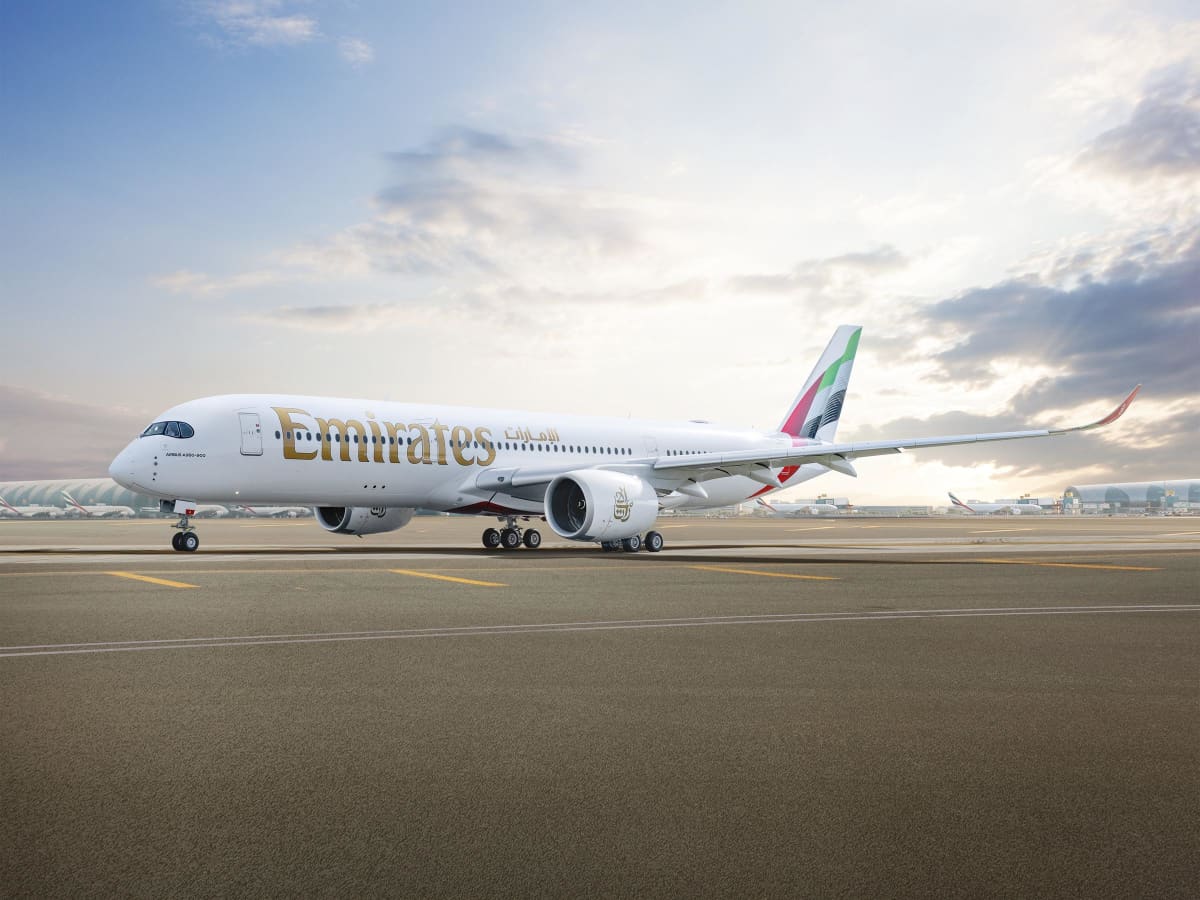
However, passengers had to wait until January 2025 to experience the aircraft in commercial service. Emirates operated its first scheduled A350 flight to Edinburgh in Scotland on January 3, 2025, before progressively deploying the aircraft to destinations across its network.
Emirates has ordered 65 A350 aircraft as part of its long-term fleet expansion programme. The aircraft is intended to provide the airline with additional flexibility to operate both existing and new routes, including destinations where larger aircraft such as the Airbus A380 may not be suitable.
What makes the Emirates A350 different?
The A350 is a widebody, twin-engine aircraft designed with an emphasis on fuel efficiency, passenger comfort and longer-range operations. For the Dubai-Nairobi service, Emirates will use a three-class configuration accommodating 298 passengers — 32 in Business Class, 28 in Premium Economy and 238 in Economy Class.
One of the biggest changes for Kenyan travellers will be Premium Economy. The cabin uses a 2-3-2 configuration, with wider leather reclining seats, adjustable headrests, raised leg and footrests and additional space compared with Economy Class. Passengers will also have access to in-seat charging, a wood-finished side cocktail table and a 13.3-inch entertainment screen.
On selected flights, including the Dubai-Nairobi route, Emirates says Premium Economy passengers will receive complimentary amenity kits. The cabin also includes enhanced dining and beverage offerings.
Business Class, meanwhile, has been configured in a 1-2-1 layout, giving every passenger direct access to the aisle. The seats convert into fully flat beds and feature a personal minibar, wireless charging, and individual entertainment systems. A snack display area at the rear of the cabin will also allow passengers to access refreshments during the flight.
Economy Class has also received a significant redesign. Passengers will find an updated interior featuring sky blue, bronze and cream tones, together with leather headrests and additional legroom. Each seat is fitted with Emirates’ upgraded Information, Connectivity, and Entertainment (ICE) in-flight entertainment system, displayed on a 13.3-inch adjustable 4K touchscreen.
Technology is another major feature of the aircraft. The A350 comes with 60-watt USB-C charging at every seat, Bluetooth connectivity for personal headphones, electric window blinds and touchscreen controls integrated into the entertainment system. Passengers can also access digital newspapers and magazines, an improved live flight map and multiple external aircraft camera views.
The aircraft also introduces an upgraded version of Emirates’ ICE entertainment platform, with 4K and 4K HDR displays, improved navigation and a larger content library.
Connectivity has also been upgraded through a newer-generation satellite antenna designed to provide faster onboard internet connectivity. Emirates says the system can support more passengers connecting simultaneously than previous systems.
Another feature passengers may notice is the cabin environment. Emirates says the A350 has higher ceilings, wider aisles, larger overhead storage and customised mood lighting. The aircraft is also designed to provide a quieter cabin environment than previous-generation aircraft.
What the Nairobi deployment means for passengers
The A350 arrival comes as Emirates expands its operations in Kenya. The airline introduced a third daily Dubai-Nairobi flight in July, taking its schedule to 21 flights per week. The additional frequency provides more departure options for passengers travelling between Kenya and Dubai and connecting onwards through Emirates’ global network.
Emirates Country Manager in Kenya Christophe Leloup described the A350 deployment as a new chapter for the airline’s Kenyan operations. “The arrival of the A350 in Nairobi marks an exciting new chapter for Emirates in Kenya,” Leloup said. “We’re delighted to bring our latest aircraft and onboard experience to our customers in market, with more comfort, choice and thoughtful touches in every cabin.”
The aircraft will also expand access to Emirates’ Premium Economy product for Kenyan travellers, giving passengers another option between Economy and Business Class.
The Nairobi deployment comes as Emirates continues to expand the A350 network. The airline said in September 2026 that the aircraft was serving 30 destinations from Dubai and was scheduled to reach 36 destinations by the end of the year, with Nairobi among the destinations being added in late October.
For Kenya, the arrival represents more than the introduction of a new aircraft. It brings a newer generation of cabin design, entertainment, connectivity and seating options to one of the airline’s established African routes, while giving passengers their first opportunity to experience Emirates’ Premium Economy service directly from Nairobi.
