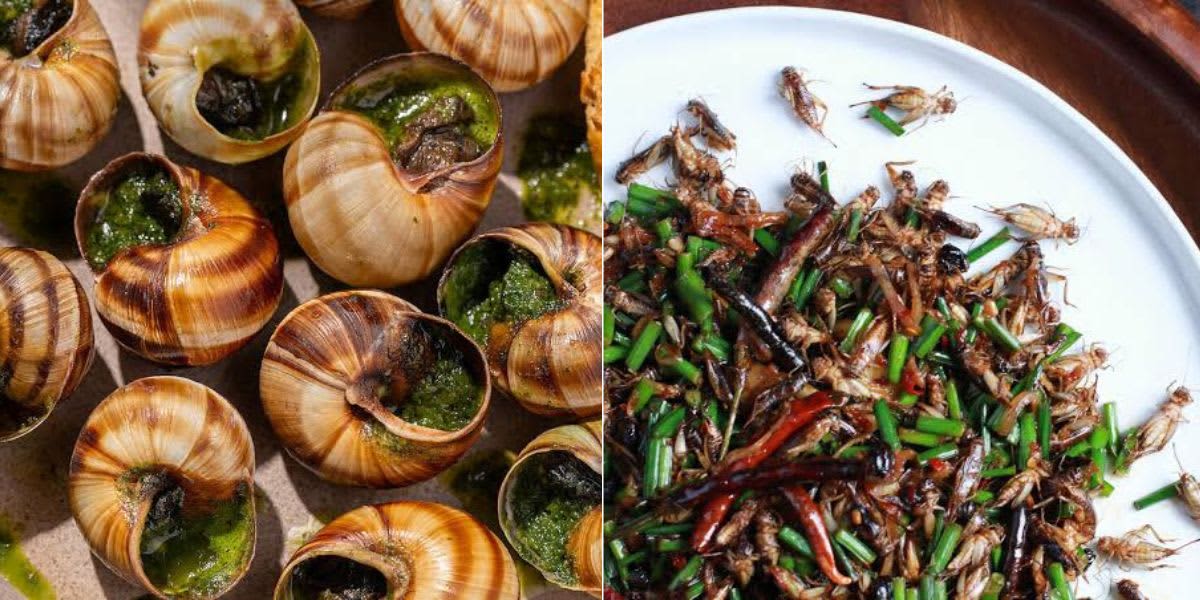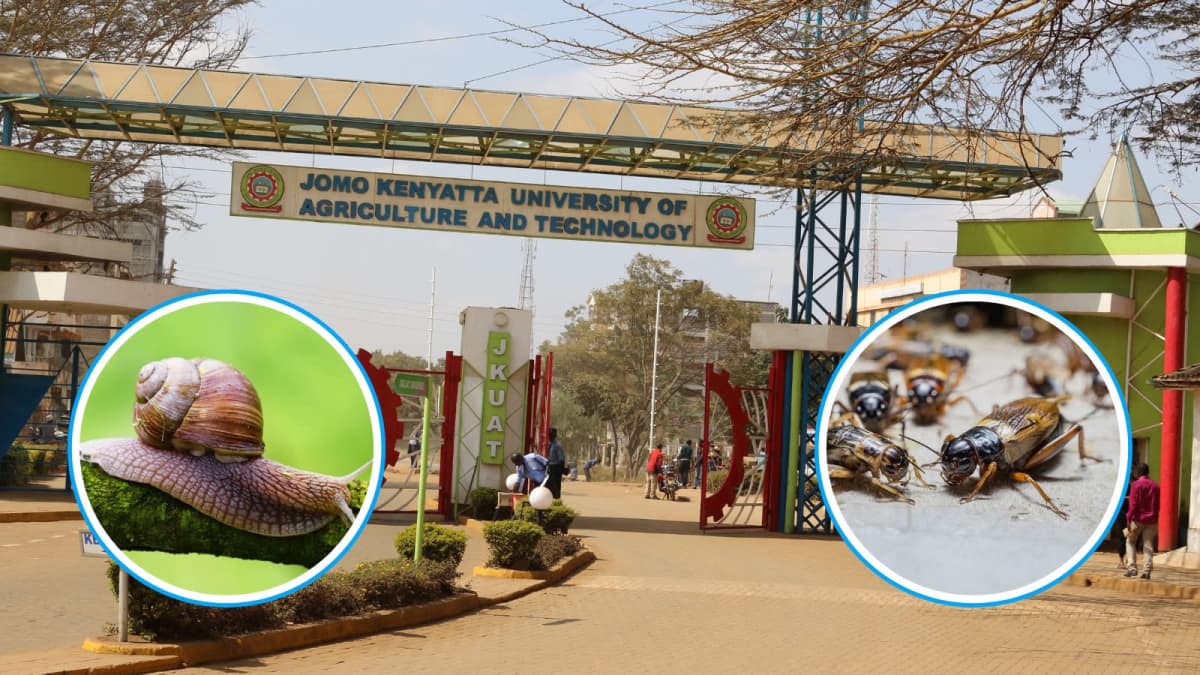
Jomo Kenyatta University of Agriculture and Technology (JKUAT) has proposed crickets and snails as alternative sources of food for Kenyans as concerns over a potential food shortage persist.
Speaking during the Nairobi International Trade Fair 2026 on Wednesday, September 30, JKUAT Vice Chancellor Victoria Wambui said the university was exploring unconventional food sources to diversify the country's food options and strengthen food security.
Wambui said embracing alternative foods could also give farmers an opportunity to diversify their production and create additional income streams.

"We are proposing the use of crickets and snails as food, and if you visit our stand, you'll be able to learn how you can even cook some of these foods," Wambui stated.
The Vice Chancellor urged farmers to consider agricultural innovations involving crickets and snails, saying the ventures could unlock new opportunities in food production while providing alternative sources of income.
JKUAT is also showcasing other agricultural innovations, including tissue culture technology used to produce plantain and dragon fruit seedlings.
According to Wambui, the university has developed new protocols for propagating the crops and is selling the resulting seedlings to Kenyan farmers who want to plant them and evaluate their growth and fruit production.
"We have also come up with very good protocols in the area of tissue culture for things like plantain and dragon fruit, and therefore these are other seedlings that we are selling to Kenyans," the VC added.
The university said its work goes beyond research, noting that it also trains farmers on how to adopt emerging agricultural technologies and use products developed by its researchers.
The push for alternative food sources comes amid concerns over Kenya's food security following failed rains and expectations of El Niño rains beginning in October.
The government has announced plans to import more than one million bags of maize from Zambia as part of measures to avert a potential food shortage.
JKUAT's proposal to promote foods such as crickets and snails is part of efforts to diversify food sources and potentially cushion the country against future shortages.
While snails and crickets are consumed in various parts of the world, including Asia, Europe and parts of West Africa, their consumption remains relatively uncommon in Kenya.
However, the practice is gradually gaining ground, with some Kenyan farmers already establishing snail and cricket farms.