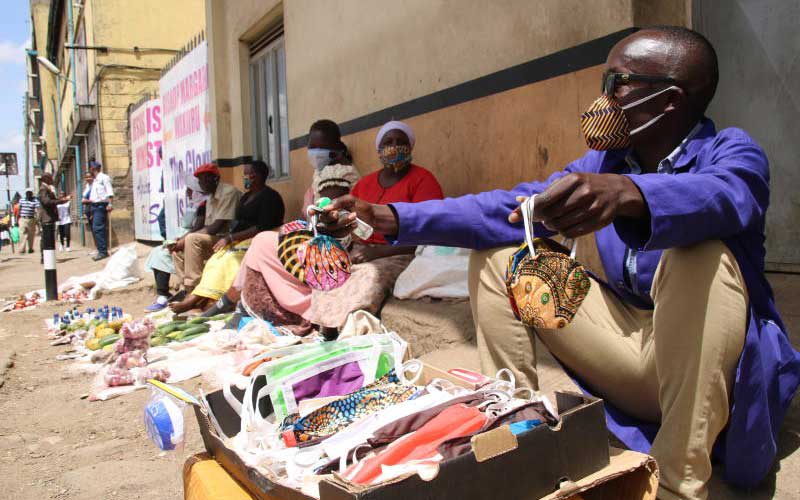
The Kisumu County Government has unveiled plans to phase out roadside hawking by requiring small-scale traders to operate from designated spaces within modern markets.
Governor Anyang’ Nyong’o announced the new measures under the 2026 Kisumu County Trade and Markets Policy, which aims to reorganise informal trade and establish a more orderly and structured business environment across the county.
Under the proposed framework, traders will be allocated specific areas within designated markets to conduct their businesses, replacing the widespread practice of selling goods along roadsides and other informal locations.
Nyong’o said the policy was designed to strengthen small businesses by creating an environment that could help them attract more customers and increase their earnings.

“These policies are not mere documents meant to collect dust on shelves. They represent a bold, actionable blueprint designed to empower our informal traders, scale up our micro, small and medium-sized enterprises and modernise our local economy from the ground up,” he said.
Some traders have welcomed the planned reforms, arguing that the growing number of hawkers operating outside established markets has negatively affected businesses run by traders within designated trading spaces.
Businesswoman Sarah Adero said market traders stood to benefit from the changes if customers were encouraged to shop from designated business areas rather than purchasing goods from hawkers operating along streets.
“The policies will help us because when hawkers sell everywhere, customers don’t even get to the market to buy our goods. With the changes, we expect more customers to visit the market and buy from us,” she said.
Meanwhile, Kisumu-based businessperson Daniel Akwata noted that many emerging businesses face difficulties expanding due to stiff competition and the dominance of already established enterprises.
He warned that without sufficient support and interventions, many upcoming entrepreneurs could struggle to sustain their businesses and eventually reach a dead end.
IYBA-SEED Project Manager Nduta Ndirangu said the proposed reforms would contribute to the creation of a more organised and effectively managed market system while expanding opportunities for traders.
“These reforms seek to create a fair and well-managed market, strengthen cooperatives and improve opportunities for women and youth by promoting local enterprise development and encouraging greater consumption of locally produced goods and services,” she said.
The Kisumu County Government's latest move comes at a time when informal trade has attracted increased scrutiny from the national government.
President William Ruto recently ordered a crackdown on foreigners operating small-scale and retail businesses in the country.
Trade Cabinet Secretary Lee Kinyanjui clarified on Monday that foreigners would continue to enter Kenya under the visa-free and Electronic Travel Authorisation (eTA) arrangements.
However, he warned that individuals who engage in trade or business activities without obtaining the necessary authorisation would face action from the government.
