Kenya has confirmed a second case of Ebola, with the Ministry of Health revealing that the patient was identified while already in quarantine following exposure to the first confirmed case.
In a press statement issued on Wednesday, October 14 obtained by Vantage Ke, Health Director General Patrick Amoth said the patient is a 39-year-old man and a close family member of the first patient.
The man developed fever, fatigue and joint pains on Tuesday, October 13, prompting health teams to isolate him and collect samples for testing.
Laboratory tests at the National Virology Reference Laboratory and the Kenya Medical Research Institute-Centers for Disease Control and Prevention (KEMRI-CDC) returned positive results, confirming the infection.

The patient has since been transferred to a designated treatment centre, where medical teams are providing supportive care.
Kenya has now recorded two confirmed Ebola cases and one death, according to the Ministry of Health.
108 Contacts in Quarantine
The Ministry disclosed that contact tracing and monitoring efforts were ongoing, with 128 contacts identified in connection with the first case. By October 13, health officials had traced 113 of the contacts, with 108 placed in quarantine in Kenya.
The individuals are undergoing daily clinical assessments and temperature checks for 21 days from their last possible exposure to the virus.
Five other contacts are outside Kenya, with authorities in the respective countries notified in accordance with international health regulations.
The Ministry stated that tracing efforts for the remaining 15 contacts were continuing. Health teams are also assessing people who may have come into contact with the second patient since he developed symptoms, including quarantine personnel and healthcare workers.
Ministry Reveals Why Second Case Was Detected Early
The Ministry attributed the early detection of the second infection to the monitoring measures already in place.
According to the statement, the patient was under daily surveillance when he developed symptoms, allowing health officials to isolate him and conduct tests promptly.
"Because he was already in quarantine, his illness was detected early. Early supportive care improves his chances of recovery, and isolating him at the first symptom limits the chance of passing the virus to others," the Ministry stated, adding, "This is the response working as designed."
It further assured Kenyans that the two confirmed cases were linked and that there was no evidence of transmission in the wider community.
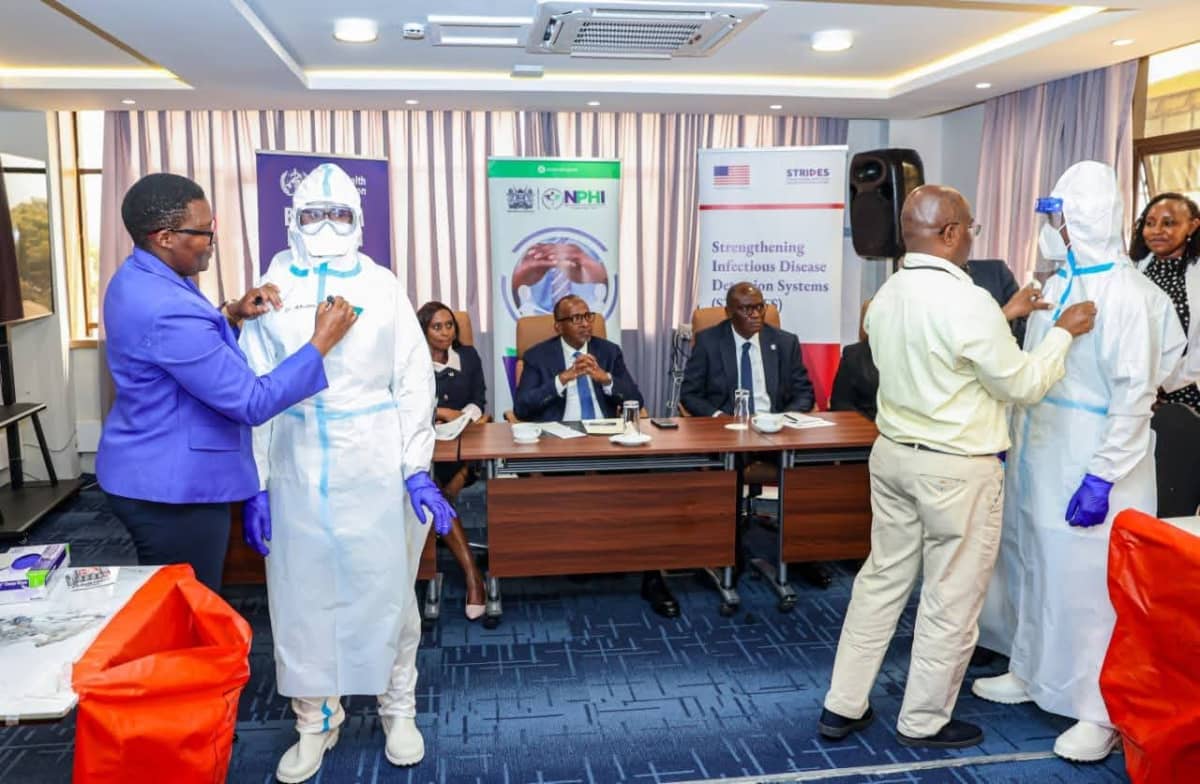
The government said infection prevention and control measures had been strengthened at quarantine and treatment facilities, with healthcare workers provided with the necessary protective equipment.
It directed anyone monitoring contacts who develops symptoms to be isolated and tested immediately.
Travel and Public Gatherings Remain Unrestricted
Despite the confirmation of the second case, the Ministry said Kenya would remain open, with no restrictions imposed on travel, trade or public gatherings.
The government said its response was being coordinated through a single national command under the Public Health (Declaration of Formidable Epidemic Disease) Order, 2026, and the Public Health (Ebola Disease) Rules, 2026.
The World Health Organization had also been notified in accordance with the International Health Regulations of 2005.
The Ministry urged the public to remain calm but vigilant as health authorities continued surveillance and contact tracing.
Symptoms Kenyans Should Watch Out For
The Ministry warned that people experiencing symptoms associated with Ebola should seek medical attention promptly at the nearest health facility.
The symptoms include fever, unusual tiredness, muscle or joint pains, vomiting, diarrhoea and unexplained bleeding.
It clarified that Ebola does not spread through the air but through direct contact with the blood or body fluids of an infected person or someone who has died from the disease.
Members of the public were also urged to avoid spreading unverified information and to respect the privacy of the affected family.
For further information, Kenyans were advised to call the Ministry of Health's toll-free number 719. The Ministry said it would provide further updates on the patient's progress as the response continues.