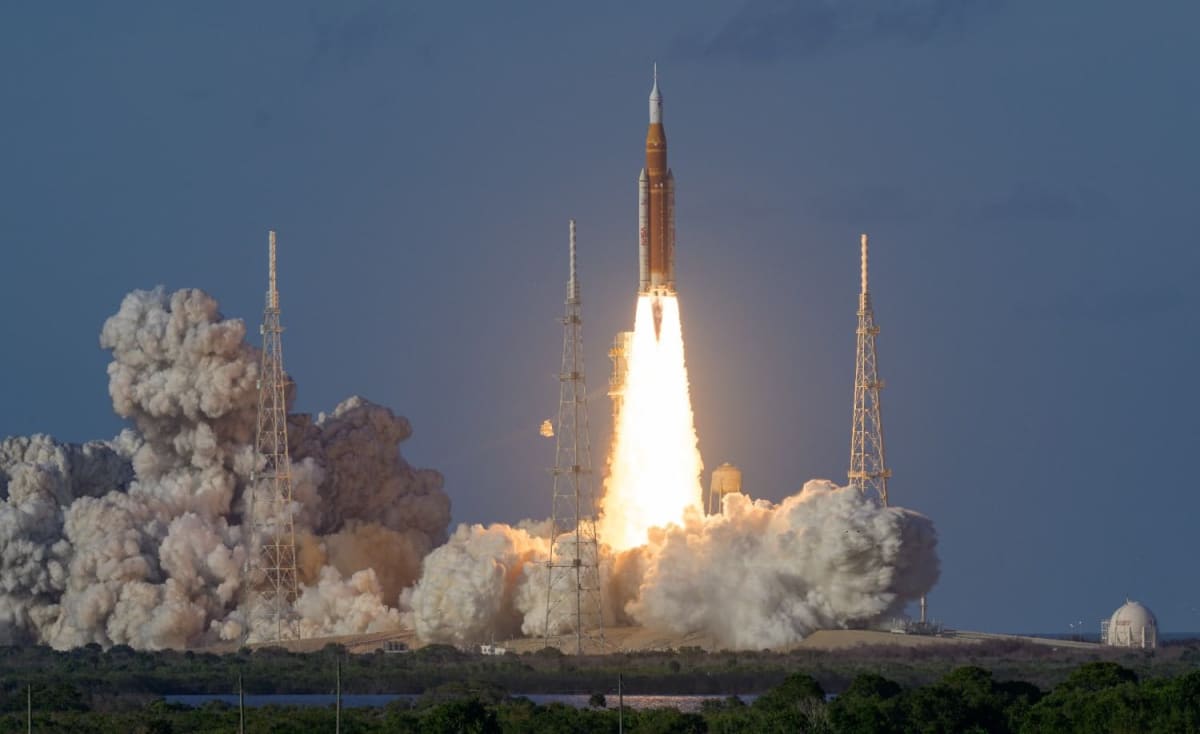
Kenya has taken a step towards establishing a commercial spaceport after the government signed a funding agreement for a feasibility study on the proposed satellite launch facility.
The project, being spearheaded by the Kenya Space Agency (KSA), is proposed for the Kipini area along the Kenyan coast, between Malindi and Lamu.
The feasibility study will assess the technical and commercial viability of the proposed facility, including the infrastructure, investment requirements, potential demand and projected returns.
PPP Directorate Director General Engineer Kefa Seda hosted KSA Director General Major General Hillary Kipkosgey on Thursday, October 1, for the signing of the funding agreement.

The agreement follows the appointment of a Transaction Advisor who will conduct the feasibility study and offer technical, commercial and financial guidance on the project.
The advisor will evaluate the infrastructure needed to establish the spaceport, estimate the investment required, assess potential market demand and determine the expected commercial returns.
The study will also explore how the facility could be developed through a Public-Private Partnership (PPP) and provide recommendations on selecting a private-sector partner.
“Kenya’s proposed spaceport represents a strategic national investment with the potential to establish the country as a significant player in the global space economy,” Seda said.
According to the PPP Directorate, Kenya's position along the equator and its east-facing coastline give the country geographic advantages for satellite launch operations.
The project is also expected to leverage existing and planned infrastructure along the coast, including roads, water systems, energy networks and port facilities.
The feasibility assessment will examine the type of launch infrastructure required, potential launch vehicles, estimated project costs and options for developing the facility in phases.
If found commercially viable, the spaceport would support satellite launches and other activities in the growing commercial space sector.
The government is targeting investment in areas including satellite deployment, telecommunications, Earth observation, climate monitoring and scientific research.
Officials also expect the project to create employment opportunities and strengthen technical skills while generating revenue through revenue-sharing arrangements.
Kenya has previously hosted space-related launch activities at the San Marco Equatorial Range near Malindi, where satellite and sounding rocket launches were conducted between 1964 and 1988.
The proposed facility would establish a new commercial launch site along Kenya’s coastline, reviving the country’s long-standing involvement in equatorial space activities.