President William Ruto has directed the reduction of the minimum customs benchmark for general containerised consolidated cargo from the recently increased Ksh3.2 million to the previous Ksh2.5 million threshold.
Speaking at State House on Wednesday during a meeting with Micro, Small and Medium Enterprises (MSME) traders, Ruto explained that the move was intended to shield small businesses from the effects of rising operational costs and other business shocks.
The President also directed the Kenya Revenue Authority (KRA) to identify high-value goods that should not be included under the Ksh2.5 million consolidation threshold. Such goods will instead be assessed separately from other items contained in consolidated cargo.

"Mr Commissioner General, create a list of the high-value goods and share it with these traders," Ruto directed.
Ruto argued that the existing arrangement could create an unfair situation where containers carrying goods worth millions of shillings attract lower cargo-related charges, potentially undermining efforts to ensure traders contribute their fair share of taxes.
The President further directed Kenya Railways to slash freight charges for 20-foot containers from Ksh75,000 to Ksh10,000, in another measure aimed at reducing the financial burden on traders.
"I am also directing Kenya Railways, the container charges on traders, which is usually capped at Ksh75,000, I am reducing it to Ksh10,000," President Ruto stated.
Ruto further directed Kenya Railways to rehabilitate the land surrounding the Kenya Railways Boma Line, a national cargo deconsolidation and clearance facility located next to Nairobi Central Railway Station.
The facility is currently dilapidated, and Ruto ordered its improvement to make it easier for traders handling consolidated containers to unpack and verify their goods.
"I want us to agree on one thing, that land at Boma, let us come up with a plan on how we expand that place so that traders from Kisumu, Mombasa can have an easy time verifying their goods, that place should stop looking dilapidated," Ruto added.
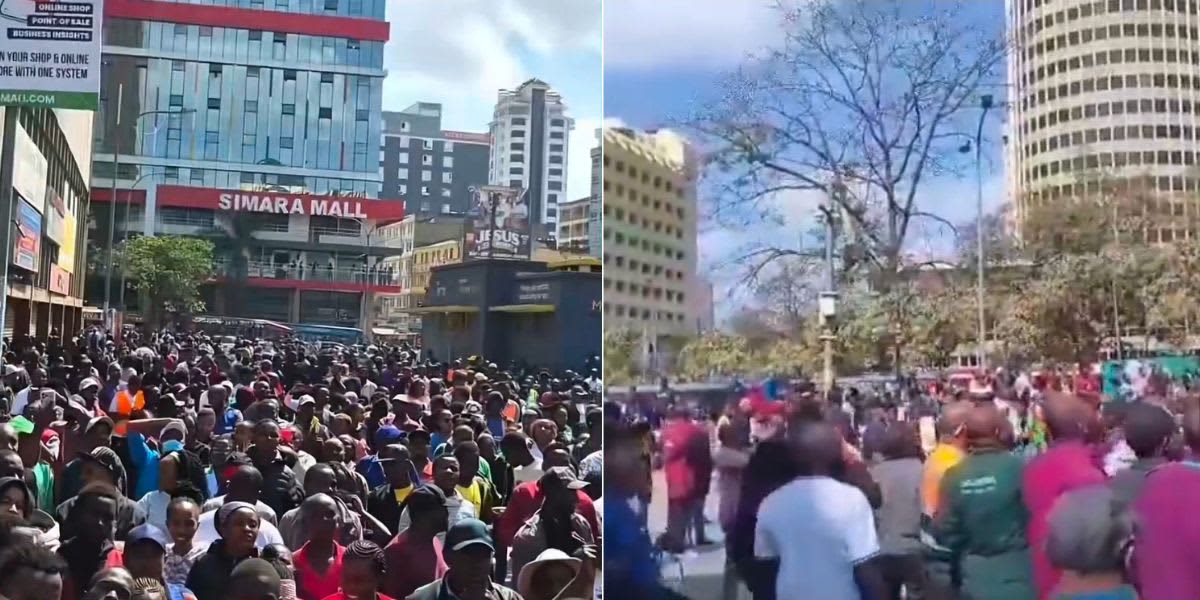
The directives come as a relief to traders, particularly importers, who on August 28 closed their Nairobi shops and marched to KRA headquarters to protest a 28 per cent increase in customs valuation on containers.
The higher valuation disrupted businesses in major trading centres, with traders in Gikomba, Kamukunji and Nyamakima among those most affected.
KRA has maintained that the Ksh3.2 million figure is a risk-management reference rather than a flat tax imposed on every container.
The tax authority's Board Chair Ndiritu Muriithi also advised traders to de-consolidate their containers at bonded facilities, where customs duty would be calculated based on the actual value of the imported goods.