
President William Ruto has announced the formation of a National Response Committee to coordinate Kenya’s preparedness and response measures following the Ebola outbreak reported in neighbouring countries, even as the government faces mounting pressure over a controversial United States-funded quarantine facility at the Laikipia Air Base.
In a statement issued after a high-level meeting at State House, Nairobi, Ruto said the committee would operate under the leadership of Prime Cabinet Secretary and Cabinet Secretary for Foreign and Diaspora Affairs Musalia Mudavadi.
“The Government will establish a National Response Committee under the leadership of the Prime Cabinet Secretary and Cabinet Secretary for Foreign and Diaspora Affairs to coordinate a whole-of-government and whole-of-society response,” Ruto stated.
According to the President, the committee will spearhead public awareness campaigns, strengthen preparedness, and mobilise technical and financial resources to address any eventualities arising from the outbreak.
The announcement came amid growing public scrutiny over the government’s decision to approve a United States-backed Ebola quarantine and treatment centre at the Laikipia Air Base.
Washington has pledged Ksh1.74 billion towards Kenya’s Ebola preparedness efforts following a phone conversation between President Ruto and U.S. Secretary of State Marco Rubio on Thursday.
The proposed facility has since triggered criticism from sections of the public and health stakeholders, with concerns emerging over transparency, public safety, and the nature of the agreement between Kenya and the United States.
The Kenya Medical Practitioners, Pharmacists and Dentists’ Union (KMPDU) issued a 48-hour ultimatum demanding full disclosure of the agreement and warning of possible industrial action if the government fails to provide details.
At the same time, Katiba Institute moved to court seeking to block the implementation of the plan, arguing that the process lacked adequate public participation and transparency.
Despite the backlash, Ruto maintained that Kenya remained alert and prepared to prevent any spread of the deadly virus into the country.
“As a key regional gateway, financial hub, and host to major international organisations, Kenya remains vigilant and committed to swift, coordinated action to protect regional health security following the Ebola outbreak in neighbouring countries,” the President said.
Ruto revealed that surveillance and screening measures had been intensified across 26 Points of Entry, with more than 58,000 travellers screened so far.
He further disclosed that all suspected Ebola cases tested in the country had returned negative results.
“I am pleased that surveillance and screening measures have been intensified across 26 Points of Entry, with more than 58,000 travellers screened and all suspected cases tested so far returning negative,” he stated.
The Head of State added that 17 isolation centres had already been identified across the country as part of contingency plans to contain any possible outbreak.
Ruto also disclosed that Kenya was mobilising support with development partners and frontline response institutions, including the World Health Organization (WHO), the Africa Centres for Disease Control and Prevention (Africa CDC), and the United Nations system.
According to the President, the partnerships are aimed at strengthening surveillance, emergency response systems, healthcare preparedness, laboratory capacity, and cross-border coordination.
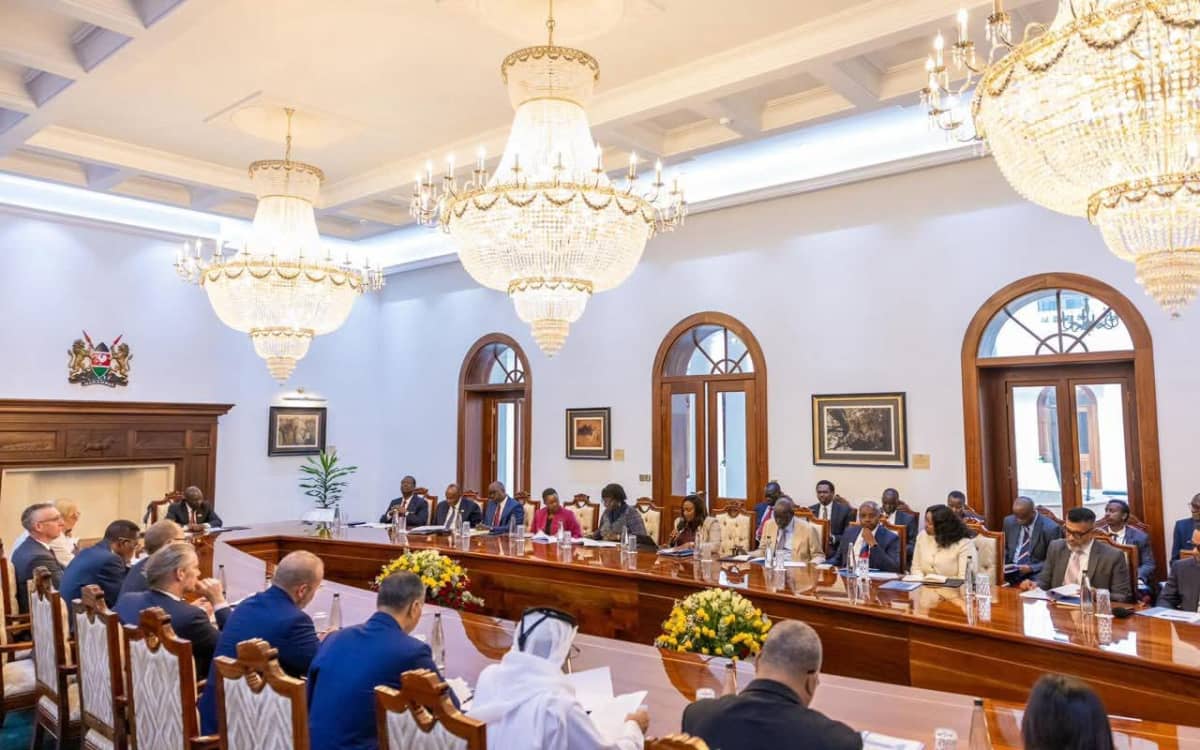
At State House, Ruto hosted ambassadors, multilateral agencies, development partners, and other stakeholders to discuss the regional Ebola situation and rally support for a coordinated response.
Among those represented were officials from the United States, the United Kingdom, the European Union, France, Germany, China, Japan, India, Qatar, the United Arab Emirates, Saudi Arabia, Ethiopia, Türkiye, the United Nations Office at Nairobi, and the United Nations Resident Coordinator’s Office.
“I appreciate the representatives from the United States, the United Kingdom, the European Union, France, Germany, China, Japan, India, Qatar, the United Arab Emirates, Saudi Arabia, Ethiopia, Türkiye, the United Nations Office at Nairobi, and the United Nations Resident Coordinator’s Office for their presence and commitment to this important national, regional, and global endeavour,” Ruto said.
The President further stressed the importance of international cooperation in combating public health threats, warning against isolationism.
“We agreed on the importance of cooperation and avoiding isolationism, recognising that public health threats do not respect borders and require coordinated regional and global action,” he stated.
Ruto insisted that Kenya would continue to act “transparently, responsibly, and decisively” to protect lives while contributing to regional and global health security.
