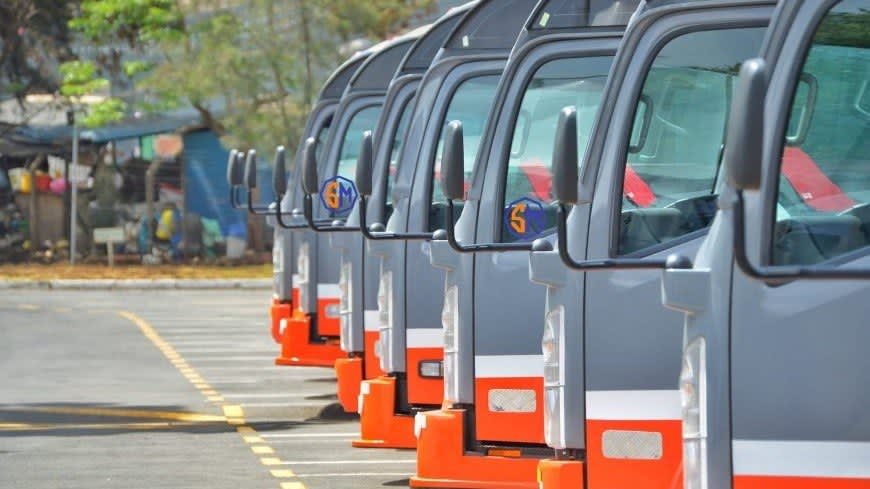
Commuters across Nairobi are set for major disruption after popular matatu operator Super Metro announced it will suspend operations on Monday, May 18, in solidarity with the nationwide matatu strike set to begin from midnight.
In a brief statement issued on Sunday evening, May 17, the SACCO confirmed that none of its buses and matatus would be on the road during the planned industrial action.
“In view of the matatu strike slated for tomorrow, we will not be in operation. We shall communicate when services will resume. Thank you,” the statement on its Facebook page read.
The announcement is expected to pile pressure on thousands of Nairobi commuters who rely on Super Metro for daily transport across key routes within the capital and its outskirts.
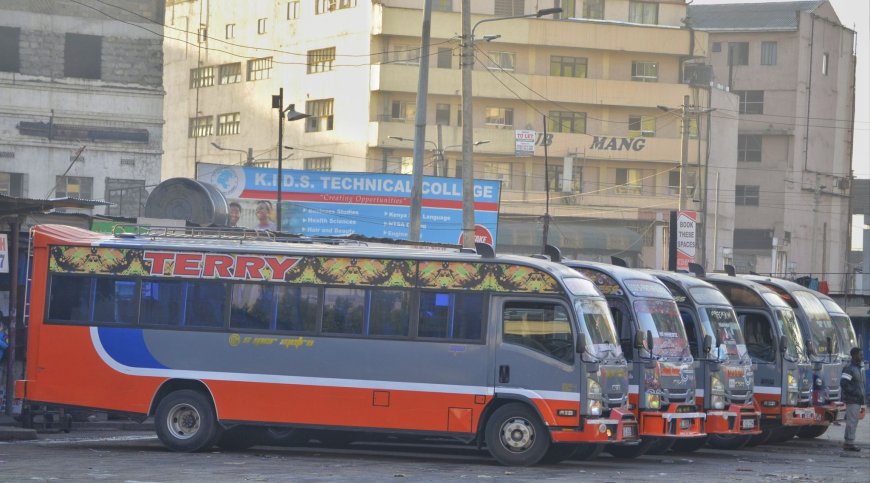
A fleet of Super Metro matatus. /SUPER METRO
The suspension comes amid growing unrest in the transport sector following the latest fuel price hike announced by the Energy and Petroleum Regulatory Authority (EPRA), which triggered outrage among motorists, PSV operators, boda boda riders, and digital taxi drivers.
Transport stakeholders have accused the government of failing to cushion Kenyans from the rising cost of living, lamenting that the increased fuel prices had directly pushed up fares and could spill over to operating costs.
Super Metro’s decision now signals that the impact of the strike could be wider than initially anticipated, with fears mounting over potential commuter chaos during Monday morning rush hour.
The SACCO did not indicate when normal services would resume, only noting that further communication would be issued.
Meanwhile, the planned nationwide strike by players in Kenya’s transport industry over escalating fuel prices will go ahead from midnight on Monday after stakeholders from across the sector agreed to suspend operations countrywide.
In a joint statement released on Sunday, the Transport Sector Alliance announced that vehicles affiliated with participating associations would not operate as part of a coordinated nationwide industrial action.
According to the alliance, the strike has attracted support from a wide range of transport players, including public service vehicle operators, cargo and logistics firms, digital taxi operators, boda boda riders, tourism transport companies, driving schools, school transport providers and private motorists.
“Following a high-level consultative meeting held today, Sunday, 17th May 2026, all stakeholders in Kenya’s transport sector have unanimously reaffirmed that no vehicle shall move starting midnight today. The nationwide Transport Sector Fuel Strike scheduled for Monday, May 18, 2026, is fully on,” the statement read.
“The Alliance confirms that all transport subsectors, covering passenger transport, cargo and logistics; ride-hailing; motorcycle transport, tourism transport, driving schools; school buses; and private motorists have resolved to stand together in one of the largest coordinated industrial actions in Kenya’s history.”
Groups supporting the strike include the Federation of Public Transport Sector, Matatu Owners Association, Motorist Association of Kenya, Truckers Association of Kenya, Digital Taxi Association of Kenya and the Association of Bus Operators, alongside several other industry bodies.
The alliance further argued that the overwhelming support from transport stakeholders placed the chances of the strike succeeding at 99 per cent.
The announcement came just days after EPRA raised the price of super petrol by Ksh16.65 per litre and diesel by Ksh46.29 per litre under the May-June 2026 fuel review.
Under the revised prices announced on Thursday, May 14, super petrol is now retailing at a maximum of Ksh214.25 per litre, while diesel jumped to Ksh242.92 per litre. The new prices took effect on May 15 and will remain in force for the next 30 days.
On Sunday, a petitioner moved to the High Court seeking urgent conservatory orders to halt the latest fuel price hikes announced by EPRA, terming the adjustments unconstitutional, punitive to consumers, and lacking transparency.
 A man fueling a car at a petrol station and EPRA's logo inset. /BBC.EPRA