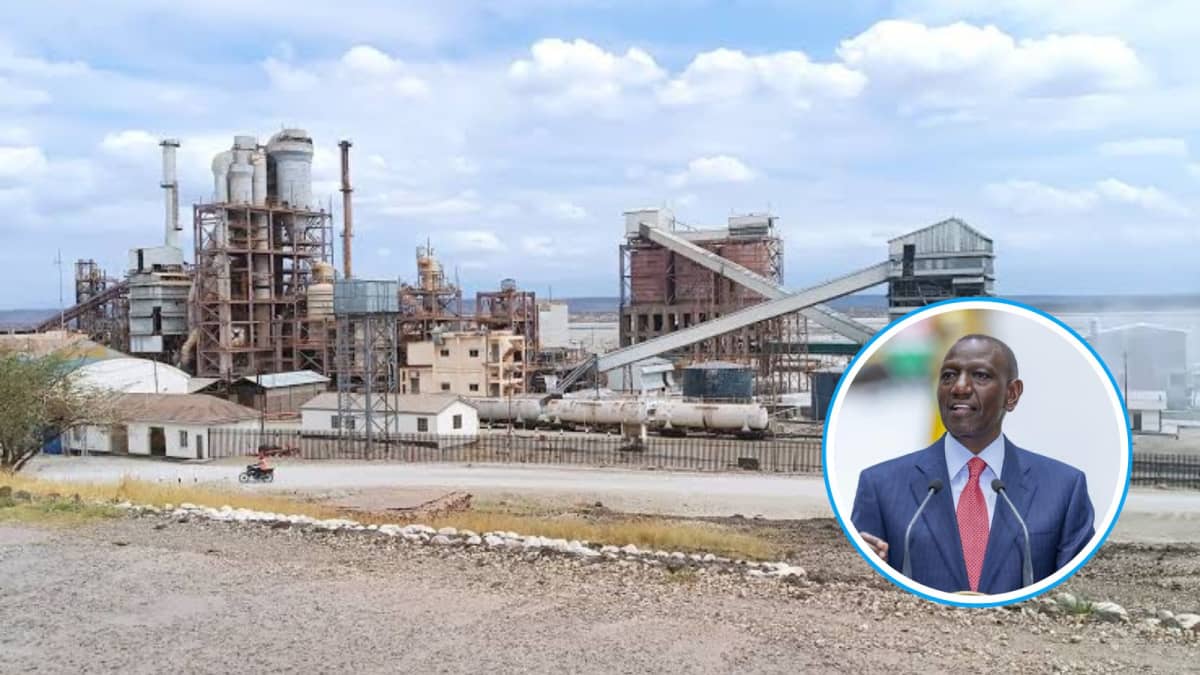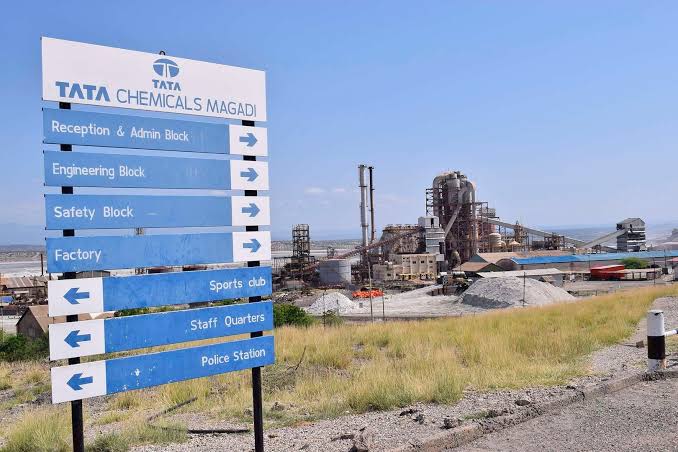
Tata Chemicals has broken its silence on the future of its Lake Magadi soda ash operations after President William Ruto ordered the company to stop mining and leave the site.
The multinational says it is now waiting for the findings of a high-level technical committee established by the Kenyan government to determine the future of the suspended operations.
Tata Chemicals Managing Director Ramakrishnan Mukundan revealed that the committee, which includes representatives from Tata Chemicals Magadi, will assess the issues surrounding the mine before deciding the way forward.
“We have the lease of the mine for another 30 years and will wait for the outcome of the committee before moving forward,” Mukundan said.

The statement places the spotlight on the future of one of Kenya’s longest-running mining operations, which has been at the centre of a dispute over mineral rights, royalties, environmental compliance and licensing.
An audit by the Ministry of Mining reportedly raised concerns over missing royalty payments, environmental compliance and the lack of a valid mining licence. Ruto subsequently ordered an end to the company’s operations and its exit from the site.
The President later clarified that the mineral rights and contract would be advertised afresh through a competitive bidding process, opening the door for other companies to compete for the rights to exploit the soda ash deposits.
“That TATA company…had that contract for 100 years. They have not built anything in Kajiado, they have not built any factory in Kajiado," Ruto said.
The government's move has sparked anxiety in Kajiado, particularly among workers and businesses whose livelihoods depend on the Magadi operation. Local unions have warned that the suspension could trigger the retrenchment of more than 500 direct employees, while thousands of casual and indirect workers could also lose their source of income.
The potential impact extends beyond employees directly employed by Tata Chemicals, with transporters, suppliers, traders and other businesses forming part of the wider Magadi economic ecosystem.
For Tata Chemicals, however, the immediate focus is on the government's technical committee. Mukundan said the company would not make further moves until the committee concludes its assessment.
The uncertainty surrounding Magadi comes as Mukundan warned businesses against becoming trapped in day-to-day challenges at the expense of long-term strategy.
He outlined that companies operating in volatile environments must maintain strategic clarity and be willing to make difficult decisions when necessary. Drawing from his experience working closely with late Tata Group chairman Ratan Tata, Mukundan said one of the most important lessons he learnt was to be “directionally right, not accurately wrong”.
He recalled how the Tata Group once considered entering the auto-components industry. While consultants had produced a detailed report on the sector, Tata instead asked broader questions about when India would reach one million cars, the average value of components per vehicle and the market share the group should target. The approach, Mukundan said, helped establish the scale of the opportunity before the company became consumed by operational details.
He also cited an example involving a proposed voluntary retirement scheme for temporary workers, where Tata questioned whether workers actually did not want to work for a full year or whether the company simply did not have enough work for them. Mukundan revealed that the question exposed a fundamental flaw in the proposal.
He also defended the need for companies to withdraw from businesses where they cannot compete effectively. “Where we cannot win, we exit,” he said, citing Tata Group’s exit from the telecom sector.
For now, the future of Tata Chemicals' operations at Lake Magadi remains tied to the government's committee, with the outcome potentially determining whether the company retains its long-standing presence in Kajiado or the mineral rights are opened up to new investors.