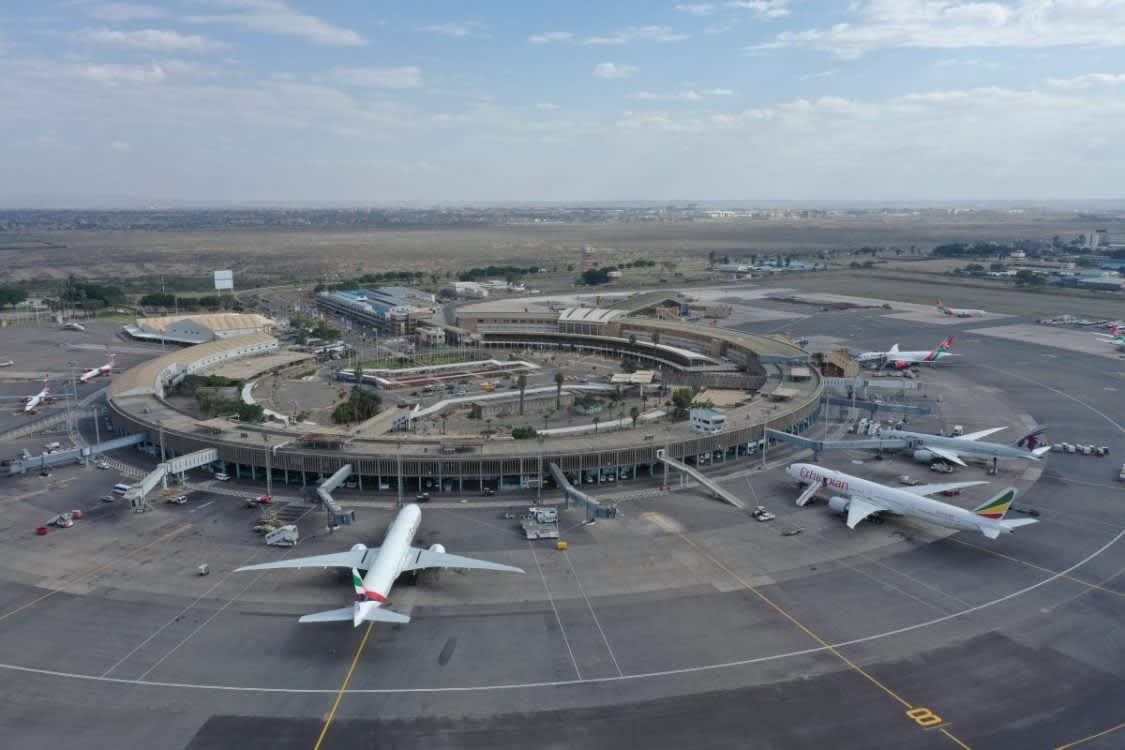
The Law Society of Kenya (LSK) has called for the government to make public all details surrounding the multi-billion-shilling expansion of Jomo Kenyatta International Airport (JKIA), citing concerns over transparency, compliance with procurement laws, and whether the public was adequately involved before the contract was awarded.
The demand comes as the government prepares to implement the Ksh375.4 billion airport modernisation project, which reports indicate was awarded to China Communications Construction Company through the National Infrastructure Fund (NIF). However, authorities are yet to officially release comprehensive information on the agreement, including the procurement process, financing structure, and the terms under which the deal was concluded.
Speaking during an interview on Spice FM on Wednesday, June 17, LSK President Charles Kanjama said the legal body was seeking answers on several aspects of the project, particularly whether the current arrangement bears any connection to the controversial Adani airport deal that was previously challenged in court before being abandoned.

“As the LSK, we want to understand many things. Is it one that had been covered by the courts in the Adani case? Of course, the court in the Adani case was talking about a concessional agreement, but in this one, it is titled differently. We want to understand that,” Kanjama said.
According to Kanjama, the distinction in the naming and structure of the agreement raises questions that require clarification, especially given the legal scrutiny that surrounded previous attempts to involve private investors in the management and expansion of JKIA.
The LSK boss also questioned whether the procurement process met all legal requirements, including provisions on public participation and competitive bidding. He argued that Kenyans have a right to know how the contract was awarded and whether all statutory procedures were followed before the project moved to the implementation stage.
His remarks come amid growing scrutiny over reports linking a prominent Zimbabwean businessman, described as a close associate of President William Ruto, to the deal. The businessman has reportedly been linked to a company that entered into a joint venture arrangement with the Chinese contractor, sparking renewed debate over transparency and accountability in major government procurement projects.
The reported involvement of the businessman has triggered fresh concerns among critics, who argue that public infrastructure projects of such magnitude should be subjected to the highest standards of disclosure to eliminate perceptions of preferential treatment or conflict of interest.
Kanjama further expressed concern over some of the eligibility requirements contained in the tender documents, suggesting that they may have restricted competition by making it difficult for many otherwise qualified firms to participate.
“If you look at some of the requirements in the tendering process, they were quite restrictive. Many qualified firms were locked out by demands requiring tendering companies to have done a Ksh100 billion project in Kenya,” he said.
He noted that such conditions could have significantly narrowed the pool of eligible bidders, potentially leaving only a handful of firms capable of meeting the threshold.
According to him, this raises questions about whether the procurement process offered a genuinely competitive environment and whether taxpayers ultimately received the best value from the bidding exercise.
The concerns add to a broader conversation about procurement practices in Kenya, particularly in relation to large-scale infrastructure projects where questions over transparency, competition, and public accountability frequently emerge.
Even so, Kanjama emphasised that the LSK is not opposed to the modernisation of JKIA. He acknowledged that Kenya's main international gateway requires substantial upgrades to improve its infrastructure, expand capacity, and maintain its competitiveness against other major airports in the region.
His comments come as the government pushes ahead with plans to transform JKIA through a series of phased developments expected to enhance passenger handling, improve operational efficiency, and accommodate growing air traffic demand.
While reports have outlined some of the anticipated improvements under the project, the government has yet to publicly release the complete contract documentation or provide a detailed breakdown of the project's scope, financing arrangements, and implementation framework.
The latest debate follows earlier statements by President William Ruto, who indicated that construction on the airport expansion programme would commence in 2026 as part of a long-term master plan extending to 2045. The President also revealed that part of the funding for the project would come from proceeds generated through the planned privatisation of the Kenya Pipeline Company.
As preparations for the project gather pace, pressure is mounting on the government to disclose more information about the deal, with stakeholders arguing that transparency will be critical in building public confidence and avoiding the controversies that have surrounded previous attempts to overhaul the country's busiest airport.
