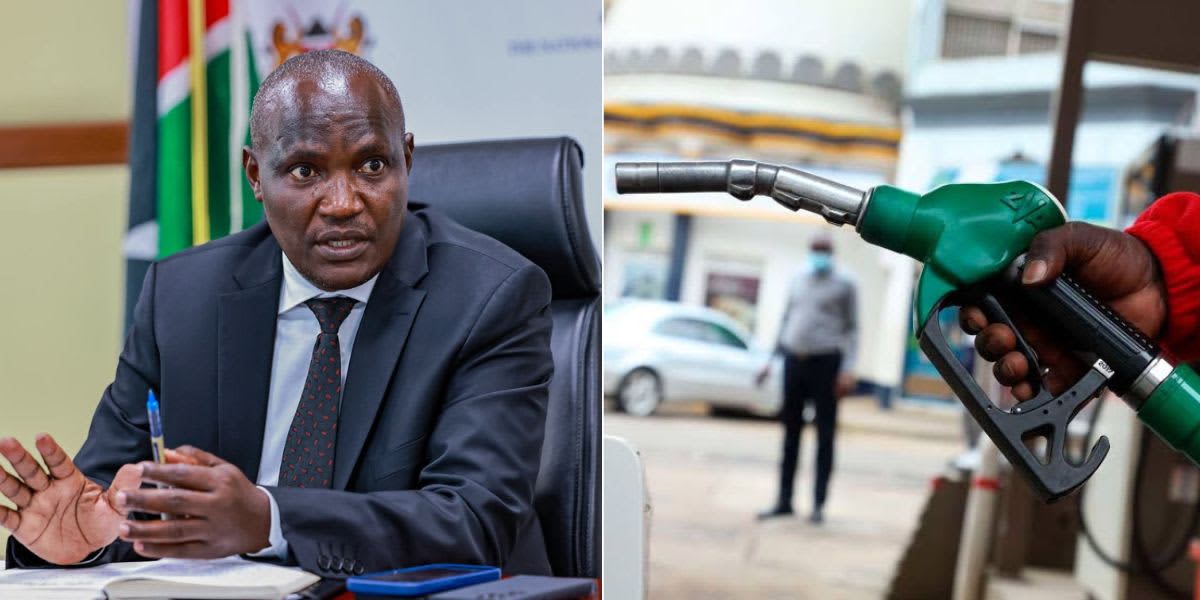
The government is weighing additional measures to shield Kenyans from elevated fuel costs, including extending the reduced 8 per cent Value Added Tax (VAT) on petroleum products beyond October and rolling out further subsidies.
Treasury Cabinet Secretary John Mbadi revealed that the government was exploring additional funding options for fuel subsidies as it assesses the impact of the ongoing Middle East conflict on global oil prices.
Mbadi spoke on Tuesday, August 11, during a media briefing at the Treasury Building, three days before the Energy and Petroleum Regulatory Authority (EPRA) is due to announce new pump prices for the August-September pricing cycle.
With the 8 per cent VAT relief set to expire in October, Treasury is considering whether to prolong the tax reduction. Mbadi indicated that the decision would largely hinge on how the unpredictable situation in the Middle East develops.

“You know the situation in the Middle East is quite unpredictable, and I do not want to talk about it with authority. We will monitor the situation as it unfolds,” Mbadi said.
Treasury is also weighing the need to increase tax collections against the possibility that higher fuel prices could fuel inflation and deepen financial pressure on households and businesses.
Mbadi disclosed that officials were searching for alternative sources of funds that could support fuel subsidies should international oil prices deteriorate further.
“As much as we are looking for tax revenue in terms of VAT, we must understand that if it is causing inflation, then it is going to have more harm on the economy. So we are balancing the two,” he said.
The latest proposal follows the government's decision in July to extend the 8 per cent VAT on petroleum products for another three months. The relief was initially introduced to cushion consumers from the effects of the Middle East conflict and rising international oil prices.
Energy and Petroleum Cabinet Secretary Opiyo Wandayi also announced a Ksh945 million subsidy drawn from the Petroleum Development Levy for the July-August pricing period. The funds were intended to help maintain existing pump prices.
The interventions have been part of broader efforts to protect households and businesses from volatility in international oil markets. The Government-to-Government fuel import arrangement has also been credited with helping maintain supplies amid disruptions to shipping routes in the Middle East.
The government's latest proposal comes under close scrutiny ahead of the next EPRA review. Current prices in Nairobi stand at Ksh214.03 per litre for Super Petrol, Ksh222.86 for Diesel and Ksh191.38 for Kerosene.
The fuel price pressure comes as Treasury projects that Kenya's economy will regain momentum and expand by 5.1 per cent in 2027.
However, the government has cautioned that sustained increases in international oil prices could raise transport and production costs, drive inflation higher, exert pressure on the shilling and increase the country's import bill.
