
The Independent Electoral and Boundaries Commission (IEBC) has rejected allegations of an elaborate scheme to move voter registration materials into neighbouring Uganda as part of an alleged plan to influence the 2027 General Election.
In a statement issued on Sunday, September 27, the electoral agency dismissed claims of illegal voter registration, unlawful transfer of voters and registration of foreign nationals, saying no credible evidence had been presented to substantiate the allegations.
"The stories on electoral malpractice or illegality relating to the registration of voters, illegal transfers of voters and alleged registration of foreigners as voters in Kenya and abroad remain unsubstantiated and untrue," the Commission said.
The statement came a day after KTN released a teaser on Saturday evening, September 26, indicating that an investigation had uncovered alleged movement of voter registration materials into Uganda.
The Swam border area in Trans Nzoia County was identified as a key area in the allegations, with the report also mentioning several politicians in connection with the claims.
However, IEBC maintained that the ongoing voter registration exercise was being carried out in all 290 constituencies in accordance with the Constitution and relevant electoral laws.
The Commission said registration was restricted to designated and gazetted centres, where the process was being overseen by Registration Officers and conducted by trained personnel.
IEBC also sought to distance itself from allegations involving the issuance of identification documents to foreign nationals, pointing out that it does not have the mandate to issue Kenyan national identification cards or passports.
The Commission stated, “In addition, IEBC does not issue National IDs or Kenyan passports. These functions fall within the mandate of the relevant State Agencies responsible for identification, citizenship and immigration."
Concerns over possible voter registration irregularities have increasingly featured in political debate ahead of the 2027 elections, particularly in counties bordering Uganda. Trans Nzoia Governor George Natembeya has been among the leaders who have repeatedly raised concerns over activities along the Kenya-Uganda border, with his county featuring prominently in the latest allegations.
The issue was also raised by Democratic Party leader Justin Muturi, who on Saturday, September 26, called for the IEBC to summon Interior Cabinet Secretary Kipchumba Murkomen over remarks concerning Kenyans living along the Uganda border.
As questions surrounding the integrity of the voter registration process intensified, IEBC said it had put in place both administrative and technological measures to prevent unauthorised registration.
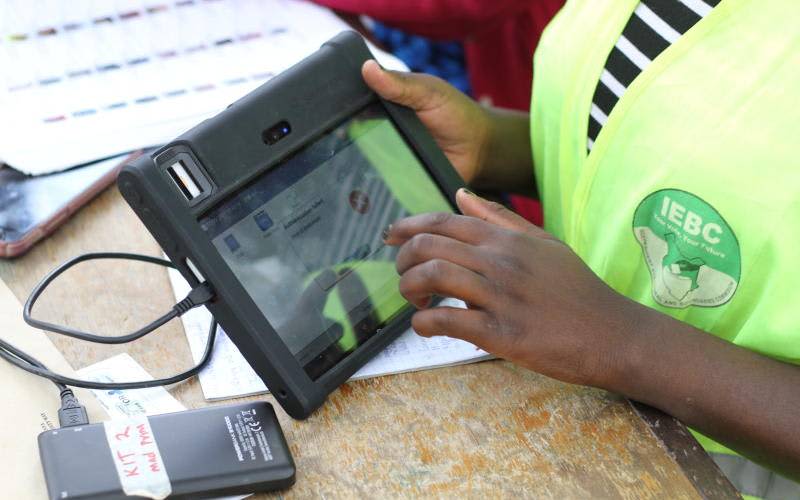
The electoral agency explained that its Kenya Integrated Election Management System (KIEMS) kits were configured to operate only within an authorised electoral environment. According to the Commission, the kits can only be activated by designated Registration Officers.
IEBC added that Registration Officers may delegate operation of the equipment to trained Registration Clerks through unique passwords. The clerks are assigned to specific electoral areas, while voter registration itself is limited to officially gazetted registration centres.
Addressing allegations that registration equipment could have been moved to neighbouring countries to facilitate unlawful voter registration, IEBC said, "No KIEMS Kit has been misplaced or reported missing, intercepted or unlawfully moved to unauthorised places or foreign destinations."
The Commission further explained that KIEMS kits used during the Enhanced Continuous Voter Registration exercise conducted between March 30 and April 28, 2026, were secured at designated police stations or IEBC offices. The equipment was subsequently returned to IEBC warehouses after the registration exercise, according to the electoral agency.
IEBC Clarifies Position on Diaspora Voters
IEBC also addressed concerns surrounding Kenyans living outside the country, including citizens residing in Uganda, Tanzania and South Sudan.
The Commission said living outside Kenya does not remove a Kenyan citizen's constitutional right to participate in the country's electoral process.
IEBC said it was progressively expanding voter registration for Kenyans in the diaspora as part of efforts to facilitate their participation in elections.
The electoral agency urged members of the public, media organisations and political parties or groups with evidence of voter registration irregularities to submit the information for investigation.
IEBC said it remained willing to engage citizens and other stakeholders on concerns surrounding the electoral process, adding that such engagement was important in promoting accountability and ensuring its personnel, systems and procedures remained compliant with the law.
