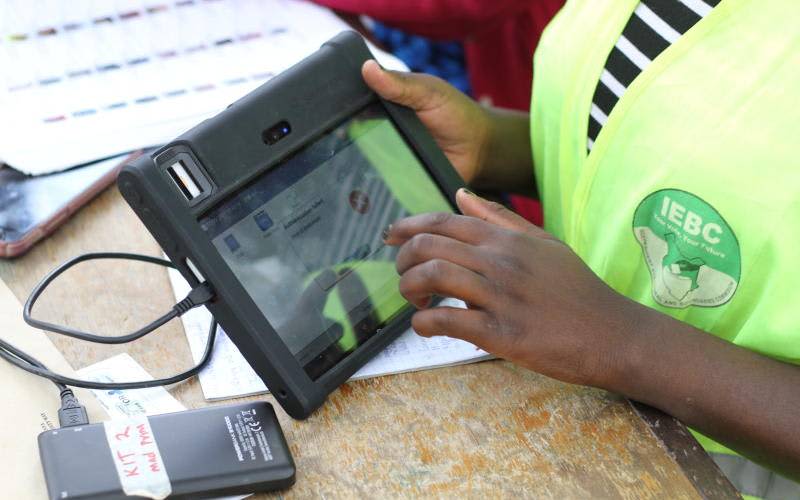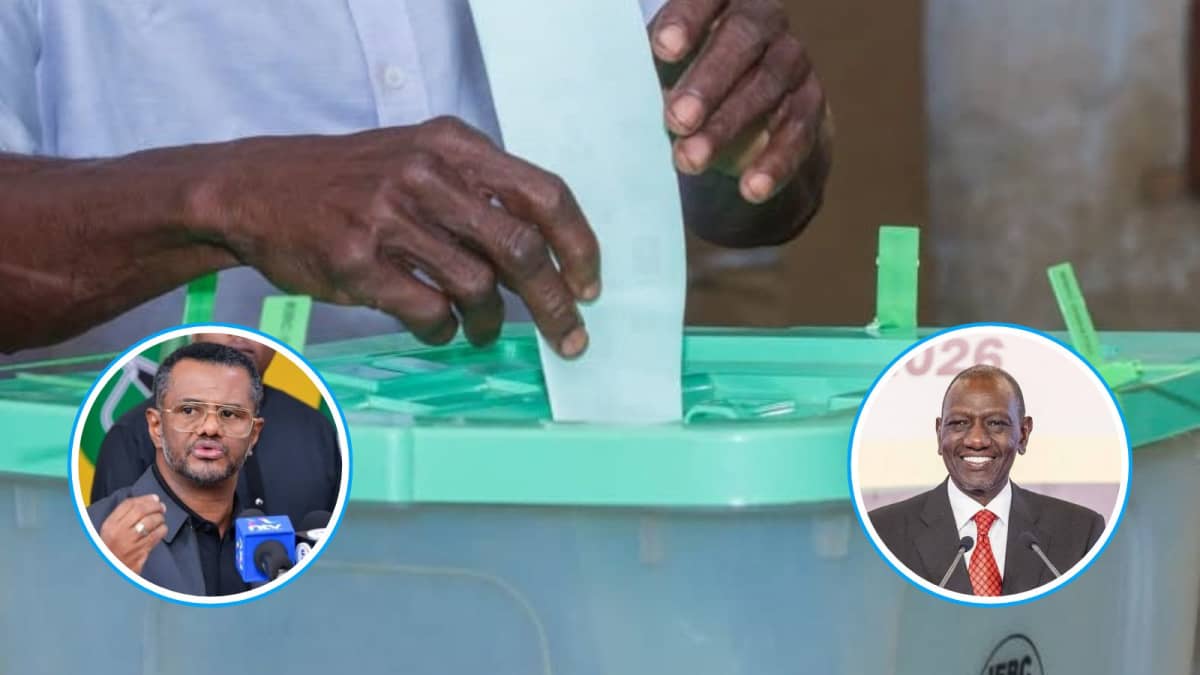
The Independent Electoral and Boundaries Commission (IEBC) has dismissed controversial remarks by United Democratic Alliance (UDA) Secretary-General Hassan Omar suggesting that the biometric details of deceased Kenyans could be used to cast votes in the 2027 General Election.
IEBC Commissioner Alutalala Mukhwana on Monday, September 14, said the commission’s biometric voter identification system was designed to verify voters using unique biological features, making it impossible for deceased people to participate in the election.
“The machines we have rely on biometrics such as fingerprints and iris scans. So how can a dead person register as a voter or even vote?” he posed while speaking on the sidelines of a forum hosted by the National Cohesion and Integration Commission (NCIC).
Mukhwana also took issue with politicians whose remarks he said risk undermining public confidence in the electoral commission ahead of the 2027 polls.
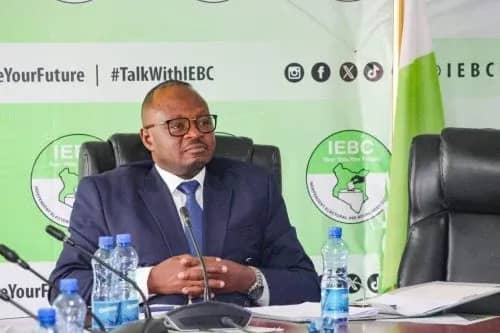
“We are pleading with politicians to exercise caution because we have got to the point of being tired of the statements that are hateful and erode public trust in IEBC. They have crossed the line,” Mukhwana declared.
The commissioner's response followed remarks by Omar that triggered a political storm after he appeared to suggest that the fingerprints of people who die before or on election day could be used to cast ballots.
Speaking in Mombasa, Omar urged supporters to fight for every vote, including those of people who had died. “On election day, we have to fight for every vote. Even if someone has died, we should take their fingerprint before they are buried, use it in the BVR system and cast a vote even for someone who died that very day,” Omar said.
“Even the one we are burying today, that is our vote because that vote is our bullet, our shield. We cannot go back to where we were before.”
Omar later maintained that his remarks had been taken out of context, but they quickly became a major talking point in the political debate over the credibility of the 2027 election.
The comments prompted opposition leaders Eugene Wamalwa and Justin Muturi to accuse Omar and his political allies of contemplating the use of deceased voters to inflate President William Ruto’s vote tally.
Speaking during an opposition tour in Hola, Tana River County, on Sunday, September 13, Wamalwa argued that the remarks reflected concerns within Ruto’s camp over the president's political support.
“The people of Kenya have realised that Ruto’s numbers do not add up. Now people in UDA have started saying that they will even wake up those who have died to vote,” Wamalwa said, adding, “Today, we are telling President Ruto and your UDA Secretary-General: we will not allow the dead to come and vote.”
Muturi, who accompanied Wiper leader Kalonzo Musyoka during the Tana River tour, also singled out Omar over the remarks. “I have heard my brother Eugene speak. The Secretary-General of UDA, Hassan Omar, comes from Mombasa and is a member of the East African Parliament. The other day he made these remarks, and he was quoted by newspapers yesterday. He has not denied them,” Muturi said.
Muturi further accused the government of seeking to compensate for declining political support by relying on votes allegedly linked to deceased Kenyans.
The controversy has also drawn concern from government officials, with Prime Cabinet Secretary Musalia Mudavadi warning politicians against statements that could undermine efforts to rebuild public confidence in the electoral process.
On the opposition side, former Deputy President and DCP leader Rigathi Gachagua and Nairobi Senator Edwin Sifuna separately demanded answers from IEBC Chairperson Erastus Ethekon on how the commission is cleaning the voters' register and preventing possible abuse of the electoral system.
The issue has consequently shifted from political rhetoric to questions over the security of the voters' register and the safeguards in place ahead of the 2027 election.
The remarks have also raised questions over whether Omar was merely using political rhetoric to emphasise aggressive voter mobilisation or drawing attention to vulnerabilities that could potentially be exploited during the election.
Muturi also called on the IEBC to ensure presidential votes are counted and declared transparently at polling stations and that results announced at the grassroots level cannot subsequently be altered.
The controversy comes against the backdrop of mounting political disputes over the credibility and independence of the IEBC ahead of the 2027 polls.
Ethekon has previously warned that repeated claims that the electoral commission has been compromised could damage public confidence in the election. “Unfortunately, even our media reports without fact-checking. We need to fact-check these wild allegations that are clearly calculated to create in the minds of Kenyans an idea that the elections are not going to be fair,” Ethekon said.