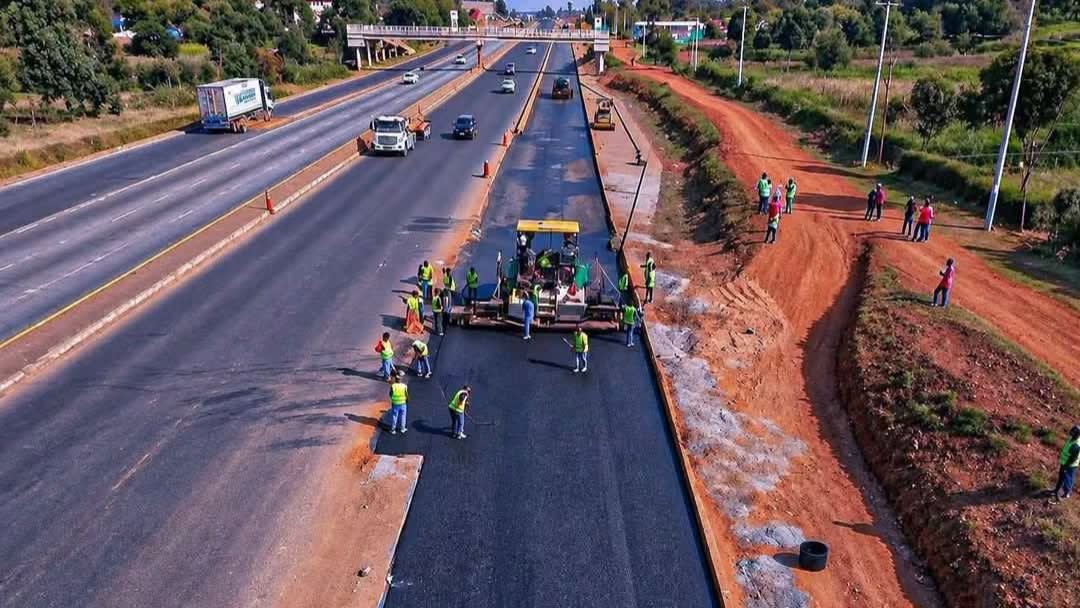
The Public Private Partnership (PPP) Petition Committee has dismissed a petition filed by the Consumers Federation of Kenya (COFEK) seeking to challenge the proposed Ksh8 per kilometre toll charges on the Rironi-Mau Summit highway.
The committee struck out the petition after determining that the consumer lobby had failed to file it within the seven-day statutory window stipulated under the Public Private Partnerships Act.
Under the law, any party seeking to contest a decision involving a PPP project must lodge a petition within seven days. However, the committee found that COFEK had exceeded the prescribed period.
In its ruling, the committee also observed that the lobby group had not specified when the Kenya National Highways Authority (KeNHA) published the disclosure document outlining details of the proposed highway project.

Nevertheless, the committee established that the document was already in existence before September 2, 2025, when public consultations on the project commenced. This meant COFEK had submitted its petition outside the legally permitted timeframe.
Through the petition, COFEK had sought orders compelling KeNHA to disclose critical project documents, including tolling plans, feasibility studies, procurement records and public participation reports.
The lobby group argued that the disclosure document lacked sufficient details on how toll charges would be calculated, whether motorists would have access to toll-free alternative routes, the project's affordability and how financial risks would be distributed.
COFEK had asked the committee to compel the production of the documents, scrutinise them and establish whether the government had followed the requirements of the PPP Act in developing the highway project.
The decision comes approximately four months after KeNHA announced that motorists would pay Ksh8 per kilometre to use the Rironi-Mau Summit highway once it becomes operational under a 30-year public-private partnership arrangement.
In a disclosure notice dated June 23, 2026, the authority confirmed that the highway would operate under a tolling system, with charges applying to motorists using both the Rironi-Naivasha-Gilgil and Rironi-Mai Mahiu-Naivasha routes.
KeNHA indicated that motorists travelling between Rironi and Naivasha would pay Ksh8 per kilometre, while those heading from Naivasha towards Mau Summit would be charged Ksh8.50 per kilometre.
Meanwhile, construction of the Ksh200 billion highway project has been divided into different phases, with two Chinese contractors undertaking the works.
China Road and Bridge Corporation (CRBC) is handling the first phase covering the Rironi-Naivasha stretch, while Shandong Hi-Speed Road and Bridge International Engineering is responsible for the Gilgil-Mau Summit section.
The ongoing expansion will see the existing two-lane highway upgraded to four lanes between Rironi and Naivasha. The section connecting Naivasha to Mau Summit will subsequently be expanded into a six-lane highway.