Kenya's economy is projected to grow by 4.8 per cent in 2026, amid rising inflation, global economic uncertainties and pressure on the country's ability to sustain its recent economic gains.
The projection, contained in NCBA Group's revised 2026 Economic Outlook released on Tuesday, November 3, represents a reduction from the bank's earlier estimate of 5.1 per cent.
The bank attributed the expected moderation to external shocks, including geopolitical conflicts, volatile international commodity prices, changing weather patterns and tighter financial conditions in major economies.
Speaking during the NCBA Economic Forum 2026 in Nairobi, Group Managing Director and CEO John Gachora said Kenya's economy had demonstrated resilience but warned that its ability to withstand repeated shocks was limited.
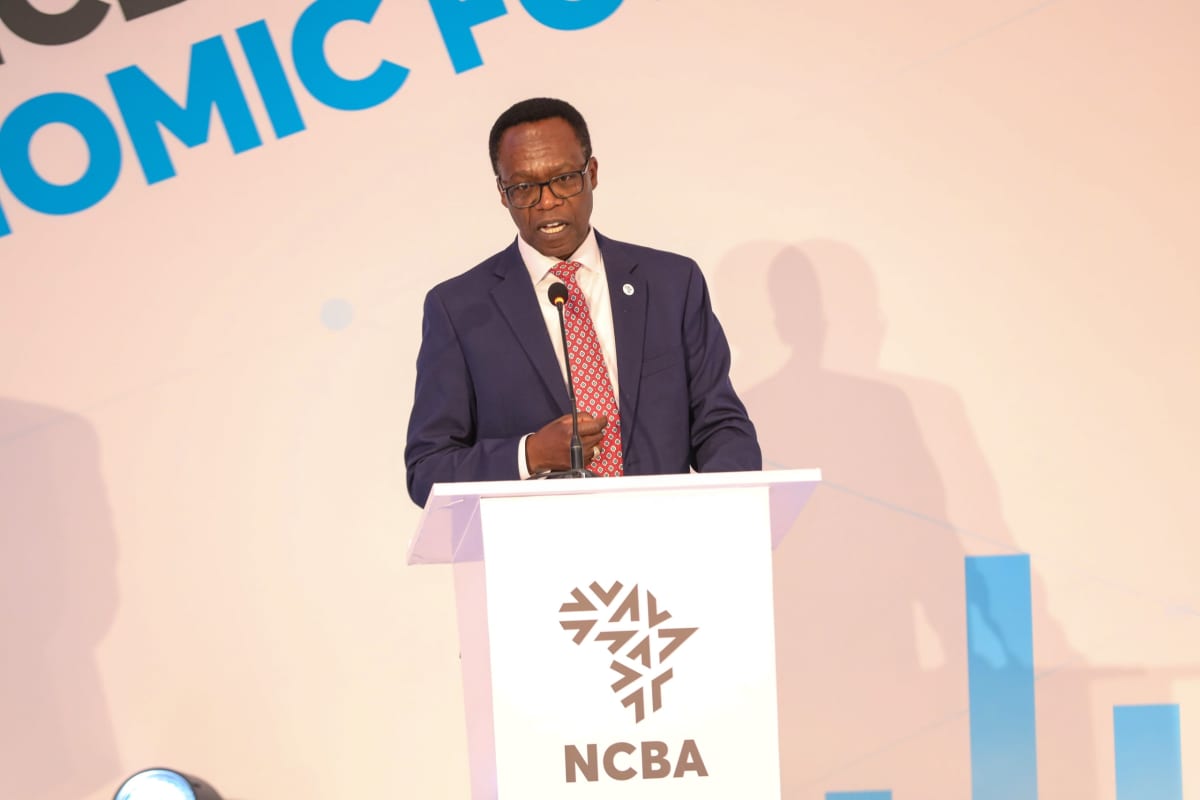
“The year 2026 has been characterized by a convergence of shocks, including the crisis in the Middle East, the ongoing Russia-Ukraine conflict, a sudden tightening of monetary policy in several key economies and volatility in sovereign bond markets.
“While our economy has remained resilient, our capacity to absorb successive shocks is not limitless. Our task is therefore twofold: to safeguard the gains made so far while accelerating growth,” Gachora addressed.
NCBA expects economic growth to range between 4.0 and 5.0 per cent in 2027, citing uncertainty surrounding international political developments, commodity prices and Kenya's upcoming General Election.
The projections come against the backdrop of rising consumer prices, with the Kenya National Bureau of Statistics (KNBS) reporting that annual inflation increased to 7.3 per cent in October 2026 from 6.8 per cent in September.
The increase was largely driven by higher prices of food, transport and housing-related items. Food and non-alcoholic beverages recorded annual inflation of 10.2 per cent, while transport costs increased by 17.1 per cent.
Meanwhile, Central Bank of Kenya (CBK) data showed that the shilling exchanged at Ksh129.97 against the US dollar on November 3. Foreign exchange reserves stood at USD14.74 billion (approximately Ksh1.92 trillion) as of October 29, equivalent to 5.9 months of import cover, according to the CBK's October 30 weekly bulletin. This was lower than the USD14.93 billion (approximately Ksh1.94 trillion) recorded on October 1, when reserves provided 6.1 months of import cover.
National Treasury Cabinet Secretary John Mbadi projected that Kenya's economy would expand by 5.1 per cent in 2027, maintaining a more optimistic outlook than NCBA's forecast range.
Mbadi said sustaining economic stability would require improved revenue collection, prudent debt management and better control of public expenditure, particularly as interest payments and pension obligations continued to put pressure on government finances.
“We project economic growth of 5.1 per cent in 2027, with inflation remaining within target and the shilling maintaining stability. Safeguarding these gains will require sustained fiscal discipline, improved revenue mobilisation and better management of public expenditure,” he said.
Separately, Chairperson of the President's Council of Economic Advisors David Ndii identified investment in agriculture, manufacturing, infrastructure and information technology as important drivers of future economic expansion.
Ndii disclosed that the government was tracking an investment pipeline worth approximately USD45.7 billion (Ksh5.94 trillion) across infrastructure, manufacturing, agriculture and ICT.
He also highlighted a proposed National Infrastructure Fund expected to mobilise USD10 billion (approximately Ksh1.30 trillion) and a proposed USD24 billion (approximately Ksh3.12 trillion) investment in the Lamu Port and oil complex.
The figures represent planned investment opportunities and proposals rather than confirmation that the funding has been secured or the projects fully approved.
Ndii said improving productivity, expanding exports and directing investment towards job-creating sectors would be critical to strengthening Kenya's economic performance.