
Kenya’s affordable housing agenda must shift beyond constructing homes to addressing the financial barriers that prevent millions of citizens from owning them, the Kenya Mortgage Refinance Company (KMRC) has warned.
KMRC Chief Executive Officer and Managing Director Johnstone Oltetia noted that the country faces a double challenge — a shortage of affordable housing units and limited access to financing, particularly among Kenyans earning irregular incomes.
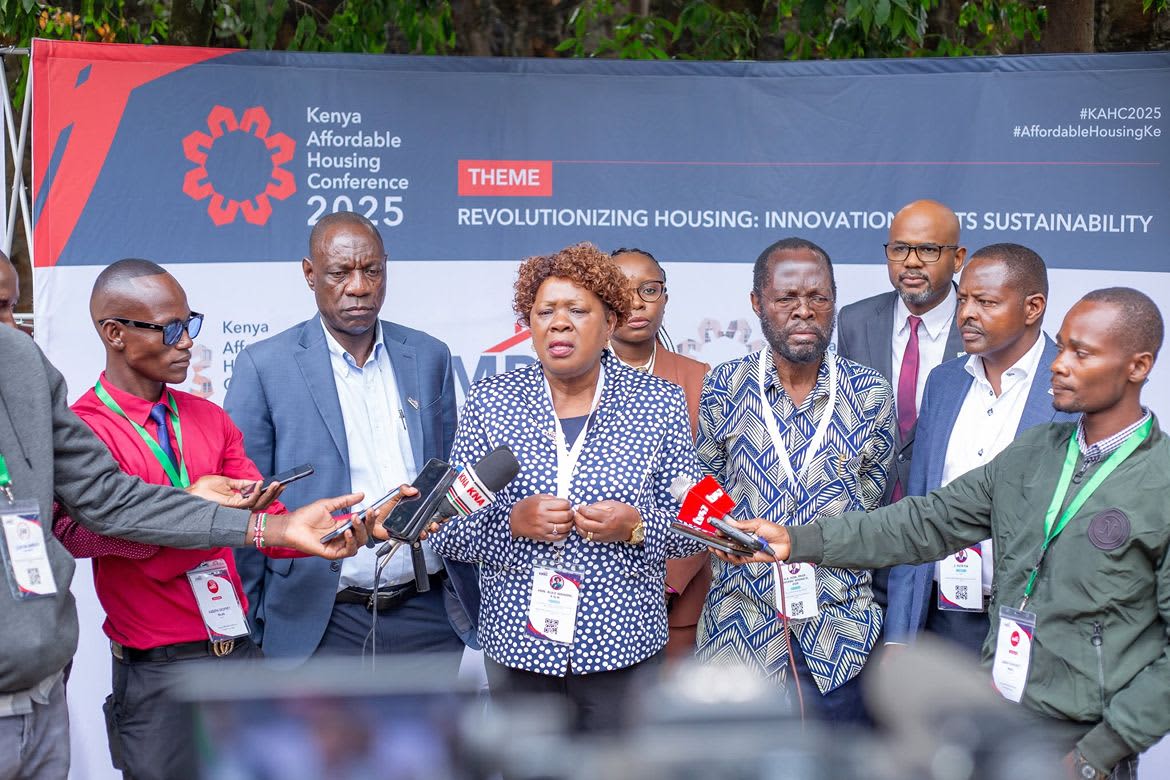
This comes as KMRC prepares to host the fifth Kenya Affordable Housing Conference from August 20 to 21 at Lake Naivasha Resort in Nakuru County.
“This year's theme speaks to both the scale of the challenge and the promise before us: to close the twin gaps that constrain access at scale,” Oltetia said, as quoted by a press release obtained by Vantage Ke.
He identified the supply-side shortage of affordable homes and the demand-side financing gap as major obstacles to expanding homeownership.
“On the supply side, the shortfall in affordable units, and on the demand side, the millions of Kenyans locked out by limited housing finance and informal, irregular incomes and to do so in ways that are inclusive, resilient, and built to last,” he added.
The conference will focus on expanding housing finance to Kenyans who have traditionally struggled to qualify for conventional mortgages, including informal workers, micro-entrepreneurs and SACCO members.
Participants from Kenya, South Africa, Tanzania and India are expected to examine alternative lending models capable of serving households outside the formal employment sector.
The discussions will also explore blended finance, development finance institutions, mortgage liquidity facilities and other mechanisms that could increase the amount of capital available for affordable homeownership.
Land ownership and administration will form another key part of the discussions, with stakeholders examining how title regularisation and improved land governance could unlock investment and accelerate housing development.
KMRC will also place climate resilience and sustainability on the agenda, with delegates expected to examine green construction, resource efficiency and climate-adapted housing while considering how such measures can be implemented without pushing homes beyond the reach of ordinary buyers.
The conference will feature presentations on Kenya’s Residential Property Price Index and emerging housing market trends, providing data on affordability, demand and investment patterns.
Technology will also take centre stage, with stakeholders expected to explore modern construction methods, artificial intelligence and other innovations that could reduce building costs and speed up housing delivery.
International experts from Japan, India and South Africa will share experiences from their respective housing finance systems, with KMRC seeking to identify approaches that could be adapted to Kenya and other African markets.
Importantly, the organisers plan to include homeowners' experiences in the discussions, focusing on the barriers households encounter when trying to purchase homes.
The conference will culminate in the inaugural Kenya Affordable Housing Awards, which will recognise mortgage lenders for innovation, partnerships, customer experience and efforts to expand homeownership.
The broader discussions come as Kenya continues to grapple with the affordability of housing and the challenge of enabling households outside the formal employment sector to access long-term housing finance.
KMRC's central argument is that increasing the number of houses alone will not solve Kenya's housing crisis if millions of potential buyers remain unable to obtain financing.
