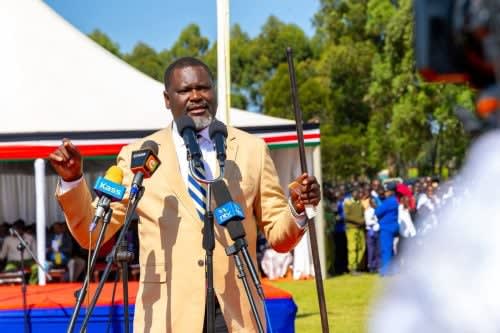
The National Cohesion and Integration Commission (NCIC) has given Public Service Cabinet Secretary Geoffrey Ruku seven days to respond to proposed corrective measures arising from its findings over remarks he made in Tharaka-Nithi in July.
In a determination issued on Wednesday, October 7, the commission found that Ruku’s comments were divisive and unfairly linked political and development grievances to an entire ethnic community.
“The Commission finds that Hon. Geoffrey Kiringa Ruku’s remarks at Kiang’ondu, Tharaka-Nithi County, in July 2026 crossed from legitimate advocacy for identity and equitable development into divisive ethnic generalisation and collective blame,” NCIC stated.
As part of the corrective measures, NCIC directed Ruku to immediately stop repeating, promoting or making similar remarks.
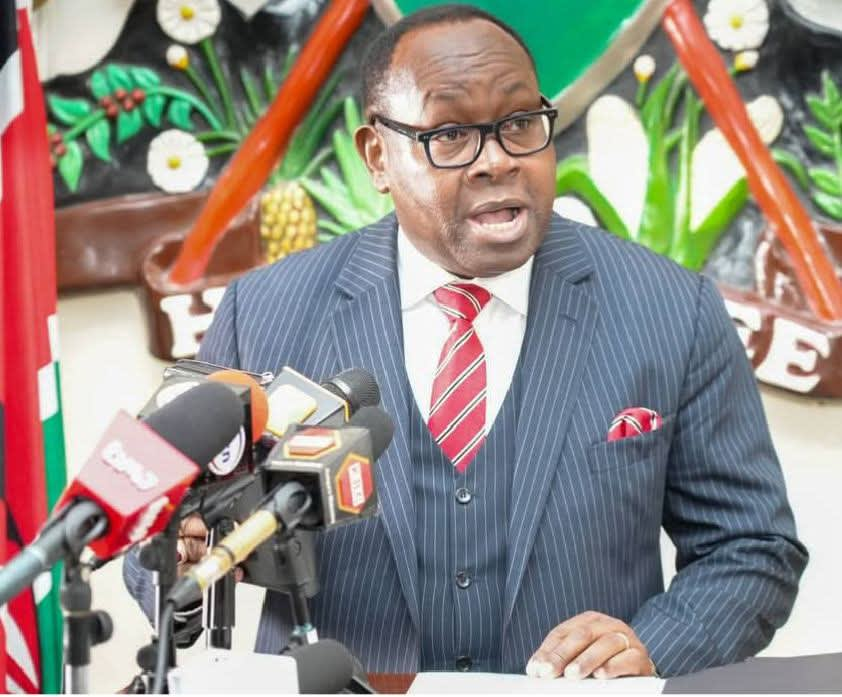
The commission also proposed that Ruku issue a public withdrawal, in both English and Kiswahili, of statements suggesting that Kikuyu people collectively consider Kenya their property or are responsible for disparities in development and public appointments.
NCIC said the wording of the proposed withdrawal would have to be approved by the commission as part of the reconciliation process.
The determination further calls for an audit of ethnic diversity in national public institutions to establish whether they comply with constitutional and legal requirements on representation.
The exercise will be based on official staffing and appointment records rather than assumptions drawn from individuals’ surnames. Institutions will also be given an opportunity to verify the findings before any reports are published.
Ruku is additionally expected to participate in discussions addressing verified disparities in public appointments and development, as well as a dialogue on equitable representation.
NCIC noted that Ruku’s position as a Cabinet Secretary amplified the impact of his remarks, placing a greater responsibility on him to exercise restraint in his public statements.
The commission also considered Ruku’s repeated reference to stepping on former Deputy President Rigathi Gachagua’s neck to be figurative political language. However, it cautioned that such imagery should be used with greater care by a public official.
Ruku appeared before NCIC on September 1 accompanied by his lawyer, where he acknowledged making the remarks and maintained that he was exercising his constitutional right to address issues surrounding ethnic identity, regional development and public appointments.
He had previously described his appearance before the commission as a cordial engagement during which outstanding issues were clarified.
NCIC acknowledged Ruku’s subsequent peace-building efforts, including returning a symbolic axe and taking part in reconciliation activities, describing them as positive steps.
However, the commission said the gestures did not overturn its findings or bring the corrective process to an end.