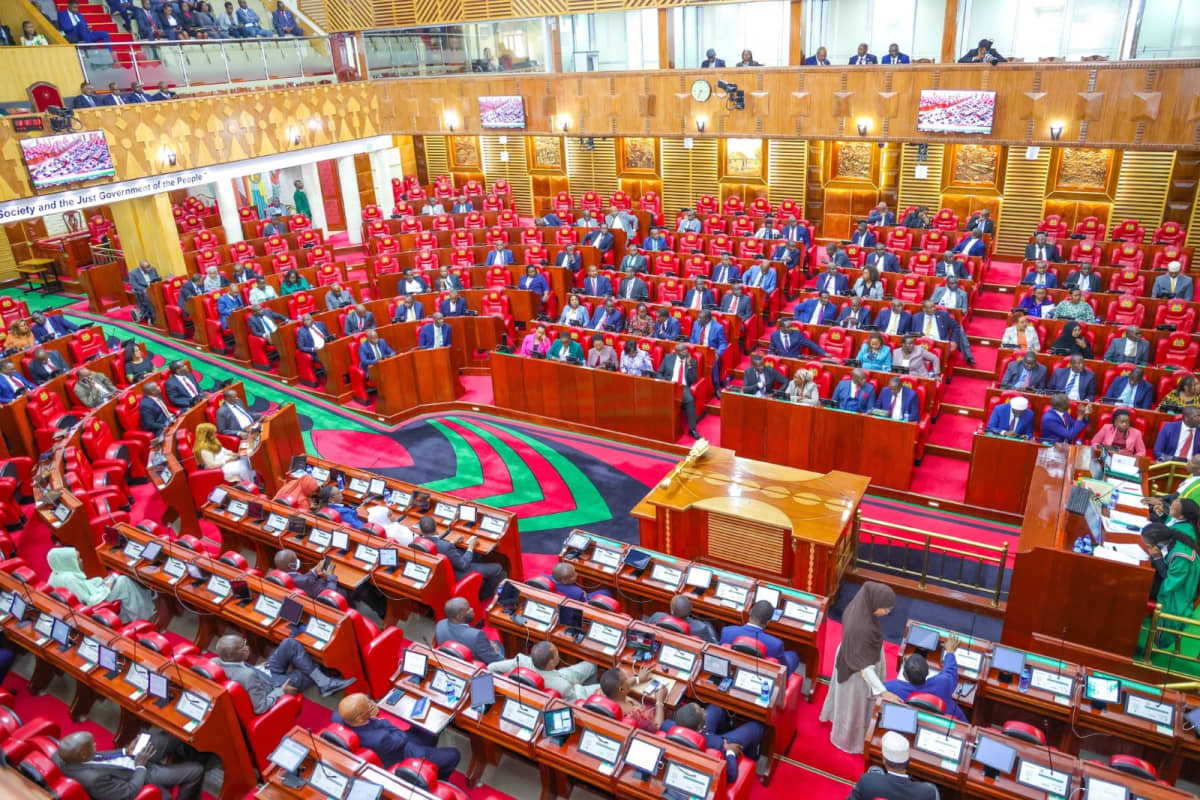


Kenyans who rely on unlimited home internet packages could face changes to how their services are billed if Parliament adopts proposed regulations requiring internet providers to charge customers according to their actual data consumption.
The issue emerged on Tuesday, November 10, when Telkom Kenya, a company fully owned by the Kenyan Government as of 2023, asked the National Assembly Committee on Communication, Information and Innovation to reconsider provisions in the Kenya Information and Communications (Amendment) Bill, 2025, warning that a uniform billing system could disrupt existing broadband arrangements.
Appearing before the committee, Telkom Chief Executive Officer (CEO) Mugo Kibati urged lawmakers to expressly protect unlimited and speed-based internet packages, arguing that consumers should retain access to different billing options.
He also called for providers to be given at least 18 months to comply with any new requirements introduced through the proposed legislation.

Background
The Bill, sponsored by Aldai Member of Parliament (MP) Marianne Kitany, seeks to introduce mandatory metered internet billing, under which internet service providers would be required to monitor individual customer consumption, assign subscribers unique meter numbers and generate invoices based on usage.
It would also require providers to submit information about their billing systems, including subscriber meter numbers, to the Communications Authority of Kenya (CA) at least once every financial year.
The proposed changes are intended to protect consumers from exploitation by ensuring they pay according to the internet services they consume.
Reactions
However, Kibati argued that the proposed framework could impose unnecessary obligations on a sector already experiencing growth under existing pricing arrangements.
He told lawmakers that mobile internet accounts for approximately 96 per cent of data subscriptions and is already billed according to consumption, while fixed broadband represents the remaining four per cent.
According to the CEO, fixed broadband subscriptions are growing by more than 30 per cent annually, raising questions about the need to introduce additional regulatory requirements.
"Sometimes you can go overboard in trying to protect consumers that you actually kill a nascent, growing sector," Kibati warned.
The company proposed an alternative framework requiring providers to disclose their billing models, charges and fair usage policies before customers subscribe.
It also wants customers to have free access to information about their data consumption, receive itemised bills upon request and access effective mechanisms for resolving billing disputes.
Telkom further proposed independent audits of billing accuracy where necessary, alongside the submission of aggregated subscriber information to the regulator instead of individual customer records.
The concerns come amid growing scrutiny of the proposed legislation, with the Communications Authority also cautioning Parliament against making consumption-based billing mandatory across the internet sector.
In submissions presented to the same parliamentary committee on November 3, the regulator proposed alternative consumer protection measures, including real-time data usage dashboards, alerts when customers reach 50, 80 and 100 per cent of their consumption limits, and optional spending caps.
The CA argued that mandatory usage-based billing could make internet expenditure less predictable, particularly for households, students and small businesses.
The regulator also recommended clearer billing information, independent verification of metering systems and affordable broadband packages for low-income consumers.
Meanwhile, Telkom raised concerns that persistent subscriber identifiers and annual reporting requirements could expose sensitive personal information without adequate safeguards under the Data Protection Act.
Committee chairman John Kiarie welcomed the company's submissions, saying Parliament would be disadvantaged if it legislated on the telecommunications industry without consulting operators.
The proposed amendments remain under parliamentary consideration and have not yet become law.