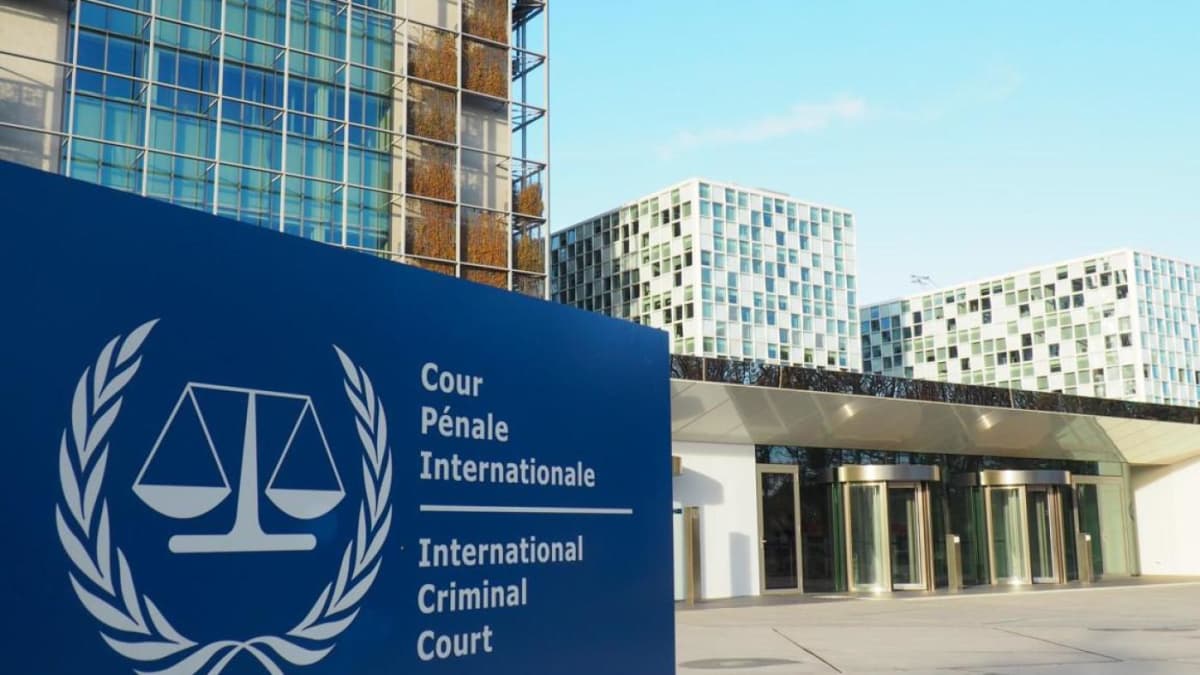
Human rights organisation VOCAL Africa has asked the International Criminal Court (ICC) to closely monitor Kenya over what it describes as a rapidly deteriorating political, security and human rights situation ahead of the 2027 General Election.
In a letter to the ICC Prosecutor dated August 19, 2026 and obtained by Vantage Ke, the organisation called on the Office of the ICC Prosecutor to take formal notice of developments in Kenya, warning that the country could be heading towards widespread human rights violations if emerging warning signs are not addressed.
VOCAL Africa said the situation could create conditions for “widespread human rights violations, crimes against humanity, ethnic cleansing and in the worst circumstances, genocide.”
The organisation acknowledged that the ICC can only intervene where the requirements of the Rome Statute are met, but said its communication was intended as an early warning appeal under Article 15 of the Rome Statute.
The organisation cited Kenya's 2007–2008 post-election violence as a warning of how political intolerance, ethnic mobilisation, inflammatory rhetoric, organised gangs and institutional failures could combine to trigger mass violence.
'Normalisation of Political Goonism'
A major concern raised in the letter is what VOCAL Africa described as the “normalisation of political goonism”.
It claimed that since the Gen Z protests of 2024 and 2025, organised gangs had increasingly been deployed during political meetings, protests, civic forums and other public gatherings.
According to the organisation, the gangs have been used to intimidate, assault, rob and silence politicians, journalists, human rights defenders, women, young people, peaceful protesters and perceived political opponents.
VOCAL Africa listed recent incidents allegedly involving political gangs in Homa Bay, Mombasa, Nairobi, Kisumu, Kisii, Nyeri, Nyandarua, Nakuru and Kajiado counties.
It specifically cited violence during political activities in Homa Bay on Sunday, August 16, 2026, where it said at least two people, including a police officer, were killed and scores injured.
The organisation also raised concerns over attacks on journalists and human rights defenders in Mombasa, disruption of press conferences and protests in Nairobi, and the invasion of All Saints' Cathedral during a public forum on the national budget.
“The similarity in the methods, targets and apparent objectives of these incidents raises serious questions about the organisation, financing and political protection of the gangs,” VOCAL Africa stated.
It further alleged that in some cases, gangs had operated openly in the presence of police officers, while investigations had failed to result in visible accountability for alleged organisers, financiers and political beneficiaries.
“Arresting a few vulnerable young people while leaving their sponsors untouched cannot dismantle political violence,” the organisation said.
Warning Over Political Rhetoric
VOCAL Africa also accused political leaders of increasingly using rhetoric that could deepen ethnic divisions and political intolerance.
It said public rallies, media interviews and digital platforms were being used to spread ethnic hostility, threaten political opponents and mobilise supporters against people holding different political views.
The organisation warned that inflammatory language could become particularly dangerous when combined with organised gangs, ethnic mobilisation, institutional weakness and impunity. “Such rhetoric cannot be dismissed as ordinary political competition,” it stated.
It further claimed that references to particular communities as enemies, outsiders or obstacles to political power could create conditions for forced displacement, ethnic cleansing or other international crimes.
Institutions Accused of Failure
VOCAL Africa also criticised institutions tasked with preventing political violence, electoral malpractice, corruption and ethnic incitement. It accused the National Cohesion and Integration Commission (NCIC) of issuing warnings without translating them into prompt accountability, while claiming that the Independent Electoral and Boundaries Commission (IEBC) had not demonstrated sufficient resolve to tackle electoral violence and intimidation.
The Ethics and Anti-Corruption Commission (EACC) was similarly accused of failing to effectively address the alleged misuse of public offices and resources for political mobilisation and violence.
“These institutions appear useless and impotent at a time when their independence, courage and effectiveness are urgently required,” the organisation stated.
VOCAL Africa warned that failure by State institutions to prevent foreseeable violence and prosecute those responsible could contribute to conditions in which grave crimes become possible.
The organisation's appeal comes as political activity intensifies ahead of the 2027 General Election, with the ICC now being asked to take note of the concerns raised and place Kenya under closer observation.