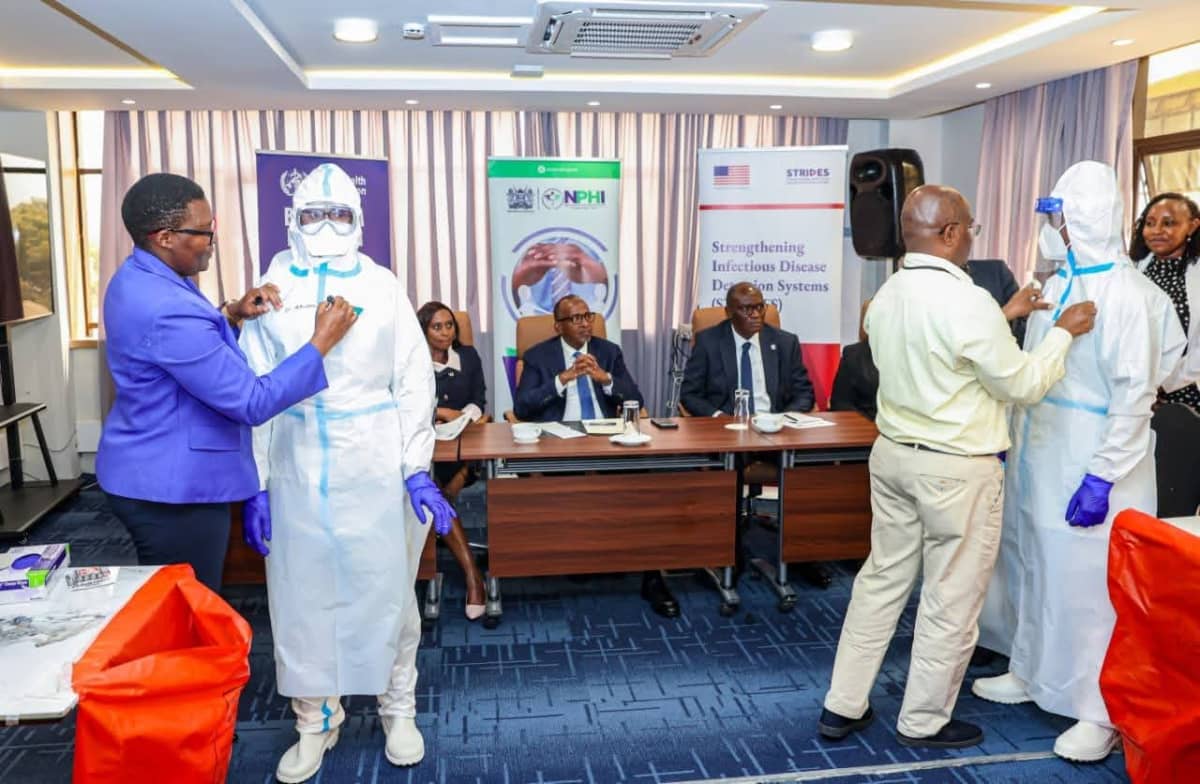


The High Court has halted plans to establish an Ebola quarantine and treatment facility for American citizens at Laikipia Air Base, ruling that the government's arrangement with the United States (US) was unconstitutional.
In a judgment delivered on Thursday, November 26, 2026, Justice Patricia Nyaudi prohibited the Ministry of Health from undertaking further construction work or operating the facility until the government makes key project documents public.
The ruling followed consolidated petitions filed by Katiba Institute and the Law Society of Kenya against the Attorney-General and the Cabinet Secretary for Health, Aden Duale.
The court found that the government had violated constitutional requirements on transparency, accountability and public participation when negotiating and implementing the arrangement.

Justice Nyaudi declared that the Health Cabinet Secretary failed to uphold the national values and principles of governance under Article 10 of the Constitution in the process that led to the facility's establishment.
The court also found the government in breach of Article 35(3), which guarantees access to information, over its continued failure to disclose the full details of the agreement.
Under the judgment, CS Duale has been given 45 days to release all documents relating to the arrangement, including the agreement, memoranda of understanding, negotiations and other relevant communications.
The government was also compelled to disclose public health, environmental, biosafety and security assessments, approvals obtained from Parliament and regulatory agencies, as well as protocols governing the admission, isolation, handling and treatment of individuals exposed to Ebola.
The court directed that the information be made available to the public, the petitioners and the court within the stipulated period. However, the facility will remain suspended until the court certifies that the government has satisfactorily complied with the disclosure orders.
How the Laikipia Ebola Facility Dispute Began
The legal dispute dates back to May 28, 2026, when Katiba Institute filed its petition just hours before the facility was scheduled to open.
The court immediately suspended the project and subsequently directed the government to disclose documents relating to the arrangement with the US. According to Katiba Institute, documents subsequently released by the government did not include an environmental and social impact assessment or a safety contingency plan.
The dispute escalated in June when the court found CS Duale in contempt for allowing construction activities to continue despite existing court orders.
Katiba Institute also raised concerns over the alleged admission of foreign nationals to the facility in July while court orders were still in force.
Katiba Institute Reacts to Court Decision
Katiba Institute Executive Director Nora Mbagathi, in a statement, welcomed the judgment, arguing that Kenyans had a constitutional right to understand decisions that could affect their health and safety.
"Today's judgment confirmed what we have said from the first day: Kenyans cannot be kept in the dark about decisions that put their lives and health at stake," Mbagathi stated.
The organisation's counsel, Joshua Malidzo Nyawa, maintained that international diplomatic arrangements must remain subject to Kenya's constitutional requirements.
"The lives and health of Kenyans are not bargaining chips in international diplomacy. No government can negotiate away the people's constitutional rights behind closed doors and expect the courts to look the other way," Nyawa remarked.
Katiba Institute has urged the government to publish all the required documents, respect the suspension orders and account publicly for the reported admission of foreign nationals in July.
It also called for future international health agreements to be presented to Parliament and the public before they are concluded.
The organisation further urged the government to prioritise national Ebola preparedness as Kenya works towards being declared Ebola-free.
The court made no order on legal costs, noting that the petitions had been filed in the public interest.