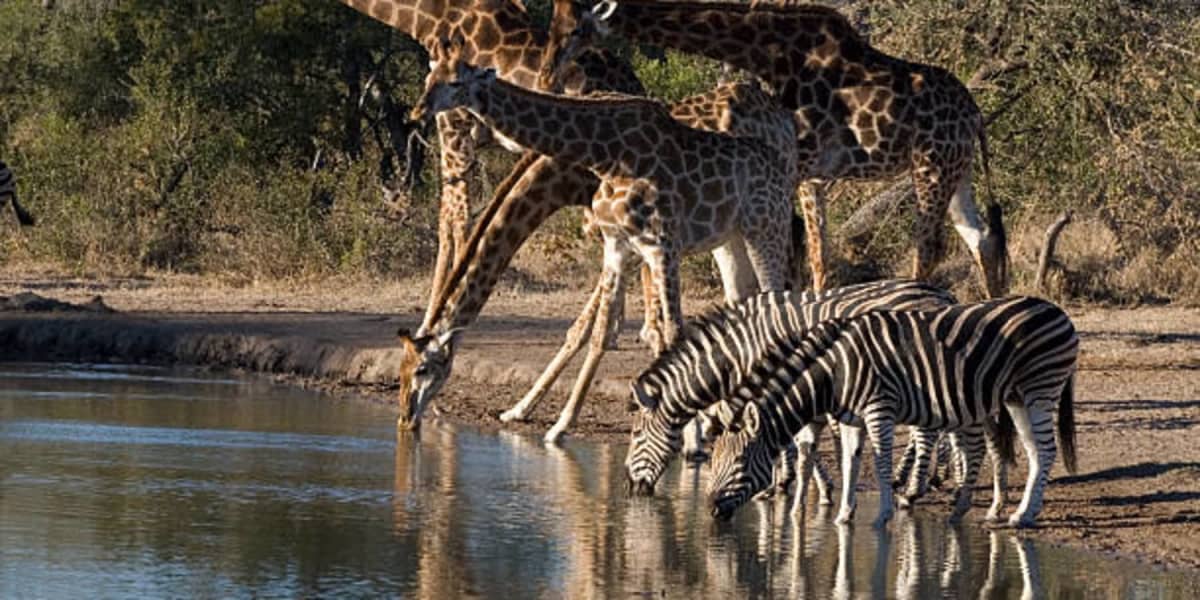
An illegal commercial wildlife trade is threatening giraffes, zebras and other animals across the Kenya-Tanzania border, with more than 200 hunting hotspots identified near protected areas, a new report by WWF and TRAFFIC has revealed.
The assessment warns that organised hunting syndicates are increasingly targeting wildlife for meat destined for urban markets, where some consumers reportedly pay premium prices for products sold on the basis of novelty, taste or unproven medicinal claims.
The report examines the 134,000-square-kilometre Southern Kenya-Northern Tanzania (SOKNOT) landscape, covering the Serengeti-Maasai Mara, Amboseli-Kilimanjaro and Tsavo-Mkomazi ecosystems.
Based on interviews with 110 community members, law enforcement officers and civil society partners, researchers identified more than 200 hunting hotspots across the landscape. The vast majority are located on community land within 15 kilometres of protected area boundaries, where enforcement is reportedly limited.

The findings suggest that wildlife conservation efforts focused on national parks may be overlooking areas where illegal hunting and meat trafficking are increasingly taking place.
“For years, wild meat hunting was treated as a hidden, low-level subsistence issue, overshadowed by the high-profile fight for ivory and rhino horn,” said Jackson Kiplagat, WWF-Kenya's chief executive officer.
“We undertook this assessment because we needed to pull back the curtain on how commercial syndicates are industrializing this trade outside national park borders, exploiting vulnerable communities, and quietly depleting the natural heritage our nations share.”
Giraffes, Zebras Among Targeted Animals
According to the report, commercial hunters are targeting animals that provide large quantities of meat while requiring relatively little effort and carrying lower perceived risks. Plains zebras, Masai giraffes and Kirk's dik-diks are among the species bearing the brunt of the trade.
In the Amboseli-Kilimanjaro corridor, which includes areas around Rombo, Tarakea and Moshi, hunters reportedly use powerful spotlights to disorient giraffes at night before killing them. In one seizure, authorities recovered the remains of seven giraffes, according to the report.
In the Tsavo-Mkomazi ecosystem, organised hunting parties are reported to have killed more than 200 dik-diks in single operations.
Meanwhile, wildebeests and zebras hunted in the Serengeti-Maasai Mara landscape are reportedly processed and transported through informal networks into Kenyan cities.
The report also highlights a decline in Coke's hartebeest population in Tsavo. Figures attributed to Kenya's National Wildlife Census show that the population fell from 2,064 animals in 2021 to 1,055 in 2025, a decline of approximately 49 per cent. However, the figures alone do not establish how much of the decline was caused by illegal hunting.
Urban Demand Fuels Commercial Hunting
The assessment identifies a market involving young hunters, transporters, middlemen and urban consumers. Young men aged between 20 and 25 are reportedly being drawn into hunting by the prospect of earning money in communities with limited employment opportunities.
The researchers say the trade is increasingly serving urban consumers rather than households hunting primarily to feed their families. Some buyers are reportedly attracted by the meat's perceived medicinal benefits, novelty or reputation as an alternative to conventional meat.
The report cites unproven beliefs that tree hyrax meat can cure eczema and elephant liver can treat hepatitis.
Expanded road networks have also made it easier to connect remote wildlife areas with urban markets, according to the assessment.
Dr Yussuf Wato, WWF-Kenya's head of conservation programmes, warned that enforcement targeting hunters alone would not dismantle the trade.
“Arresting young hunters on community lands will never solve this crisis while the shadow financiers and urban buyers pocket the profits untouched,” Wato said.
“We need to unite behind intelligence-led enforcement that dismantles the middlemen, trucks, and city supply chains.”
WWF Calls for Cross-Border Action
The report argues that enforcement efforts have largely concentrated on national parks, leaving surrounding community lands vulnerable to illegal hunting.
It recommends sustained public-awareness campaigns in urban centres, stronger intelligence-sharing between Kenyan and Tanzanian authorities, and employment and enterprise programmes targeting young people in communities bordering wildlife areas.
Researchers also call for enhanced monitoring and protection of threatened species, including Masai giraffes, which are listed under Appendix II of the Convention on International Trade in Endangered Species of Wild Fauna and Flora (CITES).
Dr Wato warned that continued commercial hunting could have consequences beyond the loss of individual animals. “When iconic wildlife is systematically butchered to supply lucrative commercial networks, the entire ecological fabric unravels,” he said.
Adding “If we fail to act decisively, we risk losing not just individual animals, but the integrity of the Amboseli, and Tsavo ecosystems that define who we are.”
The report calls for a coordinated response involving conservation agencies, communities and both governments to address the hunting, transport and consumption of illegally sourced wild meat.