
A helicopter crash in Kericho on Monday, October 12, has renewed questions about the safety of rotorcraft, coming weeks after a fatal accident near Mount Ololokwe in Samburu County and a separate tragedy involving Zimbabwean businessman Wicknell Chivayo.
The incidents have drawn fresh attention to the risks associated with helicopter travel, particularly as the aircraft are widely used for government transport, tourism, emergency response and access to remote areas.
In Kericho, a Kenya Forest Service (KFS) helicopter, registration number 5Y-FSK, crashed at Kericho Golf Club while taking off. The aircraft was carrying government officials, including Environment Principal Secretary Festus Ng’eno, according to initial media reports.
KFS later confirmed that four people, comprising one pilot and three passengers, were aboard and that all were safe and accounted for. The aircraft sustained extensive damage, and investigations were expected to establish the circumstances surrounding the incident. The cause had not been officially determined.
The accident followed a fatal helicopter crash near Mount Ololokwe in Samburu County on August 19, which claimed seven lives, including that of the pilot and six passengers.
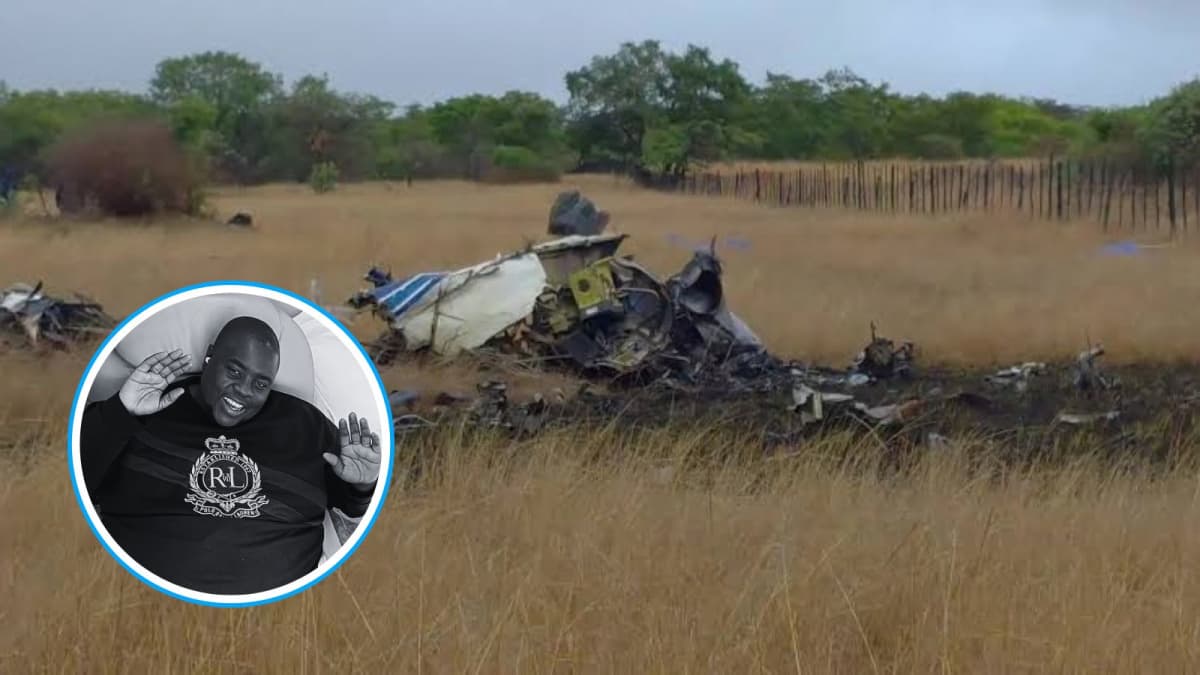
In Zimbabwe, Chivayo, his wife Lucy Muteke and other occupants died in a helicopter crash in the Marondera area in late September, according to media reports. The tragedy added to concerns over helicopter safety beyond Kenya.
But do these accidents mean helicopters are more dangerous than aeroplanes? Vantage Ke explores this:
Why helicopters can be more dangerous
Aviation safety experts assess risk using several measures, including accidents per flight hour, accidents per flight and fatalities per passenger journey. The results can differ considerably depending on the type of aircraft and operation being compared.
In many general aviation settings, helicopters experience higher accident rates than fixed-wing aircraft. However, that does not mean every helicopter journey is riskier than every aeroplane flight. The comparison is particularly important because helicopters and aeroplanes often perform different tasks.
A commercial passenger aeroplane typically follows a planned route at a relatively high altitude, with established departure and arrival procedures. Helicopters, by contrast, frequently operate close to the ground, fly into confined landing areas and manoeuvre around terrain or buildings. Those operating conditions can expose helicopter pilots to hazards that are less common during routine airline cruising.
1. Low-altitude flying leaves less room for error
Helicopters are designed to operate at low speeds and altitudes, making them useful for sightseeing, surveillance, medical evacuations and transport to remote destinations. However, flying close to the ground can leave pilots with less time and fewer options to respond when an unexpected problem develops.
Mountains, ridges, trees, power lines and buildings can become significant hazards, particularly during turns or manoeuvres near obstacles. The Mount Ololokwe accident illustrates the danger of operating close to mountainous terrain.
According to a report on the preliminary investigation, the helicopter was conducting a low-level flight along a cliff face to facilitate sightseeing and photography when its landing-gear skid struck a protruding rock formation near the summit.
The impact separated part of the landing gear, after which the aircraft descended the mountainside and was destroyed in a post-crash fire. All seven occupants suffered fatal injuries. The investigation into the accident remained ongoing, meaning the final findings on its causes and contributing factors were not yet established.
The incident highlights how proximity to terrain can create serious risks, even when weather conditions are suitable for visual flying.
2. Helicopters have complex mechanical systems
Unlike aeroplanes, which rely on fixed wings to generate lift as they move through the air, helicopters use rotating blades to generate lift and control their movement. Their rotor systems, transmissions and flight controls require specialised engineering, inspections and maintenance.
A mechanical problem can have serious consequences, although the level of risk depends on the nature of the failure, the aircraft design, maintenance standards and the circumstances of the flight.
This does not mean helicopters are mechanically unreliable. Properly maintained helicopters are capable of safe and demanding operations, but their complex systems require rigorous oversight.
It is also important not to assume that a crash was caused by mechanical failure simply because an aircraft was badly damaged. Investigators must establish whether the accident involved a technical problem, operational factors, environmental conditions, or a combination of circumstances.
3. Weather can complicate helicopter operations
Poor visibility, fog, low clouds, strong winds and heavy rain can make flying more challenging. Helicopters are frequently used for short journeys and operations in areas where weather can vary significantly over small distances. Pilots must assess visibility, terrain clearance and changing conditions before and during a flight.
The risks can increase when an aircraft is operating close to hills or mountains, where reduced visibility can make it harder to judge distances and identify obstacles.
However, weather should not automatically be blamed for a crash. In the Ololokwe accident, the preliminary investigation report cited in September indicated that visual meteorological conditions prevailed at the time. The reported collision with terrain therefore demonstrates that serious accidents can occur even when weather conditions are considered suitable for visual flight.
The cause of the Kericho crash had not been established in the initial reports, and any connection to rainfall or other weather conditions would need to be supported by the investigation.
4. Emergency landings are different
One advantage of helicopters is their ability to land in relatively confined spaces. This makes them useful for emergency medical services and operations in areas without conventional runways.
But the ability to land in a small space does not guarantee a safe emergency landing. If a helicopter experiences an engine failure, a trained pilot may be able to use a technique known as autorotation. In this manoeuvre, airflow through the rotor system keeps the blades turning as the aircraft descends, allowing the pilot to attempt a controlled landing.
Autorotation is not a guarantee of survival. Its effectiveness depends on factors including altitude, airspeed, terrain, the aircraft's condition and the pilot's ability to manoeuvre.
Fixed-wing aircraft also face serious challenges during engine failures, but many can glide towards a suitable landing area. Their options depend on altitude, aircraft performance and the terrain below. Neither aircraft type has a universal advantage in every emergency.

5. Why commercial aeroplanes have a different safety record
One reason helicopters can appear more dangerous is that they are frequently used for specialised missions, while commercial aeroplanes typically operate under established airline procedures.
Scheduled airlines generally benefit from structured pilot training, recurrent simulator assessments, standardised operating procedures, maintenance programmes and operational oversight. They also use larger aircraft designed for transporting many passengers over long distances.
Helicopters used for private charters, tourism, government assignments or aerial work may operate in very different conditions. Their safety depends on the operator, pilot qualifications, maintenance, flight planning, and the nature of the mission.
This distinction matters when interpreting accident statistics. The United States National Transportation Safety Board (NTSB) publishes aviation accident data broken down by aircraft type and flight purpose. Its records demonstrate why comparisons must account for the kind of flying being undertaken, rather than simply counting crashes.
A crash involving a helicopter on a sightseeing flight should not automatically be compared with an accident involving a commercial airliner without considering exposure to risk and the circumstances of both operations. For ordinary passengers, scheduled commercial airline travel generally remains one of the safest forms of transport.
6. What the recent crashes tell us about aviation safety
The Kericho, Ololokwe and Chivayo incidents are different accidents, and their causes should not be treated as identical.
In Zimbabwe, the Bell 430 helicopter carrying Chivayo and other occupants crashed in the Marondera area on September 30. The country's aviation authorities reported that fuel spilled on impact before a fire broke out, but the cause of the crash had not been established in the initial findings. A full investigation was instituted.
The Ololokwe accident involved a helicopter manoeuvring close to mountainous terrain, while the Kericho incident occurred during take-off. Investigators must examine each accident separately, using evidence such as aircraft maintenance records, pilot records, weather information, flight tracking data and wreckage analysis.
The distinction is important because a crash does not, by itself, establish whether the problem was mechanical, operational or environmental.
It would also be premature to conclude that the three incidents demonstrate a nationwide deterioration in helicopter safety. Establishing such a trend would require comprehensive data on flight hours, accidents, fatalities and the types of operations conducted over a defined period.
Nevertheless, the accidents highlight the importance of strong safety oversight, disciplined flight operations and thorough investigations whose findings can help prevent similar incidents.
What passengers should know
For anyone considering helicopter travel, the aircraft type alone does not provide a complete picture of safety. The operator's safety record, maintenance standards, pilot training and experience, weather assessment, and the planned route all matter. Regulatory compliance and appropriate operating procedures are essential, particularly for flights involving difficult terrain or remote destinations.
A helicopter's ability to land without a runway is a major advantage, but it does not eliminate the risks associated with flying.
Likewise, a fixed-wing aircraft is not automatically safe simply because it has wings. Small private aeroplanes, training aircraft and large commercial jets have different operating profiles and safety considerations.
Verdict: Are helicopters more dangerous than aeroplanes?
Based on analysis by Vantage Ke, helicopters can have higher accident rates than fixed-wing aircraft in some general aviation operations, but the comparison depends on the type of flight and the measure of risk used.
Their ability to fly at low altitudes, hover, and operate in confined spaces makes them valuable for transport, rescue missions and tourism. Those same operating conditions can expose them to terrain hazards and leave pilots with fewer options when problems arise.
The recent crashes in Kericho, Samburu and Zimbabwe are a reminder that aviation safety cannot be judged by aircraft design alone. Pilot decisions, operating conditions, maintenance, weather and safety procedures all play important roles.
Ultimately, the most meaningful question is not simply whether helicopters are more dangerous than aeroplanes, but how safely a particular aircraft is operated, maintained and flown.
