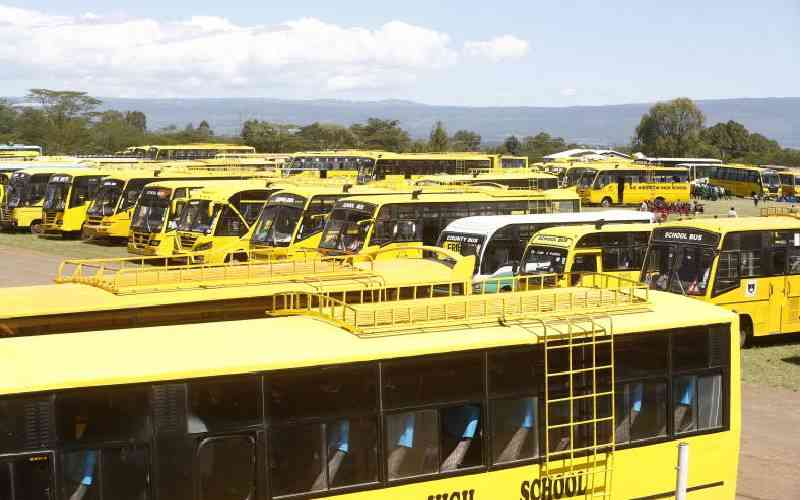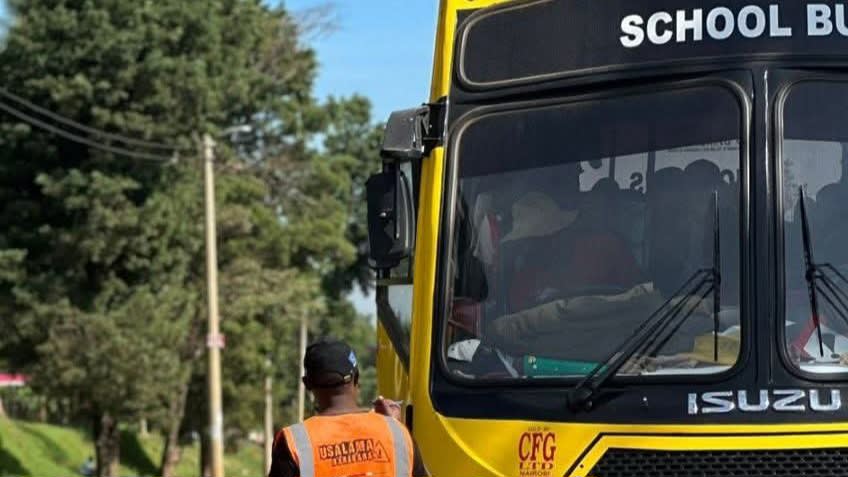
Githunguri Member of Parliament (MP) Gathoni Wamuchomba has called for school buses to be given priority on Kenyan roads, arguing that learners face unnecessary delays and safety risks while travelling to school and other destinations.
Wamuchomba wants school buses to enjoy special right of way similar to ambulances, police vehicles and other vehicles currently accorded priority on the roads.
Speaking in Parliament on Wednesday, September 30, the MP raised concerns over how motorists, particularly public transport operators, interact with buses carrying schoolchildren.

"Unfortunately, our roads are not fair to them. Our roads are not very forgiving to our learners, our children. I sympathise with the way we drive our buses," Wamuchomba said.
Her concerns were sparked after students who had visited Parliament experienced delays while travelling to the National Assembly.
Wamuchomba said the experience highlighted the challenges faced by school buses, which she argued are often forced to compete for road space with other motorists despite carrying learners.
She proposed that Kenya consider introducing special priority for school buses to ensure children reach their destinations safely and on time.
The Githunguri MP pointed to other countries where school buses receive special treatment on public roads, saying Kenya should consider adopting a similar system.
"If you go to other countries, school buses, the yellow bus, is like a saint bus. It is a bus that carries saints. It is given priority way in public roads," Wamuchomba said.
Countries such as the United States, Canada and South Korea have laws providing school buses with specific traffic protections, particularly when they stop to pick up or drop off learners.
What Kenyan Law Says
Currently, Kenyan traffic regulations give special priority to emergency vehicles such as ambulances, fire engines and police vehicles.
Rule 83 of the Traffic Rules made under the Traffic Act requires motorists to give way and, where necessary, pull over and stop when they hear a warning gong, bell or siren from an emergency vehicle.
Senior government officials, including the President and Cabinet Secretaries, can also receive official police escorts and traffic clearance during traffic congestion.
Wamuchomba's proposal would therefore introduce school buses into the category of vehicles receiving special consideration or right of way.
However, Kenya already has specific rules governing how motorists should behave around school buses.
Under the Traffic (School Transport) Rules, school buses measuring more than 30 feet are required to have dual red-light indicators and reflectorised red stop signal arms fitted on the right side.
When a school bus stops to pick up or drop off learners, the driver is required to activate the flashing red lights and extend the mechanical stop arm.
Other motorists approaching the bus are required to stop completely. They are not permitted to overtake or pass the school bus until the stop arm has been retracted and the flashing red lights have stopped.
Wamuchomba's proposal would go beyond these existing protections by giving school buses broader priority while they are travelling on Kenyan roads.
The push comes amid continued concerns over road safety involving schoolchildren, with the MP arguing that giving school buses greater priority could reduce delays and provide safer journeys for learners.