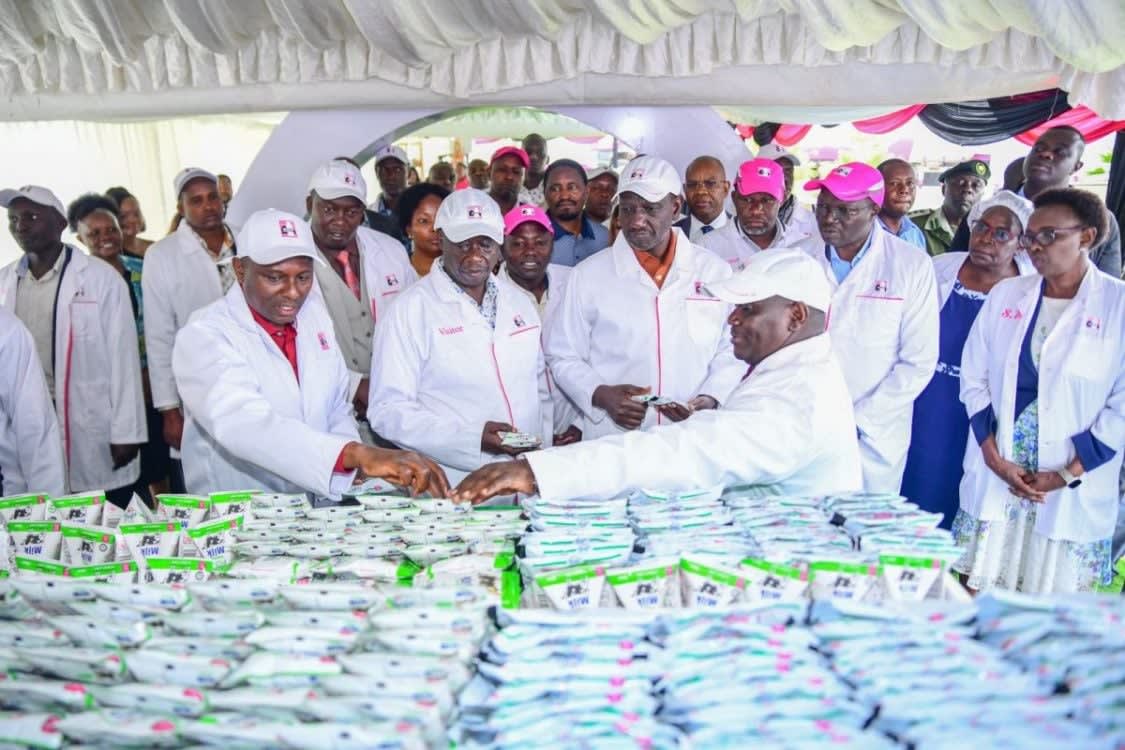
President William Ruto has announced that dairy farmers will receive Ksh65 per litre of milk starting October, in addition to a quarterly bonus of Ksh2 per litre, as Kenya continues to experience a shortage of milk.
Speaking during the 63rd Mashujaa Day celebrations at Kipchoge Keino Stadium in Eldoret on Tuesday, October 20, Ruto said the government had introduced agricultural reforms aimed at increasing farmers’ earnings and improving the dairy sector.
“Beginning this month, daily farmers will earn Ksh65 per litre with a bonus of Ksh 2 to be paid every quarter,” he said.
The President noted that the price paid to milk producers had increased from Ksh35 to Ksh60 per litre, adding that the latest adjustment would further boost farmers’ income.

Ruto also announced that Kenya’s milk production had increased by one billion litres.
Data from the Kenya National Bureau of Statistics (KNBS) Economic Survey 2026, released on April 30, shows that fresh milk production reached a record 5.5 million tonnes, equivalent to approximately 5.5 billion litres, in 2025.
The figure represented a 3.5 per cent increase compared to 2024, marking the third consecutive year that the country recorded growth in milk production.
The KNBS report further indicated that milk deliveries to industrial processors surpassed one billion litres for the first time, rising by 11.5 per cent from 909 million litres recorded in 2024.
The latest announcement comes against the backdrop of a persistent milk shortage that has pushed up retail prices and disrupted supplies to households, hotels and dairy outlets.
Farmers have blamed the situation on the rising cost of animal feeds and declining milk production. Some producers have reportedly opted to sell their milk directly to consumers, citing better returns compared to the prices offered by processors.
The new payment structure comes as the government seeks to improve farmers’ earnings while preventing higher producer prices from placing additional pressure on consumers.
A few days ago, Ruto announced plans to decentralise the eight factories operated by New Kenya Cooperative Creameries (New KCC), allowing each facility to function independently and distribute milk directly to markets within its region.
According to the President, the proposed changes will reduce dependence on the Nairobi factory for milk distribution and lower transportation expenses.
The government expects the decentralised arrangement to improve distribution efficiency, ease supply shortages and help bring down milk prices for consumers.
Ruto also pledged that the government would clear approximately Ksh400 million owed to dairy farmers by the end of October.