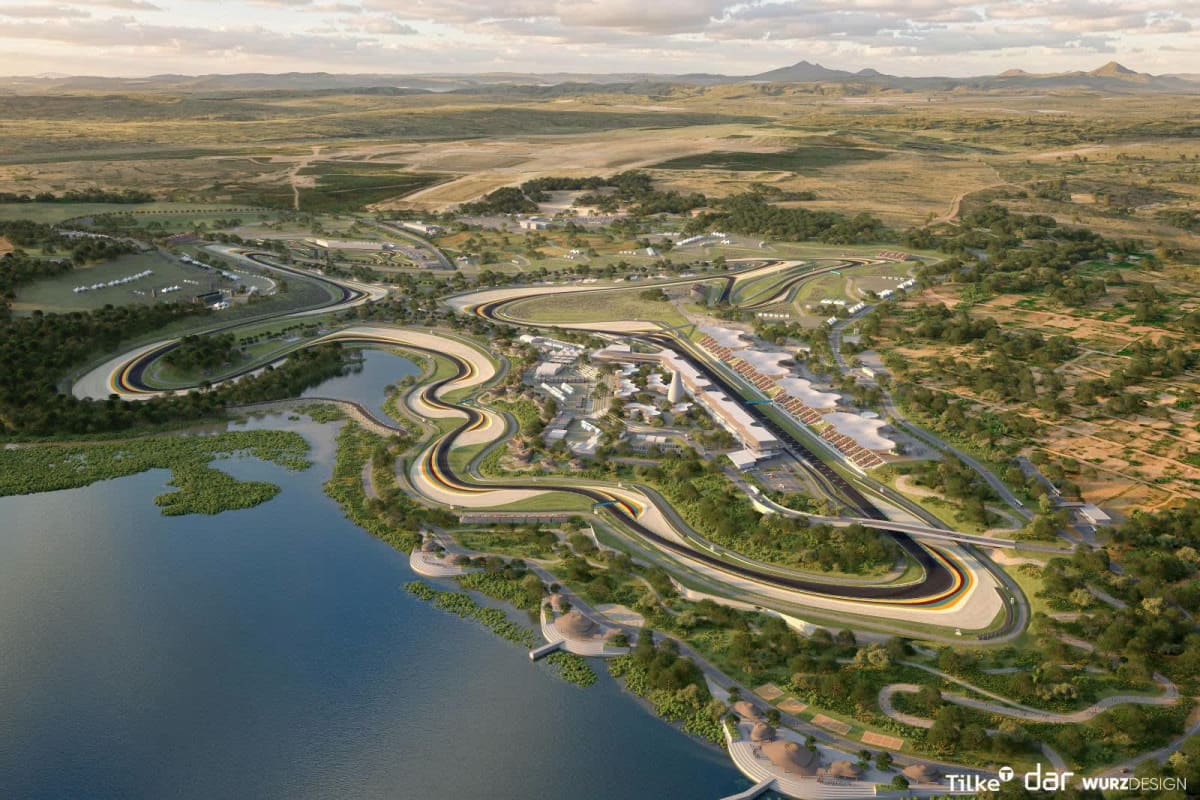
Rwanda has secured a 10-year agreement with Formula One to bring the motorsport championship back to Africa in the early 2030s, reviving questions about why Kenya failed to secure a Grand Prix despite former Machakos Governor Alfred Mutua’s ambitions to host the sport more than a decade ago.
Formula One announced the agreement on Tuesday, October 13, 2026, with Rwanda planning to build a purpose-built circuit in Bugesera, approximately 40 kilometres south of Kigali, next to the new international airport.
The announcement marks a major step towards ending Africa’s absence from the Formula One calendar since the 1993 South African Grand Prix at Kyalami. It also fulfils the dream of seven-time Formula 1 champion Lewis Hamilton to see the fast-growing motorsport on the African continent, after being on record publicly calling for F1's inclusion among global sporting events held in Africa, given that Formula One is already racing across nearly all continents.
But for Kenya, whose fan popularity in F1 has grown over the years, the development recalls Mutua’s 2013 proposal to establish a racing circuit in Machakos as part of a wider plan to transform the county into an investment and tourism destination.

However, the two projects have reached different stages. Whereas Machakos established a local motorsport circuit that hosted rallycross competitions, the county never secured a Formula One hosting agreement. Rwanda has obtained the agreement, with the new document set to be built.
Inside Rwanda’s Formula One Project
Rwanda’s proposed circuit will form part of a broader sports, tourism, infrastructure and commercial development programme led by the Rwanda Development Board.
The design is being developed by WurzDesign, founded by former Formula One driver Alexander Wurz, in collaboration with Tilke Engineers and Architects, a firm associated with several international racing circuits.
The track will be designed to meet FIA Grade 1 standards, the highest classification required to host a Formula One World Championship race. Its layout is expected to incorporate the area’s natural hills and elevation changes.
Formula One has, however, yet to announce the exact date of Rwanda’s inaugural Grand Prix. The first race is expected in the early 2030s, once the circuit has been completed and the requirements met. The total construction cost and detailed financing arrangements are also yet to be publicly disclosed.
Rwanda intends to use the global motorsport event to attract international visitors, create business opportunities and strengthen its reputation as a destination for major sporting events. This could put the country in a head-to-head contest with Kenya, which has been hosting the World Rally Championship (WRC) Safari Rally since 2021 and followed by hundreds of millions of television viewers globally, with over 400,000 spectators attending the event live in Kenya during rally week...that is, if Kenya actually secures a new hosting agreement beyond 2027.
What Happened to Mutua’s 2013 Plan?
Mutua, now a Labour and Social Protection Cabinet Secretary (CS), first outlined his Formula One ambition in 2013 as part of plans for a modern City of Machakos featuring commercial developments, sports facilities, a university, a medical zone and a motorsport circuit.
“We will also have a sports city with stadiums, playgrounds and a track for car racing - yes, we want Formula One to be held right here in Machakos,” he declared at the time.
The proposal was intended to attract investors and position Machakos as a regional economic hub. However, the wider city development plan encountered delays, with Mutua later blaming land disputes and bureaucracy for frustrating implementation.
In 2021, he revived the motorsport proposal, announcing plans for a circuit at Machakos People’s Park. He also proposed that the track double as a public road when racing was not taking place, allowing it to serve ordinary transport needs.
A motorsport circuit was subsequently unveiled in Machakos on April 28, 2022. The 4.5-kilometre facility was intended to accommodate different forms of racing, including rallycross and motorcycle competitions.
The circuit was not merely an unbuilt proposal: it went on to host rallycross events, including a championship held at Machakos People’s Park in November 2022.
However, the completion of a local motorsport circuit did not mean Machakos had built a Formula One-certified Grand Prix venue. The available reporting does not establish that the facility secured FIA Grade 1 certification or a Formula One hosting agreement.
Why Kenya Never Secured an F1 Race
The clearest difference between the two projects is the absence of a formal Formula One commitment in Machakos, according to analysis done by Vantage Ke.
Mutua’s proposal was part of a wider county development vision, and the circuit that emerged was used for other motorsport events. The ambition to host Formula One, however, never progressed to a confirmed Grand Prix on the championship calendar.
Land disputes and administrative delays affected the wider City of Machakos project, according to Mutua. But the available evidence does not establish that these were the sole reasons Kenya failed to secure Formula One, or that resolving them would automatically have guaranteed a race.
Hosting a Grand Prix requires more than building a track. A venue must satisfy stringent technical and safety requirements, while organisers must also secure the necessary commercial and hosting arrangements with Formula One.
Hosting a Formula One race is also a massive financial commitment and can cost between US$100 million (Ksh12.98 billion) and US$150 million (Ksh19.46 billion) upfront for a single race weekend, while the total cost over a standard 10-year hosting contract can exceed US$1 billion (Ksh129.75 billion).
Rwanda’s agreement provides a formal framework for hosting the championship, although it still faces the work of constructing its circuit and preparing the necessary infrastructure.
What Rwanda’s Deal Means for Kenya
Rwanda’s progress highlights the difference between developing a motorsport facility and securing a place on Formula One’s international calendar.
Machakos delivered a circuit that hosted local racing, but its Formula One ambition remained unrealised. Rwanda has secured the hosting agreement, but its planned venue must still be completed before the race can take place.
The economic benefits of the Rwandan project will depend on construction costs, financing, visitor numbers and the opportunities created for local businesses.
For Kenya, the comparison offers a clear lesson: an ambitious sporting proposal can generate interest, but translating it into a global event requires a formal agreement, technical preparation and sustained implementation.