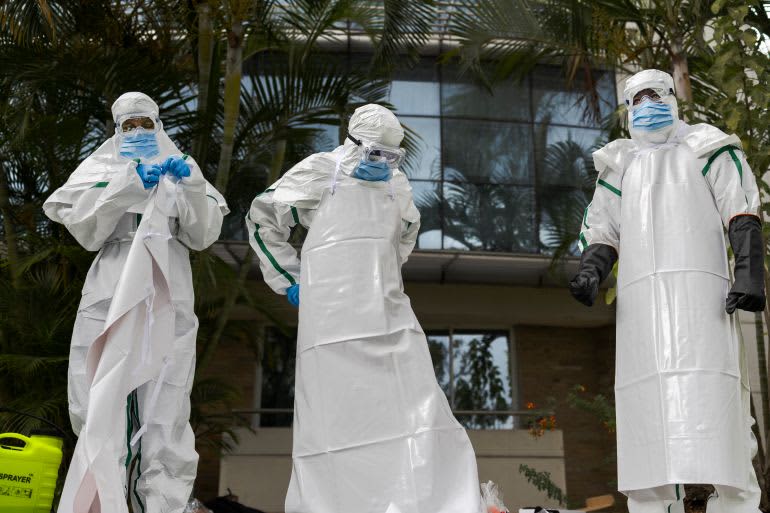
Kenya could be declared free of Ebola within the next 21 days if no new infections are reported, Health Cabinet Secretary Aden Duale has announced.
Speaking during an interview with Citizen TV on Sunday, October 25, Duale said the country must complete 42 consecutive days without new confirmed or probable cases before it can be declared Ebola-free.
As of Monday, October 26, Kenya had reached the halfway mark of the 42-day monitoring period, following the outbreak that began on October 2. According to the CS, all subsequent infections have been recorded among individuals who had contact with the initial imported case while in quarantine, with no new community transmission reported.
Duale expressed confidence that Kenya had contained the outbreak, adding that the country could be declared free of the deadly virus once the mandatory period expires without further infections.

"The people who tested positive are not from the wider community. They are those in quarantine who had contact with the first case. We have contained it, and the next time Kenya will be free of Ebola will be when we reach 42 days. That is when we will declare Kenya Ebola-free; right now we are at 21 days," Duale stated.
The World Health Organisation (WHO) requires countries to complete 42 consecutive days without a new confirmed or probable Ebola case before declaring an outbreak over.
The period is twice the virus's maximum incubation period of 21 days and is intended to establish that all potential chains of human-to-human transmission have ended.
The countdown typically begins the day after the last confirmed or probable patient tests negative for the virus twice, or is safely discharged under the applicable public health protocols.
If Kenya successfully completes the monitoring period, it could join Uganda among countries that have brought Ebola outbreaks under control. The virus has caused thousands of deaths over the years, particularly in the Democratic Republic of Congo (DRC).
In the preceding 48 hours, the Ministry of Health tested more than 551 suspected cases, all of which returned negative results.
Quarantined Individuals to Be Released
Meanwhile, the Ministry of Health is preparing to release nearly 20 people who were placed in quarantine after coming into contact with the first imported Ebola case.
The individuals have reportedly remained in isolation for three weeks and are expected to complete the mandatory 21-day quarantine period on Monday.
Duale said those who test negative and show no symptoms will be allowed to return to their families and interact with the public after completing the required medical assessments and health protocols.
He explained that the ministry has been conducting regular tests to monitor the individuals throughout the incubation period and establish whether any have developed the infection.
"Every 48 hours, we test them to see whether they are positive or negative because the incubation period of this virus is between two and 21 days. Those who served the 21 days; today is the 20th since the outbreak. If tomorrow they are negative, almost half of them, we will do the clinical analysis, all the protocols, and they will be safe to go back to their families," Duale added.
The government has also reported 100 per cent contact tracing, saying everyone identified as having interacted with the imported case has been placed under supervision.
Kenya has so far recorded nine Ebola cases and two deaths. The fatalities include the initial case and a 65-year-old woman who developed symptoms while in quarantine.
Members of the public can report Ebola-related emergencies by calling the toll-free number 719, dialling *719#, or contacting the Ministry of Health via WhatsApp on 0700 719 719.