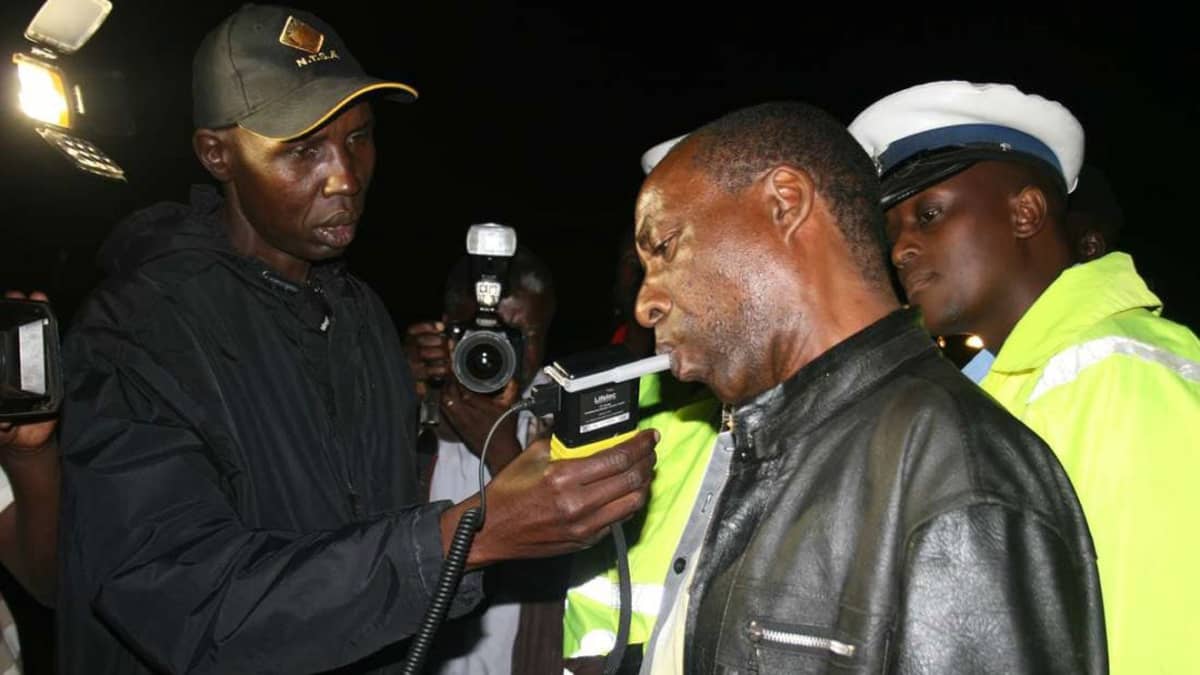
The National Transport and Safety Authority (NTSA) has issued a safety checklist for motorists driving at night as part of efforts to reduce road accidents and prevent avoidable deaths.
The guidelines were announced under the Operation Msimu Bila Ajali, Usalama Barabarani campaign, launched on Monday, October 26, with NTSA working alongside law enforcement officers to address dangerous driving practices.
The initiative involves educating drivers and passengers on road safety, alongside daytime and nighttime inspections along major transport routes, with increased surveillance during hours associated with a higher risk of fatal crashes.
“As part of ongoing proactive measures to disrupt risky behaviours and prevent loss of lives on our roads, the Authority, in collaboration with law enforcement, has launched the Msimu bila ajali, Usalama Barabarani campaign. This campaign involves sensitisation of drivers and passengers, as well as day and night safety checks along major transport corridors,” NTSA stated.
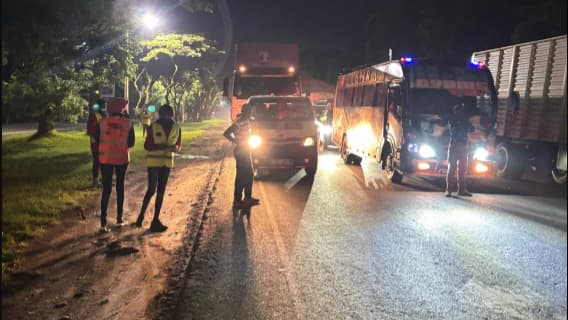
Under the safety checklist, officers will inspect vehicle speeds to ensure motorists adhere to prescribed limits. They will also verify that speed limiters are functioning correctly and continuously transmitting data to the Intelligent Road Safety Management System (IRSMS), NTSA's national digital platform for real-time monitoring and road safety compliance.
Long-distance public service vehicle (PSV) operators will be required to present passenger manifests, driver logs detailing driving hours, valid Road Service Licences, inspection stickers and evidence that they are operating on authorised routes.
Inspectors will also establish whether vehicles are carrying passengers or cargo beyond their legally permitted limits. Additionally, officers will verify drivers' licences and check the authenticity of PSV badges.
The authority has further emphasised the importance of seatbelt use, requiring passengers to remain buckled up throughout their journeys.
Drivers will also undergo breathalyser tests as NTSA intensifies its crackdown on drink-driving, which remains among the risky behaviours targeted during the festive season safety campaign.
NTSA warned that evening and nighttime travel presents heightened dangers on Kenyan roads, prompting additional inspections to identify and deter motorists who disregard safety regulations.
Data cited in previous reports on NTSA findings indicates that the period between 7 pm and 10 pm accounts for approximately 30 per cent of road crashes nationally and 26 per cent in Nairobi.
Recent analyses have also identified the hour between 8 pm and 9 pm as the deadliest period, with poor visibility, speeding, driver fatigue and alcohol impairment contributing to the increased risks.
Pedestrians, cyclists and boda boda riders are particularly vulnerable on poorly lit highways, where motorists may struggle to identify people and potential hazards in sufficient time to avoid collisions.
The authority has also cautioned motorists against fraudulent messages purporting to communicate speed violations. NTSA clarified that official speed violation notifications are sent exclusively through the SMS sender ID NTSA.
Motorists have been urged to remain vigilant, report suspicious messages and visit the authority's official website, www.ntsa.go.ke, for road safety information and updates.
The campaign comes amid growing concern over the number of road crashes reported across the country this year. NTSA has called on President William Ruto to declare road crashes a national disaster, citing the rising number of accidents and the loss of lives recorded on Kenyan roads.
The authority's latest initiative seeks to strengthen enforcement, promote responsible driving and protect road users during a period when increased travel can expose motorists and passengers to greater risks.