
Kenyans have expressed concern over persistent hot weather in Nairobi and several other parts of the country, with temperatures remaining elevated despite the onset of the October-November-December (OND) rainy season.
The prolonged sunshine has prompted questions about why the country is experiencing intense heat when El Niño was expected to bring increased rainfall to many areas. However, weather experts explain that a forecast of above-average seasonal rainfall does not necessarily mean rain will fall continuously or result in cooler conditions.
Weather expert Maithya wa Vilivū says seasonal projections suggest Nairobi could experience warmer-than-usual conditions during the final three months of 2026 and into early 2027, with temperatures expected to range between 0.5°C and 1.5°C above the long-term average.
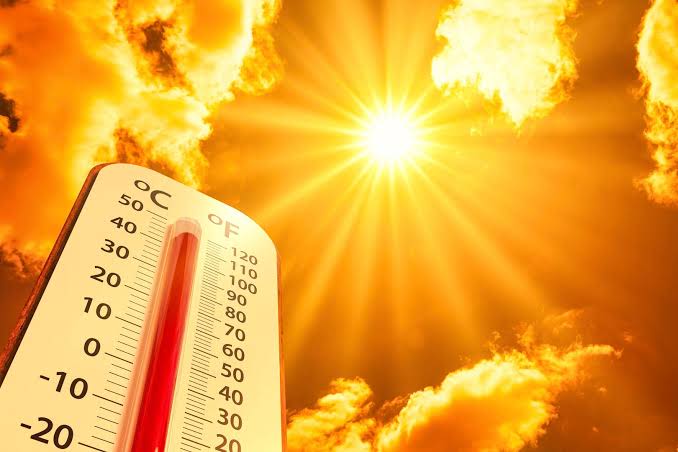
According to Maithya's assessment, the median temperature increase is approximately 1.1°C. His seven-day forecast also indicated that daytime temperatures in Nairobi would range between 28°C and 30°C, with some areas potentially recording highs above 30°C.
He attributed the uncertainty surrounding rainfall patterns to the combined influence of El Niño and other climate systems, including the Indian Ocean Dipole, Madden-Julian Oscillation, Kelvin waves and tropical storms over the Indian Ocean. These phenomena affect moisture movement and determine how rainfall is distributed across different regions.
Experts note that while El Niño is generally associated with increased rainfall in East Africa, other atmospheric and oceanic systems influence the timing, intensity and location of precipitation. Consequently, Nairobi can continue experiencing hot, sunny conditions even during the rainy season.
The IGAD Climate Prediction and Applications Centre has forecast enhanced rainfall across much of the Greater Horn of Africa during the October-December season. However, the onset, timing and distribution of the expected rains are likely to differ from one location to another.
Experts from the Kenya Meteorological Service Authority (KMSA) have similarly explained that delayed rainfall in some areas does not automatically indicate a change in the seasonal forecast. They also caution that the strength of El Niño alone cannot determine the amount of rainfall a particular location will receive.
The rising temperatures in Kenya come amid growing global concerns over extreme heat. Reuters Climate Monitor's Heat Storm Tracker projected that a heat storm would cover 32.1 per cent of the Earth's surface, potentially exposing 1.7 billion people, equivalent to 21 per cent of the global population, to the phenomenon.
The tracker further reported that heat storms and heat waves covered an average of 18.1 per cent of the Earth's surface daily over the past five years. This represents a significant increase compared with the 2.1 per cent average recorded between 1961 and 1990.
In Kenya, the Meteorological Department forecast maximum daytime temperatures exceeding 35°C in several counties between October 20 and 26, 2026.
The affected areas include Garissa, Wajir, Tana River, Isiolo, Kilifi, Marsabit, Samburu and Turkana counties, where residents were expected to experience particularly hot conditions.
During the same period, Nairobi was forecast to record a maximum temperature of 29°C and a minimum of 12°C. Lodwar was expected to experience highs of 38°C, followed by Mandera at 37°C, Wajir at 36°C and Garissa at 35°C.
KMSA's outlook for the October-December season anticipates above-average rainfall across much of Kenya, alongside warmer-than-average temperatures.
The forecast suggests that the expected rains can occur alongside continued high temperatures, particularly in areas where precipitation is delayed, intermittent or unevenly distributed.
As a result, Kenyans may continue experiencing hot and sunny days even as the rainy season progresses, with conditions varying depending on local weather patterns and the interaction of different climate systems.