
The National Transport and Safety Authority (NTSA) has rolled out a new service that allows motorists to process and collect their driving licences in less than two minutes.
The authority announced the change on Thursday, October 8, as part of measures aimed at improving service delivery and cutting down the time motorists spend at NTSA offices.
However, motorists seeking to use the new service will still be required to visit their nearest NTSA office to collect their driving licences.
NTSA described the development as a major departure from the previous system, which often required motorists to spend hours in queues while waiting for their documents to be processed or issued.
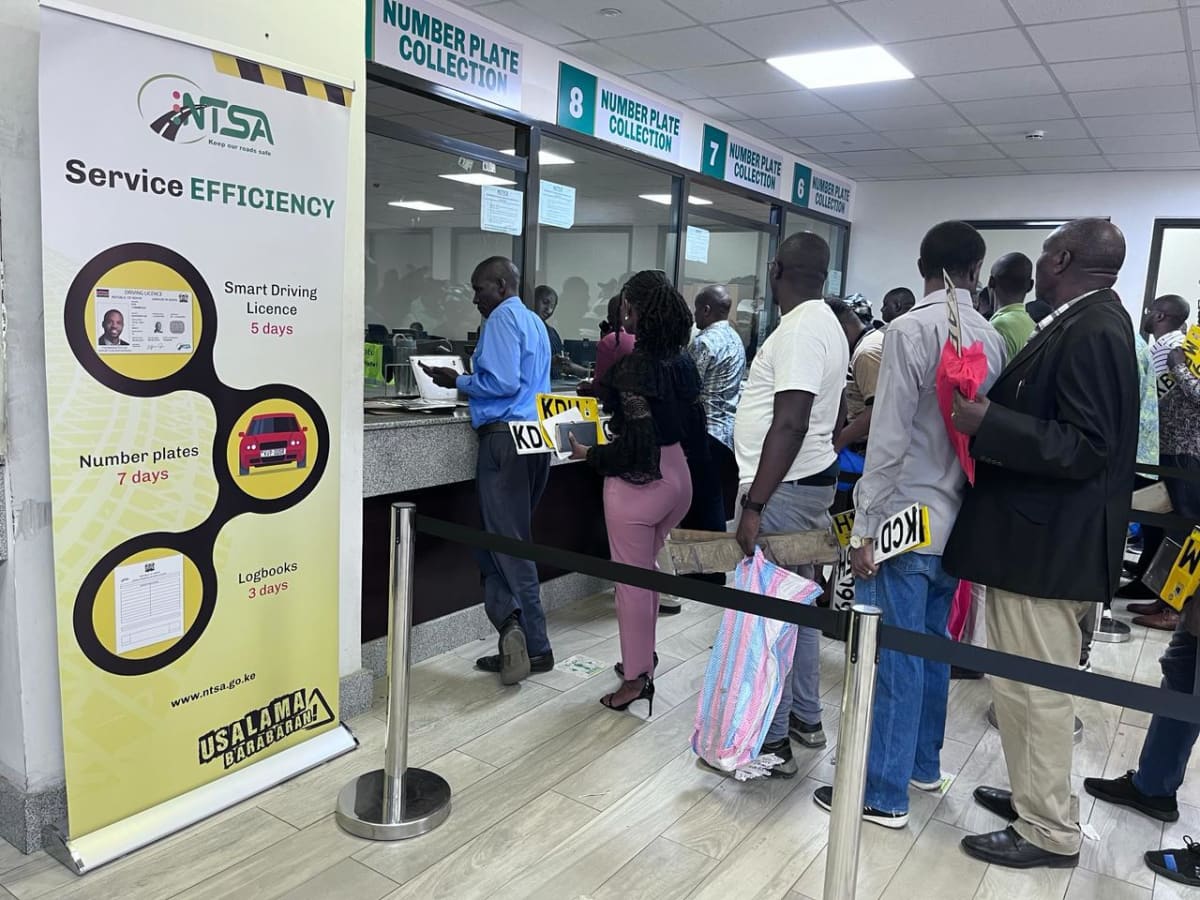
“Happy Customer Week, at NTSA we have transformed service delivery. Visit and collect your driving licence in under two minutes. No more queues at NTSA,” the authority said.
The announcement comes amid continued concerns over delays in the processing and issuance of smart driving licences and number plates.
Some motorists have previously raised complaints after completing biometric registration and making payments, only to wait for two or three months without receiving their driving licence cards.
The delays have been attributed to a significant backlog of applications, with sources familiar with the system estimating that hundreds of thousands of requests remain pending.
The large volume of applications has placed pressure on NTSA's production capacity, affecting the speed at which driving licences and number plates can be manufactured and issued.
In response, the authority has been exploring changes to the production and issuance of the documents, including greater involvement of private-sector investors.
Speaking during an interview with Citizen TV in June, NTSA Director General Nashon Kondiwa argued that bringing private companies into the process could help address the persistent delays.
Kondiwa questioned why the government should remain directly involved in the production and sale of driving licences and number plates, noting that other countries use licensed private firms to provide such services.
“I do not think a government, or any government institution, should be trading in number plates, which is what has been happening in Kenya since independence,” Kondiwa said.
